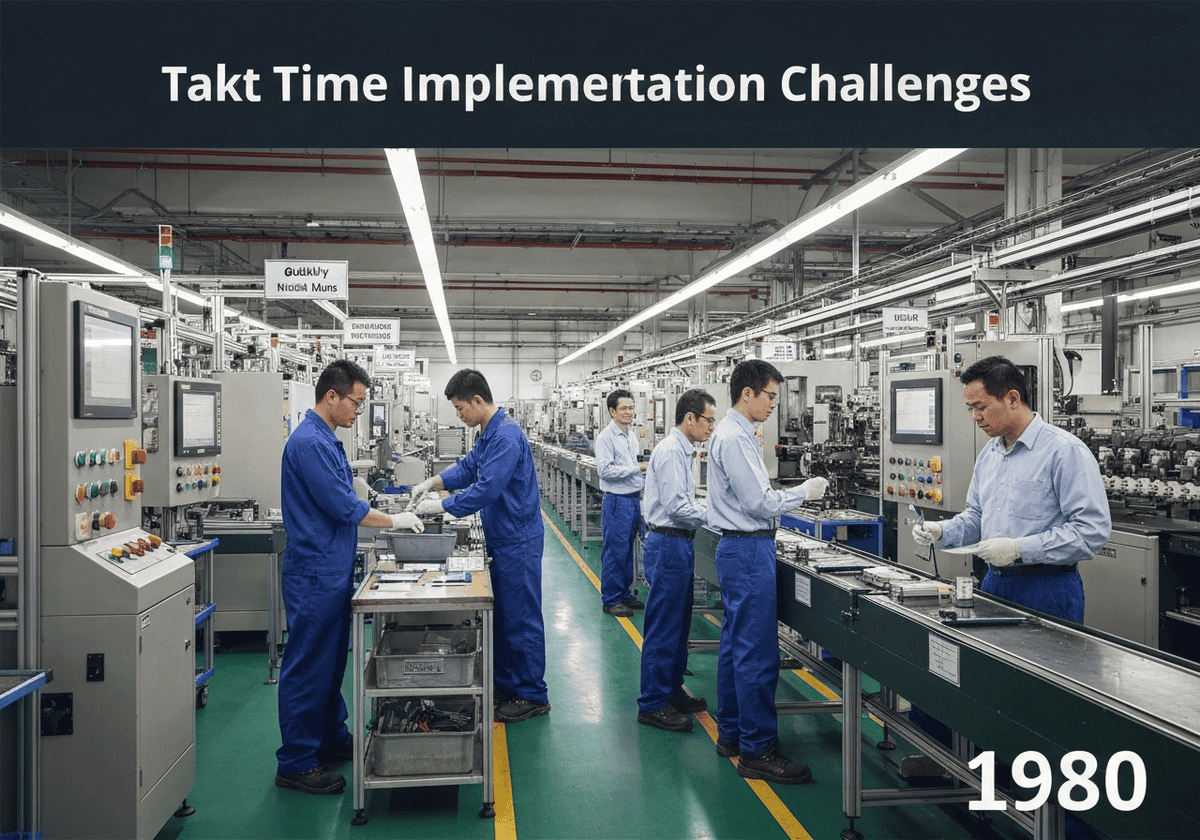
成功 タクトタイム 導入には、極めて安定した生産環境が不可欠です。一般的な課題としては、機械のダウンタイム管理、手直しを避けるための品質の一貫性確保、作業内容の異なる複数の製品を生産するライン(混在生産ライン)のバランス調整などが挙げられます。これらの変動要因に対処しなければ、タクトタイム制のシステムは脆弱になり、需要に安定して対応できなくなる可能性があります。


(画像はイメージです)
成功 タクトタイム 導入には、極めて安定した生産環境が不可欠です。一般的な課題としては、機械のダウンタイム管理、手直しを避けるための品質の一貫性確保、作業内容の異なる複数の製品を生産するライン(混在生産ライン)のバランス調整などが挙げられます。これらの変動要因に対処しなければ、タクトタイム制のシステムは脆弱になり、需要に安定して対応できなくなる可能性があります。

タクトタイムでペース調整されるシステムは、余裕時間やバッファがほとんどありません。そのため非常に効率的ですが、同時に障害に対して脆弱でもあります。最初の大きな課題は信頼性です。機械が故障すると、その下流のライン全体が作業不足に陥り、ラインはタクトタイムを達成できなくなります。これが、予防保全アプローチである総合的生産保全(TPM)が、タクトタイム導入の重要な前提条件となる理由です。
The second challenge is quality. If a defective part is produced, it must be either scrapped or reworked. Both outcomes disrupt the flow. Rework, in particular, introduces unplanned work that consumes time and resources, making it impossible to adhere to the Takt rhythm. Therefore, robust in-process quality control methods, such as mistake-proofing (Poka-yoke) and the ability for any worker to stop the line (Andon), are essential.
Finally, product variety poses a significant challenge. If a line produces multiple products (a mixed-model line), and each product requires a different amount of work at each station, it becomes very difficult to balance the line. A simple Takt time calculation is insufficient. This requires more advanced techniques like creating a weighted-average Takt time and carefully sequencing the products (a practice known as Heijunka) to level the demand for work at each station over time.
ボットによるトラフィック(現在1日あたり4万件以上)を排除するため、このコンテンツはコミュニティメンバー限定となっています。
> ログイン < または > 登録 < (100%無料)でこれにアクセスできます。他のすべての制限付きコンテンツとツールも同様です。
タクトタイム導入の課題
(日付が不明または関連性がない場合、例えば「流体力学」などでは、その注目すべき出現時期の概算値が提示されます。)

フルサイズの画像とダウンロードは、登録会員のみが100%無料で利用できます。
> ログイン <