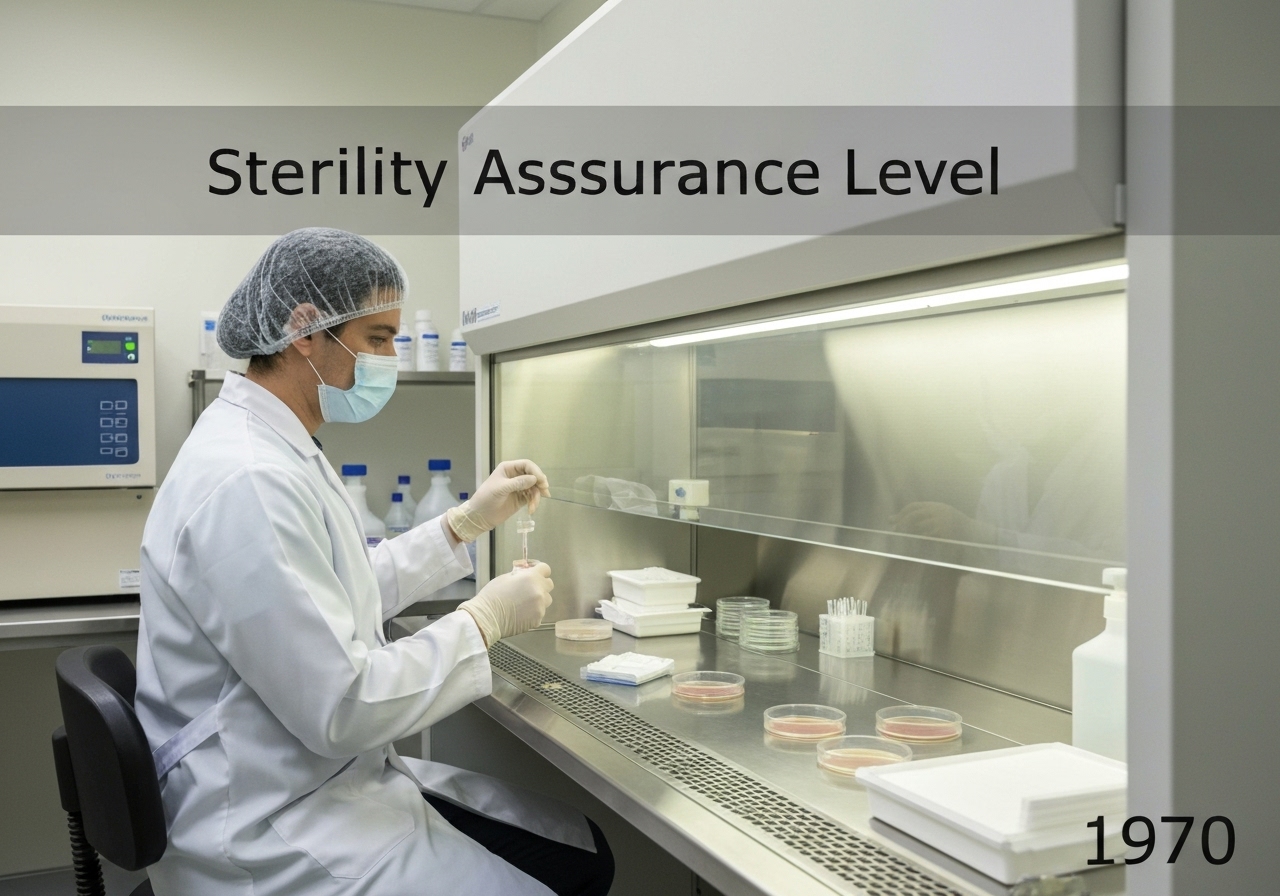
SALは、滅菌後に物品上に生存可能な微生物が1つでも存在する確率を表す定量的な指標です。医療機器に一般的に求められるSALは[latex]10^{-6}[/latex]で、これは滅菌されていない製品が発生する確率が100万分の1であることを意味します。この確率論的なアプローチは、絶対的な滅菌は証明できず、プロセスから統計的に推測することしかできないという認識に基づいています。 検証.
(画像はイメージです)
SALは、滅菌後に物品上に生存可能な微生物が1つでも存在する確率を表す定量的な指標です。医療機器に一般的に求められるSALは[latex]10^{-6}[/latex]で、これは滅菌されていない製品が発生する確率が100万分の1であることを意味します。この確率論的なアプローチは、絶対的な滅菌は証明できず、プロセスから統計的に推測することしかできないという認識に基づいています。 検証.

The concept of the Sterility Assurance Level (SAL) is rooted in the understanding that microbial death follows first-order kinetics, meaning it is a probabilistic event. It is impossible to prove that every single microorganism on an object has been killed; one can only calculate the probability of a microbe surviving the process. The SAL is this probability. For instance, an SAL of [latex]10^{-6}[/latex] does not mean one contaminated item exists for every million produced. Instead, it means there is a one-in-a-million chance for any given item to harbor a single viable microorganism after the sterilization process. This statistical approach is fundamental to the validation of sterilization cycles in regulated industries like pharmaceuticals and medical devices. To establish a cycle that achieves a desired SAL, manufacturers perform validation studies. This often involves placing biological indicators (BIs), which are standardized preparations of highly resistant bacterial spores (like Geobacillus stearothermophilus for steam or Bacillus atrophaeus for EtO), in the most challenging locations within a sterilization load. The process parameters (e.g., time, temperature, concentration) are then adjusted and tested until they consistently achieve a complete kill of the BIs. The cycle is then extended for a ‘half-cycle’ or more to provide a safety margin, ensuring the process can deliver the target SAL of [latex]10^{-6}[/latex] or better. The choice of SAL depends on the intended use of the product. Items that will come into contact with compromised tissue, such as surgical implants and injectable drugs, require the most stringent SAL of [latex]10^{-6}[/latex]. For items that contact intact skin, a lower SAL of [latex]10^{-3}[/latex] may be acceptable.
SAL(滅菌状態基準)が規制基準として正式に確立されたのは、20世紀後半、米国食品医薬品局(FDA)や国際標準化機構(ISO)などの機関の主導によるものでした。それ以前は、滅菌状態は絶対的な状態として扱われ、物品は滅菌されているかされていないかのどちらかでした。しかし、製造規模が拡大し、汚染のリスクがより深く理解されるにつれて、より厳密で定量的な枠組みが必要となりました。滅菌状態の定義が定性的なものから確率的なものへと移行したことは、大きな進歩でした。これにより、プロセス検証のための科学的かつ正当性のある根拠が提供され、製造業者は規制当局に対して滅菌方法の有効性と再現性を実証し、患者の安全レベルを一定に保つことが可能になりました。
ボットによるトラフィック(現在1日あたり4万件以上)を排除するため、このコンテンツはコミュニティメンバー限定となっています。
> ログイン < または > 登録 < (100%無料)でこれにアクセスできます。他のすべての制限付きコンテンツとツールも同様です。
無菌性保証レベル(SAL)
(日付が不明または関連性がない場合、例えば「流体力学」などでは、その注目すべき出現時期の概算値が提示されます。)

フルサイズの画像とダウンロードは、登録会員のみが100%無料で利用できます。
> ログイン <