Product Design, Manufacturing & Innovation Resources
» スパイラルモデル(SWプロセス)

スパイラルモデル(SWプロセス)

1986-01-01
  • Barry Boehm
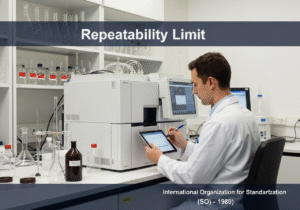
近代的なオフィス環境でスパイラル・モデルについて議論するソフトウェア・エンジニアリング・チーム。.

(画像はイメージです)

The Spiral Model is a risk-driven ソフトウェア development process model that combines elements of both prototyping and the waterfall model. It is a type of iterative development where the project passes through four phases in each iteration (spiral): determine objectives, identify and resolve risks, develop and test, and plan the next iteration. It emphasizes continuous risk analysis.

Introduced by Barry Boehm in 1986, the Spiral Model was designed to address the shortcomings of the traditional Waterfall model, particularly for large, complex projects. Each loop of the spiral represents a phase of the software process. Unlike other models, it doesn’t start with a full set of requirements. Instead, the initial spiral might focus on developing a proof-of-concept to test feasibility. Each subsequent loop builds upon the last, moving from a conceptual level to a fully engineered product. The four key activities in each cycle are: 1) Determine objectives, alternatives, and constraints for the iteration. 2) Evaluate alternatives; identify and resolve risks. This is the most critical part, involving activities like prototyping, simulation, and benchmarking to mitigate high-risk elements. 3) Develop and verify the next-level product. This involves the actual coding, integration, and testing, similar to a mini-waterfall process for that iteration’s deliverable. 4) Plan the next iteration. The project is reviewed, and plans are drawn up for the next spiral. This model allows for the incremental release of the product and refinement of requirements throughout the development lifecycle, making it highly flexible and suitable for projects where risk management is paramount.

UNESCO Nomenclature: 1208
– Software

タイプ

抽象システム

混乱

増分

使用法

ニッチ/専門分野

前駆物質

  • waterfall model
  • prototyping models
  • risk management principles
  • incremental development models

アプリケーション

  • large, expensive, and complicated government projects
  • high-risk software development
  • projects where requirements are unclear or complex
  • research and development projects

特許:

NA

潜在的なイノベーションのアイデア

ボットによるトラフィック(現在1日あたり4万件以上)を排除するため、このコンテンツはコミュニティメンバー限定となっています。
> ログイン < または > 登録 < (100%無料)でこれにアクセスできます。他のすべての制限付きコンテンツとツールも同様です。

Related to: spiral model, barry boehm, risk-driven, software development, iterative, prototyping, waterfall model, risk analysis, software engineering, project management.

歴史的背景

スパイラルモデル(SWプロセス)

1980
1980
1980
1986-01-01
1990
1990
1993
1980
1980
1980
1982-07-01
1988-06-01
1990
1993
1997-04-23

(日付が不明または関連性がない場合、例えば「流体力学」などでは、その注目すべき出現時期の概算値が提示されます。)

関連する発明、革新、および技術原理

フルサイズの画像とダウンロードは、登録会員のみが100%無料で利用できます。