Product Design, Manufacturing & Innovation Resources
بيت » ساوثرن بلوت

ساوثرن بلوت

1975
  • Edwin Southern
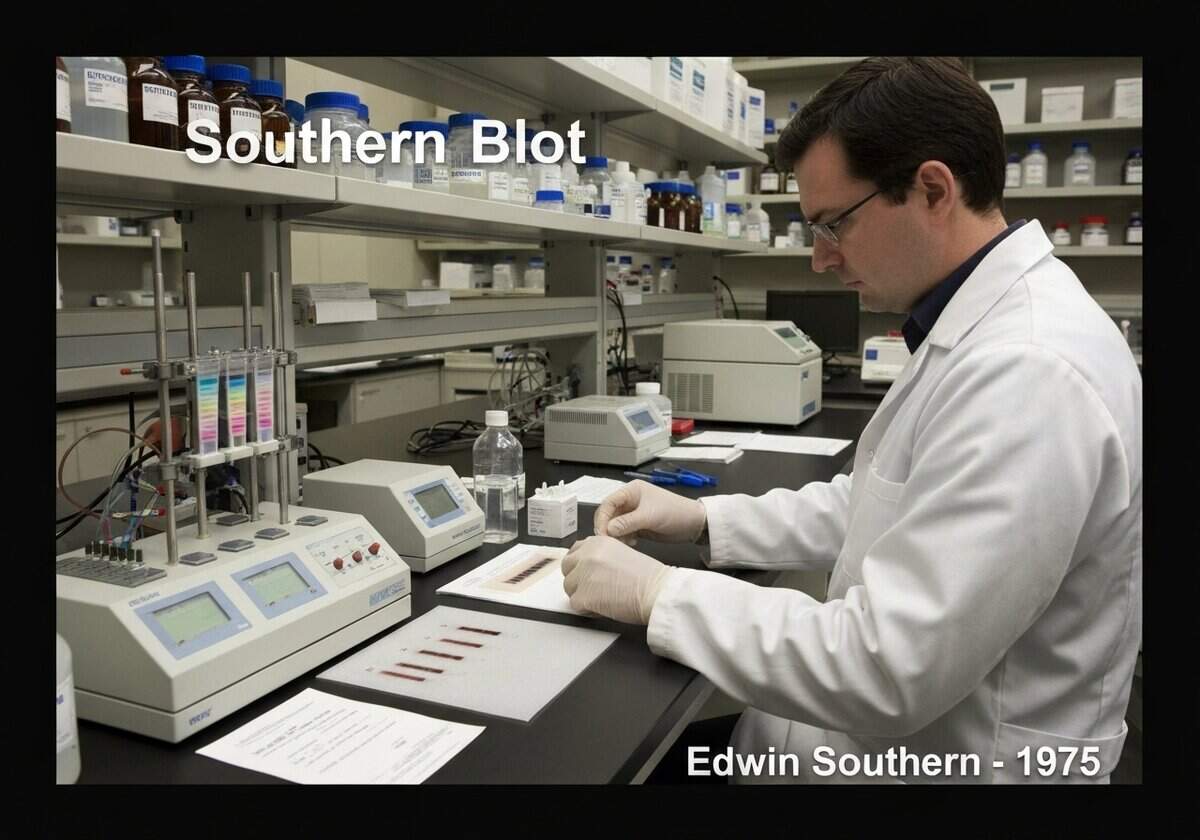
مشهد مختبري يوضح تقنية اللطخة الجنوبية لتحليل الحمض النووي في علم الوراثة الجزيئي.

(صورة تم إنشاؤها للتوضيح فقط)

البقعة الجنوبية هي طريقة تُستخدم هذه التقنية للكشف عن تسلسل محدد من الحمض النووي في عينة من الحمض النووي. وتجمع بين نقل شظايا الحمض النووي المفصولة بالرحلان الكهربائي إلى غشاء ترشيح، ثم الكشف عن هذه الشظايا بواسطة مسبار حمض نووي موسوم. تُمكّن هذه التقنية الباحثين من تحديد جين معين ضمن خليط معقد من الحمض النووي بناءً على حجمه وتسلسله.


The Southern blot, named after its inventor Edwin Southern, is a powerful and specific method for detecting a target DNA sequence within a complex mixture of DNA. It was a foundational technique in molecular genetics before the widespread adoption of PCR and sequencing. The process is a multi-step procedure that combines size separation with specific molecular recognition. It begins with the digestion of the total genomic DNA sample using one or more restriction enzymes, which cleaves the DNA into fragments of varying sizes. These fragments are then separated according to their size by agarose gel electrophoresis. The gel now contains a smear of countless DNA fragments, sorted by length. The crucial next step is the transfer, or ‘blotting,’ of these separated DNA fragments from the fragile gel onto a more durable membrane, typically made of nitrocellulose or nylon. This is achieved through capillary action, which wicks a buffer solution through the gel and the membrane, carrying the DNA along with it and immobilizing it on the membrane’s surface. The DNA is first denatured into single strands so it can bind to the probe. The membrane now holds a faithful replica of the DNA fragment pattern from the gel. To find the specific gene of interest among the thousands of fragments, a labeled probe is used. This probe is a single-stranded piece of DNA (or RNA) that has a sequence complementary to the target gene and is tagged with a marker, such as a radioactive isotope ([latex]^{32}P[/latex]) or a fluorescent/chemiluminescent molecule. The membrane is incubated with this probe, which hybridizes (forms a double helix) only with its complementary DNA fragment on the membrane. After washing away any unbound probe, the location of the hybridized probe is detected, revealing a band that corresponds to the size of the DNA fragment containing the target gene.

UNESCO Nomenclature: 2406
- البيولوجيا الجزيئية

يكتب

العملية الكيميائية

الاضطراب

تزايدي

الاستخدام

متخصصة/متخصصة

السلائف

  • الرحلان الكهربائي للهلام لفصل الحمض النووي
  • اكتشاف إنزيمات القيد
  • فهم مبادئ تهجين الحمض النووي
  • تطوير تقنيات وضع العلامات الإشعاعية على المجسات
  • تقنيات إنشاء أغشية النيتروسليلوز

التطبيقات

  • رسم الخرائط الجينية
  • تشخيص الأمراض الوراثية (على سبيل المثال، فقر الدم المنجلي)
  • تحديد الطفرات الجينية أو إعادة ترتيبها
  • تحليل الحمض النووي الجنائي (RFLP)
  • اختبار الأبوة
  • الكشف عن الجينات المتحولة في الكائنات المعدلة وراثيًا

براءات الاختراع:

NA

أفكار ابتكارات محتملة

بسبب عمليات جمع البيانات من خلال برامج الروبوت، والتي تتجاوز حاليًا 40 ألفًا يوميًا، فإن هذا المحتوى مخصص لأعضاء المجتمع فقط.
> تسجيل الدخول < أو > سجل < (مجاني 100٪) للوصول إلى هذا، وكذلك جميع المحتويات والأدوات الأخرى المقيدة.

Related to: Southern blot, Edwin Southern, DNA detection, hybridization, DNA probe, RFLP, blotting, molecular biology, gene identification, electrophoresis.

السياق التاريخي

ساوثرن بلوت

1960
1970
1973
1975
1979
1983
1988
1960
1967
1970
1975
1977
1983
1987
1990

(إذا كان التاريخ غير معروف أو غير ذي صلة، على سبيل المثال "ميكانيكا الموائع"، يتم توفير تقدير تقريبي لظهوره الملحوظ)

الاختراع والابتكار والمبادئ التقنية ذات الصلة

الصور بالحجم الكامل والتنزيلات متاحة فقط 100% مجاناً للأعضاء المسجلين.