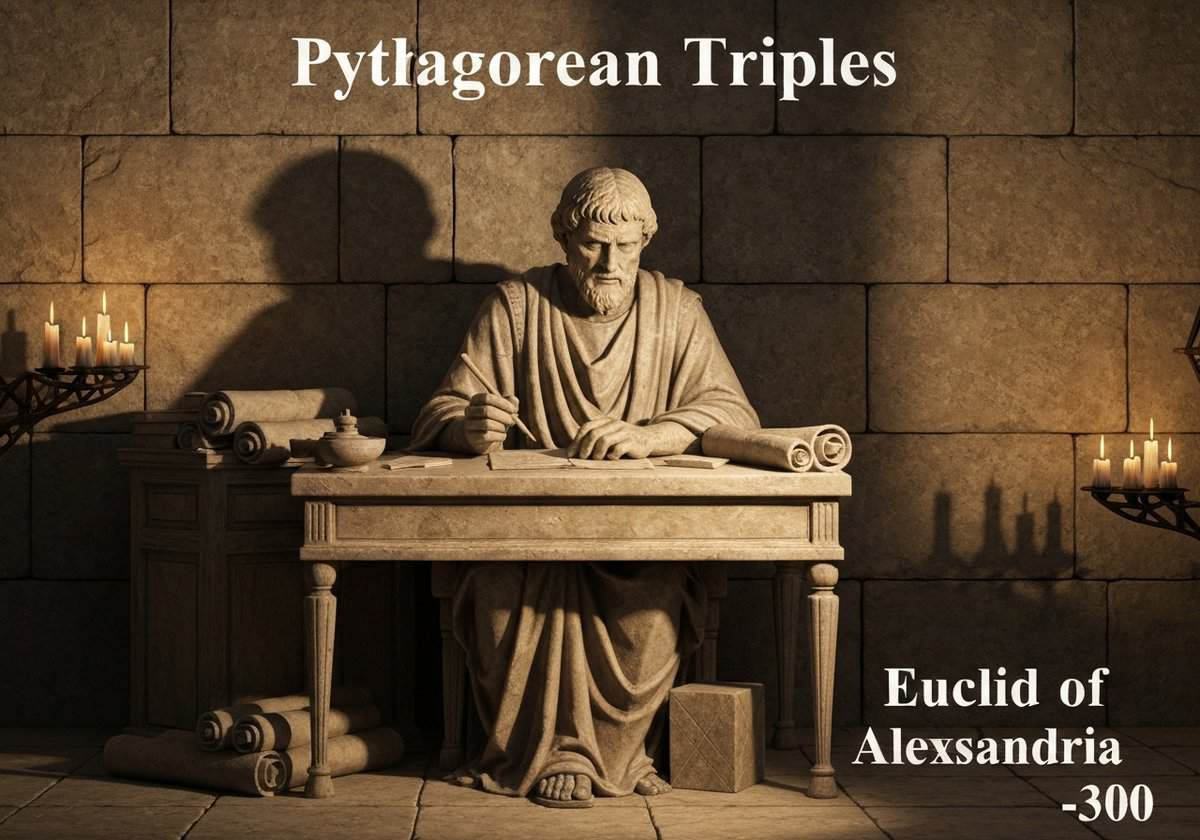
ピタゴラス数とは、[latex]a^2 + b^2 = c^2[/latex]を満たす3つの正の整数a、b、cからなる数です。よく知られた例としては(3, 4, 5)があります。ユークリッドの公式は基本的な 方法 これらの三つ組を生成するために、[latex]m > n[/latex]を満たす任意の2つの正の整数mとnが与えられた場合、[latex]a = m^2 – n^2[/latex]、[latex]b = 2mn[/latex]、[latex]c = m^2 + n^2[/latex]という式によってピタゴラス三つ組が生成されます。
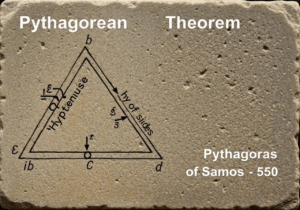
ピタゴラス数とは、ピタゴラスの定理 [latex]a^2 + b^2 = c^2[/latex] を完全に満たす 3 つの正の整数 [latex](a, b, c)[/latex] の組です。これらの三つ組は、辺の長さが整数である直角三角形を表します。最も単純で有名な三つ組は (3, 4, 5) で、[latex]3^2 + 4^2 = 9 + 16 = 25 = 5^2[/latex] です。a、b、c が 1 以外の共通の約数を持たない場合、その三つ組は「原始的」とみなされます。たとえば、(3, 4, 5) は原始的ですが、(3, 4, 5) の倍数である (6, 8, 10) は原始的ではありません。
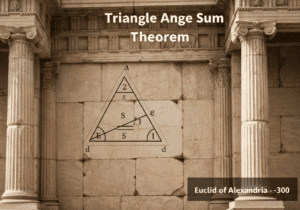
The study of these triples bridges the gap between geometry and number theory. The challenge is not just to find individual triples, but to find a systematic way to generate all of them. This problem was solved by Euclid of Alexandria. In his “Elements” (Book X, Proposition 29), he presented a formula that can generate all primitive Pythagorean triples. The formula requires two positive integers, m and n, which are coprime (share no common factors) and are not both odd, with [latex]m > n[/latex]. The triple is then given by: [latex]a = m^2 – n^2[/latex], [latex]b = 2mn[/latex], [latex]c = m^2 + n^2[/latex]. For example, if we choose [latex]m=2[/latex] and [latex]n=1[/latex], we generate the triple [latex]a = 2^2 – 1^2 = 3[/latex], [latex]b = 2(2)(1) = 4[/latex], and [latex]c = 2^2 + 1^2 = 5[/latex], which is the classic (3, 4, 5) triple. If we choose [latex]m=3[/latex] and [latex]n=2[/latex], we get the primitive triple (5, 12, 13).
この公式は、2次ディオファントス方程式(整数解を持つ方程式)を解く問題を単純な代入プロセスに変換するため、非常に強力です。これは、整数の内部構造と幾何学との関係を示しています。このようなパラメータ化の存在は、他のディオファントス方程式の研究に大きな影響を与えており、2より大きい任意の整数nに対して[latex]a^n + b^n = c^n[/latex]の整数解を見つけることが不可能であることを探求する有名なフェルマーの最終定理もその一つです。
関連: ピタゴラス数、数論、ディオファントス方程式、ユークリッドの公式、整数、代数学、幾何学、(3, 4, 5)、原始三つ組、数学。