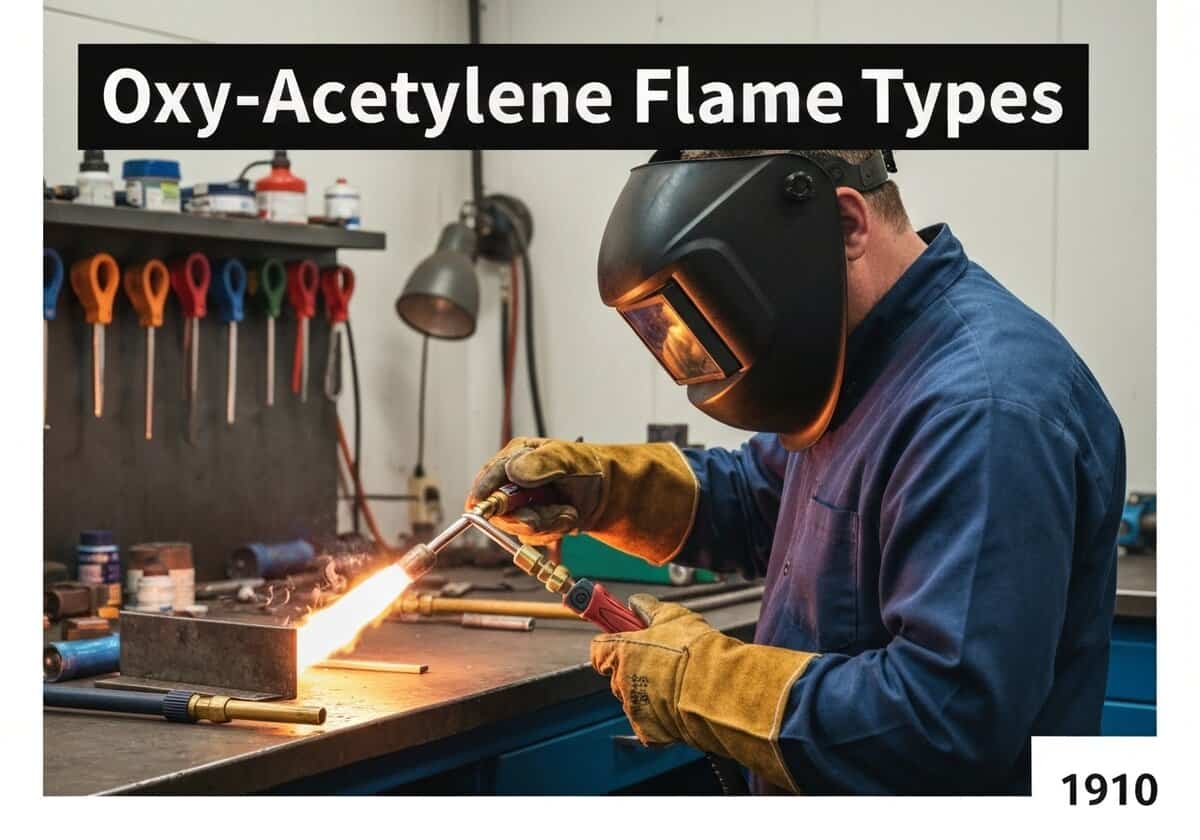
Each flame type has a distinct appearance and chemical effect on the molten weld pool. The neutral flame is characterized by a well-defined, bright inner cone and a fainter, bluish outer envelope. It provides heat without altering the chemistry of the base metal, making it ideal for most steel welding applications. The carburizing flame is identified by a third, feathery cone (the ‘acetylene feather’) extending from the inner cone. The length of this feather indicates the amount of excess acetylene. This flame introduces carbon into the molten weld pool, which can increase the hardness of the deposit, a desirable trait in hardfacing but detrimental to the ductility of mild steel. The oxidizing flame has a shorter, more pointed, and sometimes purplish inner cone and produces a characteristic hissing sound. The excess oxygen tends to burn out carbon and other alloying elements from the weld pool, which is generally undesirable for steel welding but can be useful for creating a strong oxide layer that promotes wetting in certain brazing and braze-welding operations on materials like copper and brass.