Product Design, Manufacturing & Innovation Resources
Casa » Il legame carbonio-fluoro: la fonte della stabilità dei PFAS

Il legame carbonio-fluoro: la fonte della stabilità dei PFAS

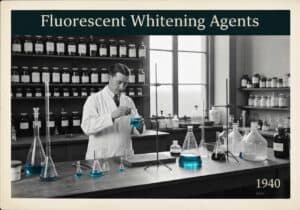
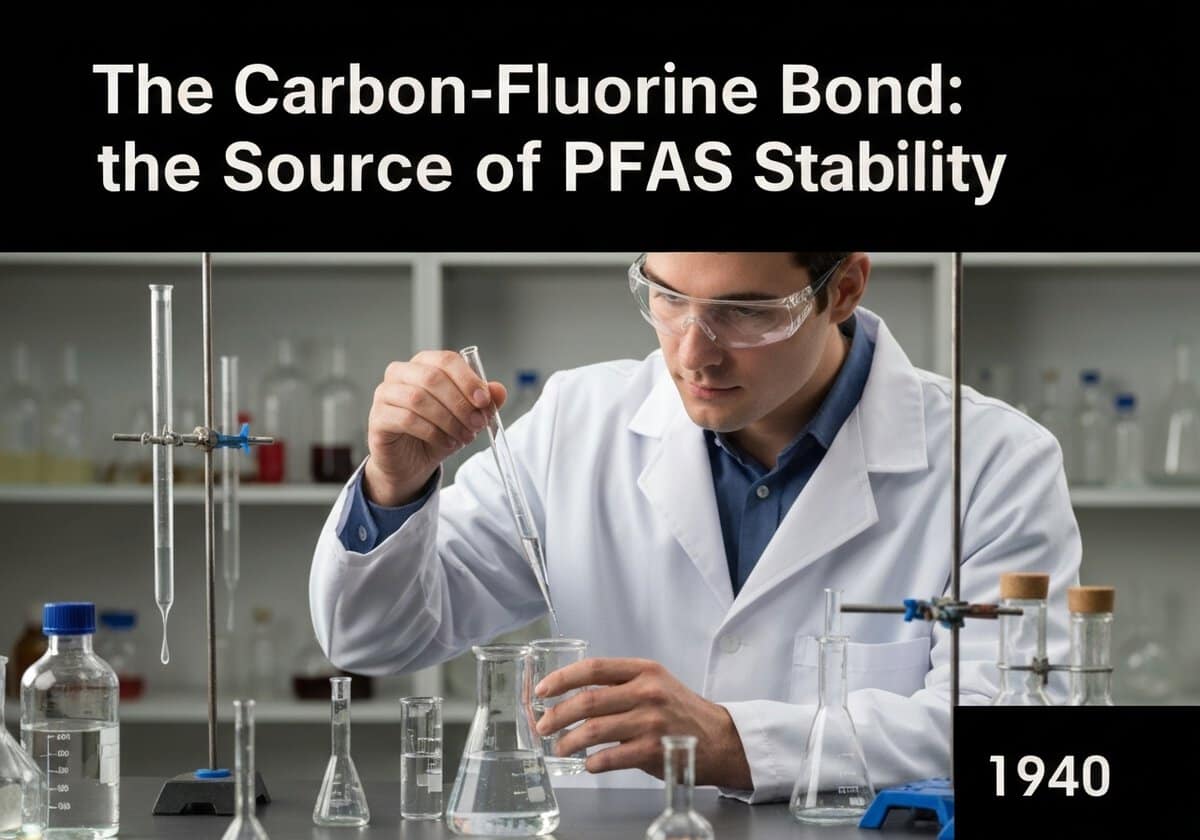
1940
Chimico che conduce un esperimento sui PFAS nel laboratorio di chimica organica.

(Immagine generata a solo scopo illustrativo)

Per- and polyfluoroalkyl substances (PFAS) are characterized by a chain of carbon atoms bonded to fluorine atoms. The carbon-fluorine (C-F) bond is one of the strongest single bonds in organic chemistry, with a bond dissociation energy around 485 kJ/mol. This extreme strength makes PFAS highly resistant to chemical, thermal, and biological degradation, leading to their environmental persistence.

The exceptional stability of per- and polyfluoroalkyl substances (PFAS) is fundamentally rooted in the properties of the carbon-fluorine (C-F) bond. Fluorine is the most electronegative element, creating a highly polarized bond with carbon. This results in a short bond length (around 1.35 Å) and a very high bond dissociation energy, making it extremely difficult to break. In perfluoroalkyl substances, where all non-terminal carbons are fully saturated with fluorine atoms, this effect is amplified. The fluorine atoms create a helical sheath around the carbon backbone, sterically protecting it from chemical attack. This ‘fluorine shield’ also repels both water (hydrophobicity) and oils (oleophobicity), a rare combination that makes PFAS effective surfactants. The cumulative inductive effect of multiple fluorine atoms also strengthens adjacent C-C bonds within the chain, further contributing to the molecule’s overall inertness. This chemical robustness is why PFAS are dubbed “forever chemicals”; they do not readily break down under natural environmental conditions, leading to their widespread accumulation.

UNESCO Nomenclature: 2506
- Chimica organica

Tipo

Proprietà chimiche

Interruzione

Fondamento

Utilizzo

Uso diffuso

Precursori

  • scoperta del fluoro da parte di Henri Moissan nel 1886
  • development of quantum mechanics to explain chemical bonding (e.g., linus pauling’s work on electronegativity)
  • sintesi precoce di composti organofluorurati semplici tra la fine del XIX e l'inizio del XX secolo

Applicazioni

  • rivestimenti antiaderenti (teflon)
  • tessuti antimacchia (scotchgard)
  • schiume antincendio (AFFF)
  • abbigliamento idrorepellente
  • imballaggio alimentare

Brevetti:

NA

Idee e potenziali innovazioni

A causa dell'eliminazione del traffico generato dai bot, che attualmente supera i 40.000 al giorno, questo contenuto è riservato ai membri della community.
> Accedi O > Registrati L'accesso a questo contenuto, così come a tutti gli altri contenuti e strumenti riservati, è (100% gratuito).

Related to: carbon-fluorine bond, pfas, perfluoroalkyl, stability, bond energy, organic chemistry, forever chemicals, electronegativity, persistence, organofluorine.

Contesto storico

Il legame carbonio-fluoro: la fonte della stabilità dei PFAS

1838
1872
1910
1940
1940
1946
1950
1800
1852
1900
1912
1940
1940
1950
1950

(se la data è sconosciuta o non rilevante, ad esempio "meccanica dei fluidi", viene fornita una stima approssimativa della sua notevole comparsa)

Invenzioni, innovazioni e principi tecnici correlati

Le immagini a grandezza naturale e i download sono disponibili, 100% gratuitamente, solo per i membri registrati.

> Login <