Product Design, Manufacturing & Innovation Resources
Casa » Agenti sbiancanti fluorescenti (FWA)

Agenti sbiancanti fluorescenti (FWA)

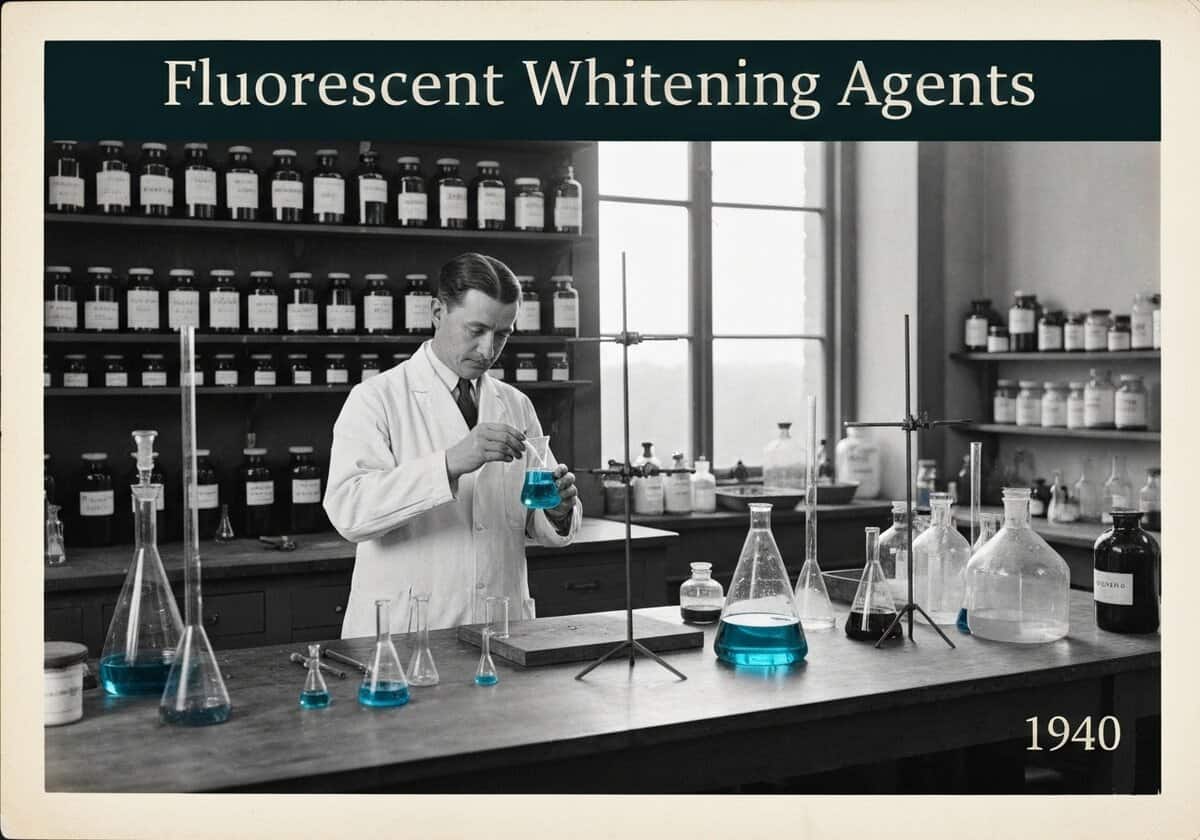
1940
Scena di laboratorio con chimico che misura agenti sbiancanti fluorescenti in chimica fisica.

(Immagine generata a solo scopo illustrativo)

Gli agenti sbiancanti fluorescenti, noti anche come agenti sbiancanti ottici (OBA), sono composti chimici che migliorano la percezione del bianco. Assorbono la luce nel ultravioletto (UV) spettro, invisibile all'occhio umano, e lo riemette come luce nella regione blu dello spettro visibile. Questa luce blu contrasta qualsiasi residuo di tonalità gialla o crema in un materiale.

Fluorescent Whitening Agents (FWAs) are a key technology for achieving high levels of whiteness in many consumer and industrial products. Their mechanism relies on the phenomenon of fluorescence. FWAs are designed to absorb high-energy photons from the near-ultraviolet range (typically 340–370 nm) and, through a process of electronic excitation and relaxation, re-emit lower-energy photons in the blue part of the visible spectrum (typically 420–470 nm). This emitted blue light adds to the light reflected by the material, making it appear brighter. More importantly, the blue emission masks the inherent yellowish appearance common in many natural and synthetic materials like cotton, wool, and paper pulp. This masking effect shifts the material’s color towards blue, which the human eye perceives as ‘whiter than white.’ The effectiveness of an FWA depends on the presence of a UV component in the viewing light source. For this reason, whiteness measurements of FWA-treated materials must be performed under a calibrated illuminant with a known UV content, such as CIE Standard Illuminant D65, which simulates daylight. Without UV energy, the FWA is inactive, and the material will appear less white. This is why white clothes can look different indoors under incandescent light (low UV) compared to outdoors in daylight (high UV).

UNESCO Nomenclature: 2501
- Chimica fisica

Tipo

Processo chimico

Interruzione

Incrementale

Utilizzo

Uso diffuso

Precursori

  • Scoperta della fluorescenza da parte di George Stokes nel 1852
  • Sviluppo della chimica dei coloranti sintetici nel XIX secolo
  • Comprensione dello spazio colore CIE e percezione umana dei colori
  • Utilizzo precoce di agenti azzurranti (ad esempio, blu oltremare) per contrastare l'ingiallimento

Applicazioni

  • detersivi per il bucato
  • produzione di carta
  • finitura tessile
  • produzione di plastica
  • cosmetici e prodotti per la cura della persona

Brevetti:

  • US2218374
  • DE723555

Idee e potenziali innovazioni

A causa dell'eliminazione del traffico generato dai bot, che attualmente supera i 40.000 al giorno, questo contenuto è riservato ai membri della community.
> Accedi O > Registrati L'accesso a questo contenuto, così come a tutti gli altri contenuti e strumenti riservati, è (100% gratuito).

Argomenti correlati: fluorescenza, FWA, OBA, sbiancante ottico, bianchezza, luce UV, luce blu, tessuti, carta, detergenti.

Contesto storico

Agenti sbiancanti fluorescenti (FWA)

1872
1910
1940
1940
1946
1950
1960
1852
1900
1912
1940
1940
1950
1950
1960

(se la data è sconosciuta o non rilevante, ad esempio "meccanica dei fluidi", viene fornita una stima approssimativa della sua notevole comparsa)

Invenzioni, innovazioni e principi tecnici correlati

Le immagini a grandezza naturale e i download sono disponibili, 100% gratuitamente, solo per i membri registrati.

> Login <