Product Design, Manufacturing & Innovation Resources
घर » ऊर्ध्वपातन के लिए ट्रिपल पॉइंट शर्त

ऊर्ध्वपातन के लिए ट्रिपल पॉइंट शर्त

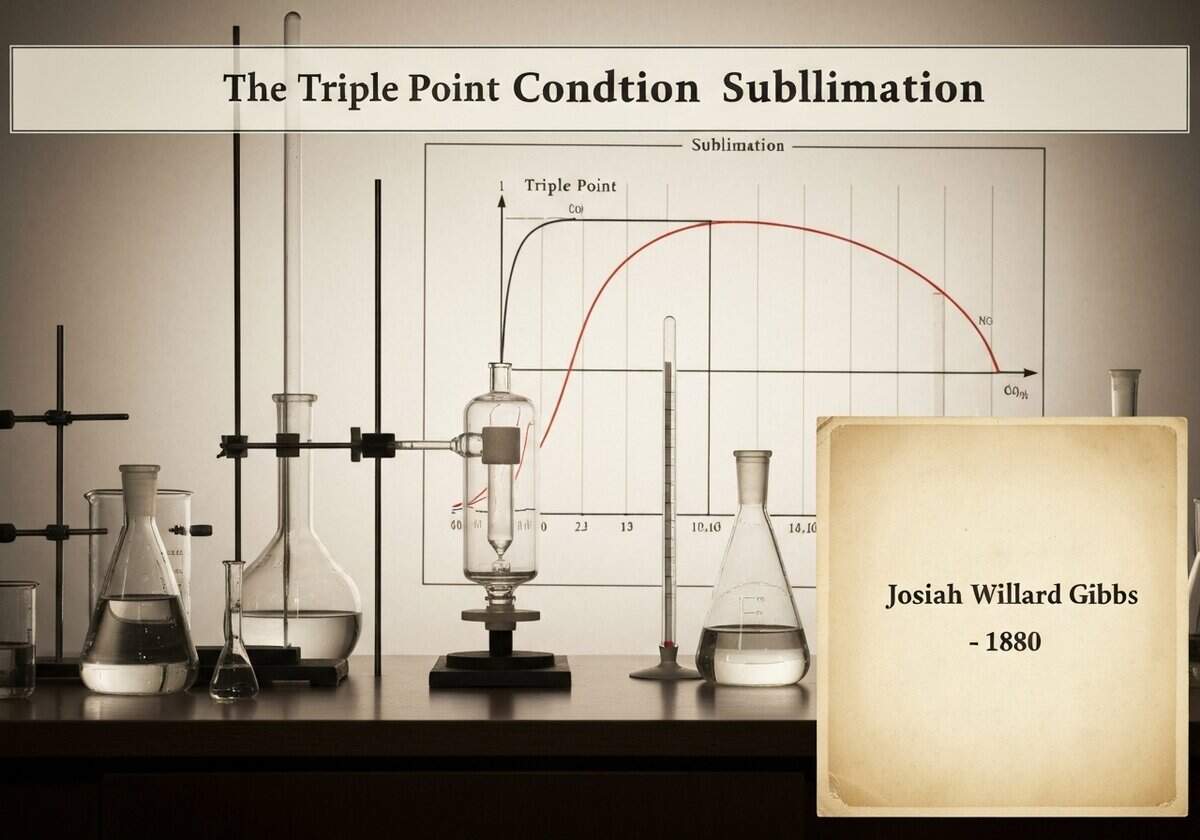
1880
  • Josiah Willard Gibbs
ऊष्मागतिकी में वाष्पीकरण और अवस्था परिवर्तन प्रदर्शित करने वाला प्रयोगशाला उपकरण।.

(यह छवि केवल उदाहरण के लिए बनाई गई है)

ऊर्ध्वपातन, ठोस से गैसीय अवस्था में प्रत्यक्ष संक्रमण, किसी पदार्थ के त्रिक बिंदु से कम तापमान और दाब पर होता है। त्रिक बिंदु वह विशिष्ट अवस्था है। thermodynamic वह अवस्था जहाँ ठोस, द्रव और गैस अवस्थाएँ संतुलन में सह-अस्तित्व में रह सकती हैं। एक अवस्था आरेख पर, ऊर्ध्वपातन वक्र ठोस और गैस अवस्थाओं को अलग करता है, जो मूल बिंदु से शुरू होकर त्रिक बिंदु पर समाप्त होता है।

त्रिबिंदु की अवधारणा ऊष्मागतिकी का एक मूलभूत सिद्धांत है, जिसे औपचारिक रूप से जोशिया विलार्ड गिब्स के चरण नियम द्वारा वर्णित किया गया है। चरण नियम, [latex]F = C → P + 2[/latex], किसी प्रणाली की स्वतंत्रता की डिग्री (F) को संतुलन में घटकों (C) और चरणों (P) की संख्या से संबंधित करता है। एक शुद्ध पदार्थ (C=1) के लिए, यदि तीन चरण सह-अस्तित्व में हैं (P=3), तो स्वतंत्रता की डिग्री की संख्या F = 1 → 3 + 2 = 0 होती है। इसका अर्थ है कि अवस्था अपरिवर्तनीय है; यह केवल तापमान और दाब के एक विशिष्ट संयोजन पर ही विद्यमान हो सकती है, जो त्रिबिंदु है।

The phase diagram of a substance graphically represents the conditions under which its different phases are stable. It is typically a plot of pressure versus temperature. The diagram is divided into solid, liquid, and gas regions by phase boundaries. The line separating the solid and gas regions is the sublimation curve. Any point on this line represents a state where the solid and gas phases are in equilibrium. If one starts in the solid phase region and lowers the pressure at a constant temperature, crossing this line will induce sublimation. Similarly, heating a solid at a constant pressure that is below the triple point pressure will also cause it to sublime. For water, the triple point is at 0.01 °C (273.16 K) and a pressure of 611.657 Pa. Any pressure below this value will cause ice to sublime directly into water vapor upon heating, bypassing the liquid water phase entirely. This principle is fundamental to processes like freeze-drying, where low pressure is applied to frozen materials to remove water content efficiently without the damaging effects of high heat.

UNESCO Nomenclature: 2210
ऊष्मागतिकी

Type

सार प्रणाली

व्यवधान

मूलभूत

उपयोग

व्यापक उपयोग

शगुन

  • studies on the states of matter by antoine lavoisier
  • development of the kinetic theory of gases by clausius and maxwell
  • ऊष्मागतिकी के नियमों का निरूपण
  • early observations of phase changes, such as the boiling of water and melting of ice

आवेदन

  • freeze-drying (lyophilization) of food and pharmaceuticals
  • understanding comet tail formation in the vacuum of space
  • frost formation (deposition)
  • purification of chemical compounds via vacuum sublimation
  • manufacturing of dry ice

पेटेंट:

NA

संभावित नवाचार विचार

बॉट ट्रैफिक को कम करने के कारण, जो वर्तमान में प्रति दिन 40,000 से अधिक है, यह सामग्री केवल समुदाय के सदस्यों के लिए आरक्षित है।
> लॉगिन < या > रजिस्टर < इस सामग्री और अन्य सभी प्रतिबंधित सामग्रियों और उपकरणों तक पहुंच (100% निःशुल्क) है।

संबंधित विषय: ऊर्ध्वपातन, त्रिक बिंदु, प्रावस्था आरेख, प्रावस्था संक्रमण, ऊष्मागतिकी, दाब, तापमान, गिब्स प्रावस्था नियम, ठोस, गैस।

ऐतिहासिक संदर्भ

ऊर्ध्वपातन के लिए ट्रिपल पॉइंट शर्त

1870
1873
1877
1880
1882-01-01
1883
1884
1869
1871
1876
1877
1880
1882-01-01
1884
1885

(यदि तिथि अज्ञात है या प्रासंगिक नहीं है, उदाहरण के लिए "द्रव यांत्रिकी", तो इसके उल्लेखनीय उद्भव का एक अनुमानित आंकड़ा प्रदान किया गया है)

शीर्ष पोस्ट और लेख

शीर्ष मूल उपकरण

पंजीकृत सदस्यों के लिए पूर्ण आकार की छवियाँ और डाउनलोड 100% निःशुल्क उपलब्ध हैं।