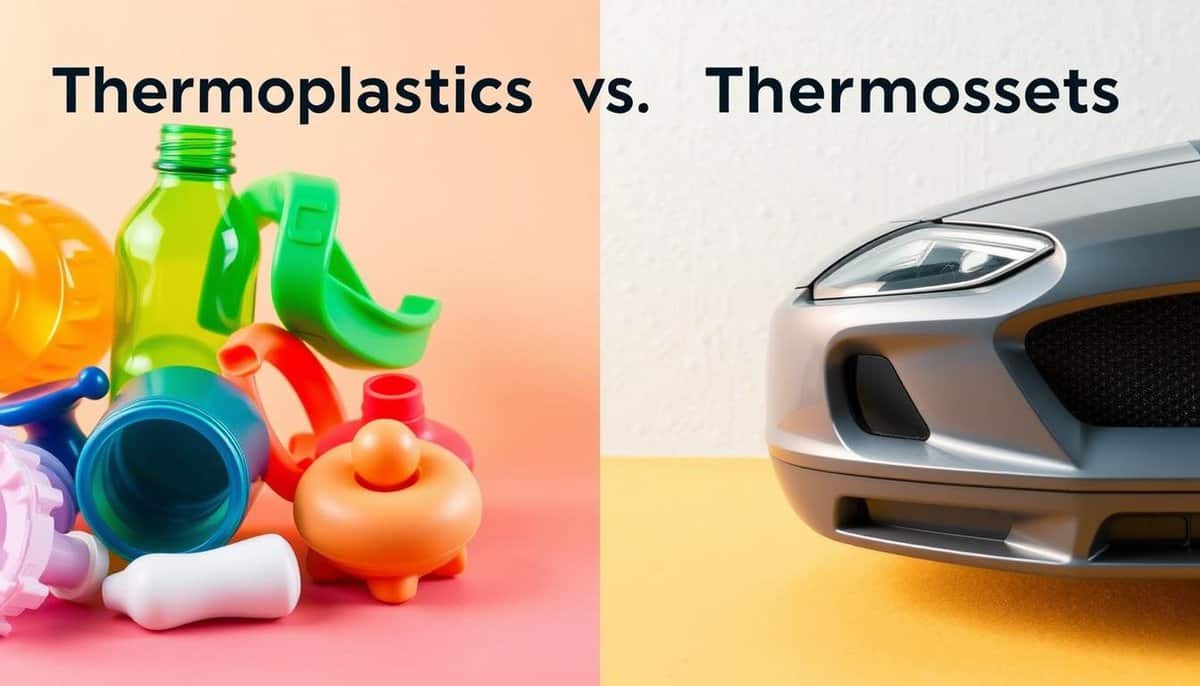
क्या आप जानते हैं कि एपॉक्सी रेजिन जैसे थर्मोसेटिंग प्लास्टिक, सूखने के बाद अधिक ताप प्रतिरोधी होते हैं? ये थर्मोप्लास्टिक की तुलना में रासायनिक रूप से भी अधिक स्थिर होते हैं। इस मजबूती और स्थिरता के कारण थर्मोसेट एयरोस्पेस और ऑटोमोटिव क्षेत्रों में उच्च तापमान वाले उपयोगों के लिए आवश्यक हैं। लेकिन, थर्मोप्लास्टिक के विपरीत, थर्मोसेट को आकार नहीं बदला जा सकता है। पुनर्नवीनीकरण उपचार के बाद। यह महत्वपूर्ण अंतर थर्मोप्लास्टिक्स बनाम थर्मोसेट्स पर चर्चा को बहुत महत्वपूर्ण बनाता है।
मुख्य बातें
- Thermosets are known for excellent dimensional stability, high strength, and good chemical resistance.
- थर्मोप्लास्टिक को नया आकार दिया जा सकता है और पुनर्चक्रणयह उच्च प्रभाव प्रतिरोध और धातुओं के साथ अच्छा आसंजन प्रदान करता है।
- Thermosets cannot be recycled and are more heat resistant compared to thermoplastics.
- Common thermoplastics include ABS, PVC, and nylon; common thermosets include epoxy resins and silicone.
Understanding Thermoplastics
Thermoplastics are important polymers used in many industries. They are flexible and adaptable. Unlike thermosets, they can be heated and shaped again many times. This ability means they are efficient to manufacture and easy to recycle.
Characteristics of Thermoplastics
थर्मोप्लास्टिक्स की कई प्रमुख विशेषताएं हैं। ये झटकों के प्रति प्रतिरोधी होते हैं और दिखने में आकर्षक होते हैं। इन्हें धातुओं के साथ आसानी से जोड़ा जा सकता है। इन्हें मोल्ड या एक्सट्रूड किया जा सकता है, जिससे निर्माताओं को कई विकल्प मिलते हैं। polypropylene (PP), polyethylene (PE), and पॉलीकार्बोनेट (पीसी) सबसे अधिक उपयोग किए जाने वाले प्रकारों में से हैं।
Common Applications of Thermoplastics

Thermoplastics are used in many things because of their amazing properties, cost and variety of processes.
When a part is unmarked, a plastic identification chart helps tell a thermoplastic from a thermoset, because the two families behave differently when heated. A plastic identification test with a hot needle, for instance, softens a thermoplastic but not a thermoset.
- Packaging, including food containers and bottles
- Automotive components like dashboards and bumpers
- Textiles and clothing
- Medical devices and supplies
- Consumer electronics and home appliances
- Construction components
- Toys and recreational equipment
This shows how important thermoplastics are in various fields, from healthcare to daily products.
Advantages and Disadvantages of Thermoplastics
It’s key to compare thermoplastics and thermosets. Thermoplastics have many pluses. They can be melted down and reshaped, which is good for the planet. They are usually tougher and cheaper than thermosets. But, they might not do well with UV light and very high heat.
आइए देखते हैं कि थर्मोप्लास्टिक्स और थर्मोसेट्स का आपस में क्या संबंध है:
| Property | Thermoplastics | Thermosets |
|---|---|---|
| Recyclability | Can be remelted and reused | Cannot be reshaped |
| Heat Resistance | Lower | Higher |
| Chemical Resistance | मध्यम | उच्च |
| Toughness | उच्च | Lower |
| लागत | Lower | Higher |
Understanding Thermosets

थर्मोसेट विशेष प्रकार के पॉलिमर होते हैं। ये इस तरह से जुड़ते हैं कि एक बार जम जाने के बाद इन्हें अलग नहीं किया जा सकता। इसका मतलब है कि सख्त होने के बाद इन्हें दोबारा आकार नहीं दिया जा सकता या दोबारा इस्तेमाल नहीं किया जा सकता। थर्मोसेट उच्च तापमान को सहन करने में माहिर होते हैं। यही कारण है कि ये कठिन कार्यों के लिए एकदम उपयुक्त होते हैं।
एपॉक्सी रेजिन, फेनोलिक्स और सिलिकोन सामान्य थर्मोसेट हैं। इनका उपयोग उन उद्योगों में किया जाता है जिन्हें मजबूत और टिकाऊ सामग्रियों की आवश्यकता होती है। उदाहरण के लिए, एयरोस्पेस और रक्षा क्षेत्र को ऐसे पुर्जों की आवश्यकता होती है जो अत्यधिक तनाव सहन कर सकें। ऑटोमोटिव उद्योग इनका उपयोग उन पुर्जों के लिए करता है जो अत्यधिक गर्मी और रसायनों के संपर्क में आते हैं।
थर्मोसेट के कई फायदे हैं। ये अपना आकार अच्छी तरह बनाए रखते हैं और रसायनों के प्रति अत्यधिक प्रतिरोधी होते हैं। यही कारण है कि घरेलू उपकरण, विद्युत, ऊर्जा और निर्माण जैसे उद्योग इनका उपयोग करते हैं। ये इन क्षेत्रों में विश्वसनीय सामग्रियों की आवश्यकता को पूरा करते हैं।
यहां विभिन्न थर्मोसेट की कुछ प्रमुख विशेषताओं पर एक नज़र डालते हैं:
| Thermoset Type | High-Temperature Resistance | Dimensional Stability | Chemical Resistance |
|---|---|---|---|
| Epoxy Resins | उत्कृष्ट | Very Good | बहुत ऊँचा |
| Phenolics | उच्च | अच्छा | उच्च |
| Silicones | Exceptional | उत्कृष्ट | उत्कृष्ट |
Comparison of Properties
In modern manufacturing, thermoplastics and thermosets play crucial roles. They are key in many industries like electronics, automotive, and construction. A deep properties comparison helps choose the right material for specific needs.
यांत्रिक गुण
Thermoplastics stand out for their flexibility and impact resistance. They are great for items that face stress and are used often, such as machinery parts or everyday products. Polypropylene (PP) and POLYETHYLENE (PE) are common thermoplastics.
इसके विपरीत, थर्मोसेट अधिक मजबूत और कठोर होते हैं। भारी दबाव में भी ये अपना आकार बनाए रखते हैं, जो विमान के पुर्जों और बड़ी मशीनों जैसी चीजों के लिए एकदम सही है। आम थर्मोसेट में एपॉक्सी और शामिल हैं। फेनोलिक राल.
Thermal Properties
तापीय व्यवहार में अंतर स्पष्ट है। पॉलीकार्बोनेट (पीसी) और नायलॉन जैसे थर्मोप्लास्टिक गर्म करने पर नरम या पिघल सकते हैं। यह इसके लिए उपयोगी है। पुनर्चक्रण क्योंकि उन्हें नया आकार दिया जा सकता है।
दूसरी ओर, थर्मोसेट ऊष्मा का बेहतर प्रतिरोध करते हैं। सूखने के बाद, वे पिघलते नहीं हैं और अत्यधिक गर्मी सहन कर सकते हैं। सिलिकॉन और पॉलीयुरेथेन इसके प्रमुख उदाहरण हैं, जो गर्म वातावरण के लिए आदर्श हैं।
Chemical Resistance
रासायनिक प्रतिरोध भी महत्वपूर्ण संकेत देता है। थर्मोप्लास्टिक नमी को अच्छी तरह से रोकते हैं, जिससे वे खाद्य भंडारण और चिकित्सा उपकरणों के लिए आदर्श बन जाते हैं। इन्हें आसानी से ढाला भी जा सकता है, जो इनकी उपयोगिता को और बढ़ाता है। बहुमुखी प्रतिभा.

थर्मोसेट, हालांकि, संक्षारक पदार्थों से बेहतर तरीके से मुकाबला करते हैं। इस गुण के कारण ये रासायनिक उपकरणों और कठोर रसायनों से भरपूर स्थानों में पसंदीदा विकल्प बन जाते हैं। इनका उपयोग निर्माण में चिपकने वाले पदार्थों और हल्के जलयानों के घटकों में किया जाता है।

| Property | Thermoplastics Characteristics | Thermosets Properties |
|---|---|---|
| Flexibility | High, excellent impact resistance | Low, high strength and rigidity |
| Thermal Resistance | Softens/melts at high temperatures | Withstands high temperatures |
| Chemical Resistance | Excellent resistance to moisture | Exceptional resistance to corrosive substances |
| Reusability | Recyclable, can be remelted | Non-recyclable, retains shape after curing |
| Typical Applications | Food containers, medical devices, textiles | Chemical processing equipment, adhesives, insulation |
Manufacturing Processes for Thermoplastics and Thermosets
Thermoplastics and thermosets are made differently, using their unique traits.
Thermoplastics can be melted and reshaped, thus providing many possibilities:
- Injection Molding: Overmolding, Insert Molding
- एक्सट्रूज़न: को-एक्सट्रूज़न, ब्लोन पतली परत एक्सट्रूज़न
- थर्मोफॉर्मिंग: वैक्यूम बनाना, दबाव निर्माण
- फूंक मार कर की जाने वाली मोल्डिंग: Extrusion Blow Molding, Injection Blow Molding
- Rotational Molding: Biaxial Rotation, Rock and Roll Molding
- 3D Printing: Fused Deposition Modeling (FDM), चयनात्मक लेजर सिंटरिंग (एसएलएसनोट: थर्मोसेट सामग्री इस क्षेत्र में प्रगति कर रही है।
- Compression Molding: Transfer Molding, Bulk Molding Compounds (BMC)
- Calendering: Sheet Calendering, Film Calendering
- Welding: Ultrasonic Welding, Hot Plate Welding
These methods make lots of parts quickly and cheaply. Aluminum molds can be used if volumes are low, which saves money for many industries.
Thermosets need a different approach due to their permanent chemical bonds.
- थर्मोसेट के लिए रिएक्शन इंजेक्शन मोल्डिंग (आरआईएम) का उपयोग किया जाता है। यह सामग्री को मोल्ड के भीतरी हिस्सों को भरने की अनुमति देता है, जिससे मजबूत और जटिल पुर्जे बनते हैं।
- resin transfer molding (RTM), also shows how thermosets make detailed and durable components.
- (less frequently, some techniques of thermoplastics can also be used for thermosets)
Molds are often made from aluminum, nickel, or even epoxy, making thermoset tooling comparatively cost-effective, especially for big parts.
संबंधित पठन
- Curing techniques: delve into various curing methods for thermosets, such as heat, UV, and microwave curing.
- Adhesive technologies: the application of thermosets in adhesive formulations and bonding techniques.
- Surface treatments: methods for surface preparation and treatment to enhance the adhesion and performance of thermoset materials.
- Chemical resistance testing: evaluating the chemical resistance of thermoset materials in various environments.
- Fillers and reinforcements: the use of fillers and reinforcements to modify and improve the properties of thermoset materials.
अक्सर पूछे जाने वाले प्रश्न
What are the primary differences between thermoplastics and thermosets?
थर्मोप्लास्टिक और थर्मोसेट मुख्य रूप से ऊष्मा के प्रति उनकी प्रतिक्रिया में भिन्न होते हैं। थर्मोप्लास्टिक को कई बार गर्म और ठंडा किया जा सकता है। इसका अर्थ है कि रासायनिक रूप से परिवर्तित हुए बिना इन्हें पुनर्चक्रित और पुनः आकार दिया जा सकता है। दूसरी ओर, थर्मोसेट गर्म करने पर रासायनिक रूप से परिवर्तित हो जाते हैं और बाद में इन्हें पुनः आकार नहीं दिया जा सकता। ये मजबूत, टिकाऊ और तापमान प्रतिरोधी पदार्थ बन जाते हैं।
What are the notable characteristics of thermoplastics?
थर्मोप्लास्टिक्स मजबूत होते हैं और क्षति का अच्छी तरह से प्रतिरोध कर सकते हैं। ये देखने में आकर्षक होते हैं और धातुओं से अच्छी तरह चिपकते हैं। ये लचीले भी होते हैं, जिससे इन्हें विभिन्न विधियों का उपयोग करके आसानी से आकार दिया जा सकता है। उदाहरण के लिए, इंजेक्शन मोल्डिंग और एक्सट्रूज़न आम हैं। कुछ जाने-माने उदाहरण पॉलीइथिलीन, पॉलीप्रोपाइलीन और नायलॉन हैं।
What are the advantages and disadvantages of thermoplastics?
थर्मोप्लास्टिक्स की खूबियां यह हैं कि इन्हें रीसायकल किया जा सकता है, इन्हें कई तरह से आकार दिया जा सकता है और ये झटके सह सकते हैं। लेकिन इनकी एक कमी यह है कि ये पराबैंगनी किरणों या अत्यधिक गर्मी में ठीक से काम नहीं करते। इस वजह से गर्म वातावरण में इनका उपयोग सीमित हो सकता है।
What are some common types of thermosets?
Epoxy resins, phenolics, and silicones are kinds of thermosets. They handle high heat well, keep their shape, and resist chemicals. This makes them good for tough jobs.
In what applications are thermosets typically used?
Thermosets are perfect for parts that have to handle a lot of stress, insulate electricity, or resist heat. Industries that need materials to stay tough in heat, UV exposure or against chemicals use them a lot.
What are the key differences between the properties of thermoplastics and thermosets?
Generally, thermosets are stronger and more rigid, while thermoplastics are flexible and resist impacts well. Thermosets can handle higher temperatures before getting damaged. They are also better against chemicals. But thermoplastics are better against moisture.
How does the recyclability of thermoplastics compare to thermosets?
थर्मोप्लास्टिक्स की खासियत यह है कि इन्हें कई बार रीसायकल और नया आकार दिया जा सकता है। इससे इनकी रासायनिक संरचना में कोई बदलाव नहीं होता। यही कारण है कि ये अधिक टिकाऊ होते हैं। दूसरी ओर, थर्मोसेट्स एक बार जम जाने के बाद दोबारा ढाले या रीसायकल नहीं किए जा सकते। ऐसा इनके स्थायी रासायनिक बंधों के कारण होता है।
थर्मोप्लास्टिक्स और थर्मोसेट्स पर बाहरी लिंक
अंतर्राष्ट्रीय मानक
(सामग्री का हमारा विवरण देखने के लिए लिंक पर होवर करें)