Remember when Greek letters were just strange symbols you ignored in escuela? Turns out, they’re the secret superheroes of engineering, math, and science! Now, instead of puzzling you, α, β, π, and λ pop up everywhere, helping us describe everything from angles and probabilities to wavelengths and constants. These little letters make complex ideas easier to handle and communicate, proving that those “weird” symbols you skipped over are actually the everyday language of the scientific world.
And because this is innovation.world here, this article provides clear definitions for all Greek letters used in science and math, instructions for typing them on Windows and macOS, their typical applications across fields like physics, statistics, and engineering, and a key formula example for each. It serves as a practical reference to understand the meaning and usage of these symbols in real-world contexts.
Todas las letras griegas y símbolos matemáticos
*: En macOS, las combinaciones de teclas Option asumen que el teclado griego politónico está habilitado (consulte los detalles debajo de la tabla y otros medios para obtenerlas).
| Nombre en inglés | Letra griega | Cómo escribir a máquina* | Uso del dominio | Fórmula famosa |
|---|---|---|---|---|
| Alfa | Minúscula: α | Windows: Alt + 224 | Física: Partícula alfa, un núcleo de helio emitido durante la desintegración radiactiva. | Alpha decay: \({}^{A}_{Z}X \rightarrow {}^{A-4}_{Z-2}Y + {}^{4}_{2}\alpha\) |
| Software Development: Alpha Test, the first phase of formal software testing done internally. | ||||
| Finanzas: Alpha, una medida del rendimiento de una inversión en comparación con un índice de referencia. | Jensen’s Alpha: \(\alpha = R_i – [R_f + \beta_i (R_m – R_f)]\) | |||
| Química orgánica: Carbono alfa, el primer átomo de carbono unido a un grupo funcional. | ||||
| Mayúsculas: A | Windows: Alt + 913 | Matemáticas: Notación de conjuntos, utilizada a menudo para denotar conjuntos o constantes. | ||
| Física: Aceleración angular, término que a veces se utiliza para esta magnitud. | Angular acceleration: \(\alpha = \frac{d\omega}{dt}\) | |||
| Ingeniería: Coeficiente de dilatación térmica, símbolo de dilatación lineal. | Thermal expansion: \(\Delta L = \alpha L_0 \Delta T\) | |||
| Estadísticas: Nivel de significación, probabilidad de error de tipo I. | Significance level: \(\alpha = P(\text{Type I error})\) | |||
| Beta | Minúscula: β | Windows: Alt + 225 | Física: Partícula beta, un electrón o positrón emitido en la desintegración radiactiva. | Beta decay: \(n \rightarrow p + e^- + \bar{\nu}_e\) |
| Finanzas: Beta, una medida de la volatilidad de una acción en relación con el mercado. | Beta coefficient: \(\beta = \frac{\mathrm{Cov}(R_i, R_m)}{\mathrm{Var}(R_m)}\) | |||
| Matemáticas: Función beta, una función especial en cálculo. | Beta function: \(B(x, y) = \int_0^1 t^{x-1}(1-t)^{y-1}dt\) | |||
| Mayúsculas: B | Windows: Alt + 914 | Matemáticas: Se utiliza como variable o constante en ecuaciones. | ||
| Ingeniería: Constante de fase en ecuaciones de onda. | Phase constant: \(\beta = \frac{2\pi}{\lambda}\) | |||
| Estadística: Probabilidad de error de tipo II. | Type II error: \(\beta = P(\text{Type II error})\) | |||
| Gama | Minúscula: γ | Windows: Alt + 226 | Physics: Gamma Ray, alta energía electromagnetic radiation. | Photon energy: \(E = h\nu = h\frac{c}{\lambda}\) |
| Matemáticas: Constante de Euler-Mascheroni, a veces denotada por γ. | Euler–Mascheroni constant: \(\gamma = \lim_{n \to \infty} \left( \sum_{k=1}^n \frac{1}{k} – \ln n \right)\) | |||
| Ingeniería: Peso específico, relación entre peso y volumen. | Specific weight: \(\gamma = \frac{W}{V}\) | |||
| Estadística: Asimetría, medida de la asimetría en las distribuciones de probabilidad. | Skewness: \(\gamma_1 = \frac{\mu_3}{\sigma^3}\) | |||
| Mayúsculas: Γ | Windows: Alt + 915 | Matemáticas: Función gamma, generalización de la función factorial. | Gamma function: \(\Gamma(z) = \int_0^\infty t^{z-1} e^{-t} dt\) | |
| Física: Factor de Lorentz, utilizado en la relatividad especial. | Lorentz factor: \(\gamma = \frac{1}{\sqrt{1 – v^2/c^2}}\) | |||
| Ingeniería: Módulo de corte, una propiedad del material. | Shear modulus: \(\tau = \Gamma \cdot \theta\) | |||
| Ciencias de la Computación: Teoría de grafos, denota un grafo. | ||||
| Delta | Minúscula: δ | Windows: Alt + 235 | Matemáticas: Delta de Kronecker, una función de dos variables. | Kronecker delta: \(\delta_{ij} = \begin{cases} 1 & i = j \\ 0 & i \neq j \end{cases}\) |
| Física: Función delta de Dirac, una distribución con ancho cero y altura infinita. | Dirac delta: \(\int_{-\infty}^{\infty} f(x) \delta(x-a) dx = f(a)\) | |||
| Economía: Tasa de depreciación, tasa a la que los activos pierden valor. | Depreciation: \(V_t = V_0 e^{-\delta t}\) | |||
| Ingeniería: Deflexión, desplazamiento en estructuras. | Beam deflection: \(\delta = \frac{PL^3}{48EI}\) | |||
| Mayúsculas: Δ | Windows: Alt + 916 | Matemáticas: Cambio o diferencia, como en Δx (cambio en x). | Difference: \(\Delta x = x_2 – x_1\) | |
| Física: Transferencia de calor, como en ΔQ (cambio de calor). | Heat transfer: \(\Delta Q = mc\Delta T\) | |||
| Química: Cambio de reacción, como en ΔH (cambio de entalpía). | Enthalpy change: \(\Delta H = H_{\text{products}} – H_{\text{reactants}}\) | |||
| Finanzas: Delta, sensibilidad del precio de la opción al precio del activo subyacente. | Option delta: \(\Delta = \frac{\partial V}{\partial S}\) | |||
| Épsilon | Minúscula: ε | Windows: Alt + 238 | Matemáticas: Cantidad positiva arbitrariamente pequeña, utilizada en límites. | |
| Física: Permitividad, como en ε₀ (permitividad del vacío). | Ley de Coulomb: \(F = \frac{1}{4\pi\varepsilon_0} \frac{q_1 q_2}{r^2}\) | |||
| Engineering: Strain, deformation per unit length. | Strain: \(\varepsilon = \frac{\Delta L}{L_0}\) | |||
| Mayúsculas: E | Windows: Alt + 917 | Matemáticas: Se utiliza como variable o constante. | ||
| Física: Intensidad del campo eléctrico. | Electric field: \(\vec{E} = \frac{\vec{F}}{q}\) | |||
| Estadística: Operador de valor esperado (raramente). | ||||
| Zeta | Minúscula: ζ | Windows: Alt + 950 | Matemáticas: Función zeta de Riemann, importante en teoría de números. | Zeta de Riemann: \(\zeta(s) = \sum_{n=1}^\infty \frac{1}{n^s}\) |
| Física: Relación de amortiguamiento en sistemas oscilatorios. | Relación de amortiguamiento: \(\zeta = \frac{c}{2\sqrt{mk}}\) | |||
| Mayúsculas: Ж | Windows: Alt + 918 | Matemáticas: Se utiliza como variable o constante. | ||
| Física: Número atómico (raramente). | ||||
| Y | Minúscula: η | Windows: Alt + 951 | Física: Eficiencia, relación entre la salida y la entrada. | Eficiencia: \(\eta = \frac{P_{\text{out}}}{P_{\text{in}}}\) |
| Mecánica de fluidosDinámico viscosidad. | Viscosidad: \(\tau = \eta \frac{du}{dy}\) | |||
| Mayúsculas: H | Windows: Alt + 919 | Matemáticas: Se utiliza como variable o constante. | ||
| Física: Entalpía (raramente). | Entalpía: \(H = U + pV\) | |||
| Theta | Minúscula: θ | Windows: Alt + 952 | Matemáticas: Ángulo, especialmente en coordenadas polares. | Coordenadas polares: \(x = r\cos\theta,\, y = r\sin\theta\) |
| Física: Diferencia de temperatura (a veces). | ||||
| Estadística: Parámetro en distribuciones de probabilidad. | ||||
| Mayúsculas: Θ | Windows: Alt + 920 | Matemáticas: Cota asintótica ajustada en notación Big Theta. | Theta grande: \(f(n) = \Theta(g(n))\) | |
| Física: Temperatura potencial. | Temperatura potencial: \(\theta = T \left(\frac{p_0}{p}\right)^{R/c_p}\) | |||
| Ingeniería: Se utiliza como variable o constante. | ||||
| Iota | minúscula: ι | Windows: Alt + 953 | Matemáticas: Aplicación de inclusión en topología. | |
| Mayúsculas: I | Matemáticas: Se utiliza como variable o constante. | |||
| Kappa | Minúscula: κ | Windows: Alt + 954 | Física: Conductividad térmica. | Conductividad térmica: \(q = -\kappa \nabla T\) |
| Matemáticas: Curvatura de una curva. | Curvatura: \(\kappa = \left|\frac{d\mathbf{T}}{ds}\right|\) | |||
| Mayúsculas: K | Windows: Alt + 922 | Matemáticas: Se utiliza como variable o constante. | ||
| Física: Constante dieléctrica (raramente). | ||||
| Lambda | Minúscula: λ | Windows: Alt + 955 | Física: Longitud de onda de una onda. | Longitud de onda: \(\lambda = \frac{v}{f}\) |
| Matemáticas: Autovalor en álgebra lineal. | Ecuación de valores propios: \(A\mathbf{v} = \lambda\mathbf{v}\) | |||
| Ciencias de la Computación: Cálculo Lambda, función anónima. | Abstracción Lambda: \(\lambda x. x^2\) | |||
| Mayúsculas: Λ | Windows: Alt + 923 | Physics: Cosmological constant in general relativity. | Ecuaciones de campo de Einstein: \(R_{\mu\nu} – \frac{1}{2}g_{\mu\nu}R + \Lambda g_{\mu\nu} = \frac{8\pi G}{c^4}T_{\mu}\) | |
| Matemáticas: Se utiliza como variable o constante. | ||||
| Statistics: Wilks’ lambda, test statistic. | ||||
| Mu | Lower case: μ | Windows: Alt + 230 | Physics: Coefficient of friction. | Fricción: \(F = \in N\) |
| Statistics: Population mean. | Media poblacional: \(\mu = \frac{1}{N}\sum_{i=1}^N x_i\) | |||
| Upper case: Μ | Windows: Alt + 924 | Matemáticas: Se utiliza como variable o constante. | ||
| Physics: Magnetic dipole moment (rarely). | ||||
| Nu | Lower case: ν | Windows: Alt + 957 | Physics: Frequency of a wave. | Frecuencia: \(\nu = \frac{c}{\lambda}\) |
| Fluido Mecánica: Cinemático viscosity. | Viscosidad cinemática: \(\nu = \frac{\mu}{\rho}\) | |||
| Upper case: Ν | Windows: Alt + 925 | Matemáticas: Se utiliza como variable o constante. | ||
| Physics: Number of particles (rarely). | ||||
| Xi | Lower case: ξ | Windows: Alt + 958 | Mathematics: Random variable in probability theory. | |
| Physics: Damping ratio (sometimes). | ||||
| Upper case: Ξ | Windows: Alt + 926 | Physics: Cascade particle in particle physics. | ||
| Matemáticas: Se utiliza como variable o constante. | ||||
| Omicron | Lower case: ο | Windows: Alt + 959 | Mathematics: Used as a variable or constant (rarely). | |
| Upper case: Ο | Mathematics: Used as a variable or constant (rarely). | |||
| Pi | Lower case: π | Windows: Alt + 227 | Mathematics: Pi, the ratio of a circle’s circumference to its diameter. | Circunferencia del círculo: \(C = 2\pi r\) |
| Statistics: Product operator (capital pi notation). | ||||
| Physics: Pion, a type of subatomic particle. | ||||
| Upper case: Π | Windows: Alt + 928 | Mathematics: Product operator (capital pi notation). | Notación del producto: \(\prod_{i=1}^n a_i\) | |
| Physics: Osmotic presión. | Presión osmótica: \(\Pi = iMRT\) | |||
| Computer Science: Projection operator in relational algebra. | ||||
| Rho | Lower case: ρ | Windows: Alt + 961 | Physics: Density of a substance. | Densidad: \(\rho = \frac{m}{V}\) |
| Mathematics: Correlation coefficient. | Pearson correlación: \(\rho = \frac{\mathrm{Cov}(X,Y)}{\sigma_X \sigma_Y}\) | |||
| Upper case: Ρ | Windows: Alt + 929 | Matemáticas: Se utiliza como variable o constante. | ||
| Physics: Resistivity (rarely). | Resistividad: \(R = \rho \frac{L}{A}\) | |||
| Sigma | Lower case: σ | Windows: Alt + 963 | Mathematics: Standard deviation in statistics. | Desviación estándar: \(\sigma = \sqrt{\frac{1}{N}\sum_{i=1}^N (x_i – \mu)^2}\) |
| Physics: Electrical conductivity. | Conductividad: \(J = \sigma E\) | |||
| Engineering: Estrés in materials. | Tensión: \(\sigma = \frac{F}{A}\) | |||
| Final lower case: ς | Windows: Alt + 962 | Greek language: Used as the final form of sigma at the end of words. | ||
| Upper case: Σ | Windows: Alt + 228 | Mathematics: Summation operator. | Sumatoria: \(\sum_{i=1}^n a_i\) | |
| Physics: Surface density. | ||||
| Computer Science: Alphabet of a formal language. | ||||
| Tau | Lower case: τ | Windows: Alt + 964 | Physics: Time constant in RC circuits. | Constante de tiempo RC: \(\tau = RC\) |
| Mathematics: Divisor function. | ||||
| Upper case: Τ | Windows: Alt + 932 | Matemáticas: Se utiliza como variable o constante. | ||
| Physics: Kinetic energy (rarely). | ||||
| Upsilon | Lower case: υ | Windows: Alt + 965 | Physics: Specific volume. | Volumen específico: \(\upsilon = \frac{V}{m}\) |
| Matemáticas: Se utiliza como variable o constante. | ||||
| Upper case: Υ | Windows: Alt + 933 | Physics: Upsilon meson, a subatomic particle. | ||
| Matemáticas: Se utiliza como variable o constante. | ||||
| Phi | Lower case: φ | Windows: Alt + 966 | Mathematics: Euler’s totient function. | Totiente de Euler: \(\varphi(n) = n \prod_{p|n} \left(1 – \frac{1}{p}\right)\) |
| Physics: Magnetic flux. | Flujo magnético: \(\Phi = \int \vec{B} \cdot d\vec{A}\) | |||
| Mathematics: Golden ratio (sometimes). | proporción áurea: \(\varphi = \frac{1+\sqrt{5}}{2}\) | |||
| Upper case: Φ | Windows: Alt + 934 | Physics: Electric potential. | Potencial eléctrico: \(\Phi = \frac{1}{4\pi\varepsilon_0} \int \frac{\rho(\mathbf{r'})}{|\mathbf{r} – \mathbf{r'}|} d^3r'\) | |
| Mathematics: Cumulative distribution function (sometimes). | Función de distribución acumulativa normal: \(\Phi(x) = \frac{1}{\sqrt{2\pi}} \int_{-\infty}^xe^{-t^2/2} dt\) | |||
| Engineering: Work function in electronics. | ||||
| Chi | Lower case: χ | Windows: Alt + 967 | Statistics: Chi-squared distribution. | Chi-cuadrado: \(\chi^2 = \sum_{i=1}^n \frac{(O_i – E_i)^2}{E_i}\) |
| Mathematics: Characteristic function in group theory. | ||||
| Upper case: Χ | Windows: Alt + 935 | Matemáticas: Se utiliza como variable o constante. | ||
| Physics: Electric susceptibility. | Susceptibilidad: \(\chi = \frac{M}{H}\) | |||
| Psi | Lower case: ψ | Windows: Alt + 968 | Physics: Wave function in quantum mechanics. | Schrödinger Equation: \(i\hbar\frac{\partial}{\partial t}\Psi(\mathbf{r},t) = \left[-\frac{\hbar^2}{2m}\nabla^2 + V(\mathbf{r},t)\right]\Psi(\mathbf{r},t)\) |
| Mathematics: Digamma function. | Digamma: \(\psi(x) = \frac{d}{dx} \ln \Gamma(x)\) | |||
| Upper case: Ψ | Windows: Alt + 936 | Physics: Water potential in plant physiology. | ||
| Matemáticas: Se utiliza como variable o constante. | ||||
| Omega | Lower case: ω | Windows: Alt + 969 | Physics: Angular frequency. | Frecuencia angular: \(\omega = 2\pi f\) |
| Mathematics: Smallest infinite ordinal number. | ||||
| Electrical Engineering: Ohm, unit of electrical resistance. | ||||
| Upper case: Ω | Windows: Alt + 234 | Physics: Ohm, unit of electrical resistance. | ||
| Mathematics: Sample space in probability theory. | ||||
| Physics: Solid angle (steradian). | Ángulo sólido: \(\Omega = \frac{A}{r^2}\) |
Methods To Insert Greek Letters and Symbols
- The Unicode Standard: both operating systems are built on the Unicode standard.
- The Code Points: the specific code for any given character is identical. U+03C0 will always represent the lowercase Greek letter Pi (π) on any modern device.
- File Compatibility: if you type a document containing Unicode characters (like π, Σ, or emojis) on a Windows PC, save it, and then open it on a Mac, the characters will appear correctly, and vice-versa.
The main differences are the tools and methods you use to enter the codes and how the characters are rendered on screen :
| Windows | macOS | |
| Direct Code Entry | Alt + X (in supported apps like Word) or a system-wide Registry change for Hex Numpad input. | System-wide “Unicode Hex Input” keyboard layout (Option + hex code). |
| Character Utility | Character Map: A utility to find, copy, and paste characters. | Character Viewer: A more integrated tool (Control+Command+Space) to search, find, and insert characters. |
| Keyboard Shortcuts | Alt Codes (Alt + numeric keypad) for a limited set of characters. | Option Key Combos (Option + letter) for a different set of common symbols. |
| Fonts (Rendering) | Uses its own set of default system fonts (like Segoe UI, Calibri, Times New Roman). | Uses its own default system fonts (like San Francisco, Helvetica, Geneva). |
The Unicode standard itself is universal. A character is a character, no matter the platform. The only thing that changes is the método you use to type it, described hereahter. You just need to learn the specific “how-to” for the operating system you are currently using.
Windows Greek Letters/Symbols How-Tos
- hold the ALT key + type code given in the table above: this method is application dependent, so main not work everywhere.
- the Emoji & Symbol Picker (Windows 10 and 11): el Windows key + . (period) or Windows key + ; (semicolon) to open the panel, the navigate to the “Symbols” tab to find the Unicode characters, including currency, math symbols, and Greek letters
- Character Map: open Character Map app, select the Greek letter, copy and paste it.
- Unicode input: type the Unicode code point (e.g., 03B1 for α), then press Alt + X in some applications like Microsoft Word.
- Microsoft Word “Insert Symbol”: Go to Insert > Symbol > More Symbols, select the Greek block, and insert the desired letter.
- Keyboard layout switch: install and switch to a Greek keyboard layout via Windows settings to type Greek letters directly.
- AutoCorrect in Word: use predefined shortcuts (e.g., typing “\alpha” converts to α) if enabled. The full list is below:
All AutoCorrect Math Symbols in MS Word
Consejo: on MS Word, if you know the Greek name, and do not need both upper and lower case versions, this is the most efficient method.
| \alpha → α | \beta → β | \gamma → γ | \delta → δ | \epsilon → ε | \zeta → ζ |
| \eta → η | \theta → θ | \iota → ι | \kappa → κ | \lambda → λ | \mu → μ |
| \nu → ν | \xi → ξ | \pi → π | \rho → ρ | \sigma → σ | \tau → τ |
| \upsilon → υ | \phi → φ | \chi → χ | \psi → ψ | \omega → ω |
And Other Math Symbols:
| \infty → ∞ | \partial → ∂ | \nabla → ∇ | \times → × | \div → ÷ | \pm → ± |
| \leq → ≤ | \geq → ≥ | \neq → ≠ | \approx → ≈ | \equiv → ≡ | \rightarrow → → |
| \leftarrow → ← | \Rightarrow → ⇒ | \Leftarrow → ⇐ | \leftrightarrow → ↔ | \cdot → · | \degree → ° |
macOS Greek Letters/Symbols How-Tos
- Opción Key Shortcuts (described in the table above): hold Opción and press a specific key (e.g., Opción + A for α).
- Character Viewer: prensa Control + Dominio + Espacio, search for Greek letters, and insert them.
- Unicode Hex Input (also described in the table): enable Unicode Hex Input keyboard, hold Opción and type the Unicode code (e.g., Opción + 03B1 for α).
- Keyboard Viewer: enable and use Keyboard Viewer to find and type Greek letters.
- Text replacements: set up custom text replacements in System Preferences > Keyboard > Text (e.g., type “\alpha” to get α).
- Math or science apps: use built-in symbol palettes in apps like Pages, Keynote, or Microsoft Word for Mac.
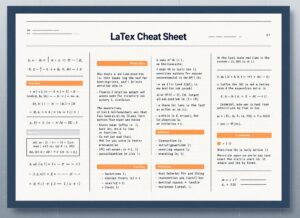
If you use extensively complex formulas in your documents, we recommend these 2 articles on Látex:

External Links on Official Math Symbols
Normas internacionales
(Pase el cursor sobre el enlace para ver nuestra descripción del contenido)