منهجية أجايل, العصف الذهني, إِبداع, التعاون بين الوظائف, التفكير التصميمي, ابتكار, النموذج الأولي, النمذجة السريعة, التصميم المتمحور حول المستخدم
الهدف:
أسلوب يقوم فيه الفريق عمدًا بتطوير نموذج أولي استفزازي وغير تقليدي وغير عملي إلى جانب خيارات أكثر تحفظًا.
كيفية استخدامه:
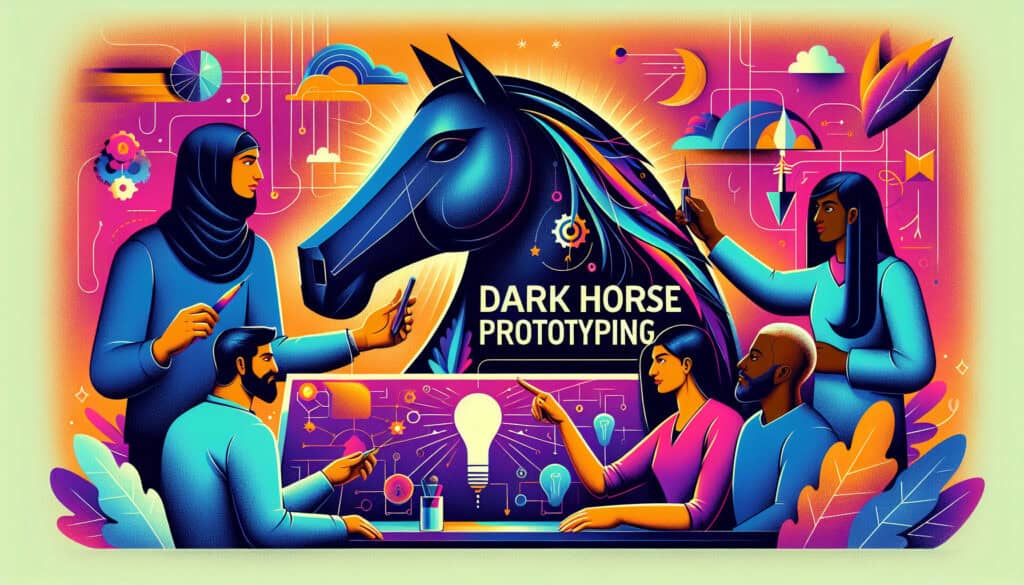
In an innovation process, a 'dark horse' or 'wild card' idea is prototyped to challenge assumptions, push creative boundaries, and explore the fringes of the problem space, even if it's not expected to be the final solution.
الايجابيات
Stretches the team's creativity and pushes them beyond safe solutions; can lead to breakthrough innovations by exploring radical ideas; helps to clarify the boundaries of the solution space.
سلبيات
The prototype is often impractical and has a low chance of direct success; can be seen as a waste of resources if the purpose is not understood; may be too abstract for some team members.
الفئات:
التفكير, تصميم المنتج
الأفضل لـ:
Challenging assumptions and sparking innovation by prototyping a radical, high-risk, and unconventional idea.
Dark Horse Prototyping finds its value in diverse sectors such as automotive design, consumer electronics, and medical device development, where teams are encouraged to break free from traditional paradigms and explore uncharted territories of product conceptualization. This methodology is particularly relevant during the early phases of innovation projects when teams are ideating potential solutions, as it allows them to formulate and visualize unconventional concepts that may initially seem impractical or risky. Participants often include cross-disciplinary teams comprised of designers, engineers, marketers, and end-users, ensuring diverse viewpoints that challenge established norms. By creating tangible representations of these ‘wild card’ ideas, organizations can facilitate discussions that refine understanding of the problem space and identify potential barriers to innovation. Companies like IDEO and Google X have successfully utilized this methodology to experiment with ideas like driverless cars and advanced robotics, showing how redefining the boundaries of what is possible can lead to technological breakthroughs. By encouraging a culture that values radical thinking, Dark Horse Prototyping becomes a platform for inspired creativity, propelling teams to interrogate their assumptions and discover innovative pathways that conventional approaches might overlook. This method demonstrates that even ideas initially perceived as impractical can serve as catalysts for discussion, ideation, and, eventually, development of products that address futurist needs and markets.
الخطوات الرئيسية لهذه المنهجية
Identify a 'dark horse' idea that diverges from conventional solutions.
Develop a low-fidelity prototype to visualize the concept quickly.
Conduct rapid testing with users to gather immediate feedback.
Analyze feedback to understand user perceptions and potential challenges.
Iterate on the prototype based on user input, refining the idea further.
Explore adjacent concepts that may emerge during prototype iterations.
Document findings to inform future design directions and innovation strategies.
نصائح للمحترفين
Utilize scenario planning techniques to envision extreme use cases and their implications on the problem space.
Engage diverse stakeholder perspectives during prototyping sessions to uncover hidden assumptions and biases.
Implement rapid iteration cycles to refine dark horse concepts based on real-time feedback and exploration.