إعادة هندسة العمليات التجارية (BPR), التحليل التنافسي, ابتكار, أبحاث السوق, إدارة المشاريع, إدارة المخاطر
الهدف:
لتقييم نقاط القوة والضعف والفرص والتهديدات الخاصة بالمنظمة أو المشروع أو الفرد لإثراء التخطيط الاستراتيجي.
كيفية استخدامه:
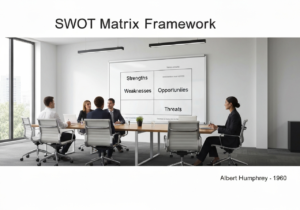
يتم تحديد نقاط القوة (السمات الإيجابية الداخلية)، ونقاط الضعف (السمات السلبية الداخلية)، والفرص (العوامل الخارجية التي يمكن استغلالها)، والتهديدات (العوامل الخارجية التي يمكن أن تسبب مشاكل) وإدراجها، غالبًا في مصفوفة رباعية الأرباع.
الايجابيات
إطار عمل بسيط لتنظيم التفكير الاستراتيجي؛ يساعد في تحديد العوامل الداخلية والخارجية الرئيسية؛ يسهل المناقشة وبناء التوافق؛ يمكن تطبيقه على نطاق واسع على مستويات مختلفة.
سلبيات
قد يكون الأمر شخصياً ويعتمد على الآراء بدلاً من البيانات؛ وقد ينتج عنه قوائم طويلة بدون تحديد أولويات واضح؛ ولا يقدم حلولاً أو إجراءات بشكل جوهري؛ وهو ثابت وقد يصبح قديماً بسرعة.
الفئات:
العملاء والتسويق, الاقتصاد, التفكير, إدارة المشاريع
SWOT Analysis finds extensive applicability across various sectors including technology, healthcare, manufacturing, and consumer services, often employed during the early stages of project development or strategic planning sessions to evaluate the potential of new product ideas or market entries. Teams made up of product designers, engineers, marketing professionals, and business strategists frequently initiate the SWOT process, allowing for diverse perspectives that can enrich the output of the analysis. In industries such as healthcare, for instance, this method is particularly useful when launching innovative medical devices where understanding both the internal capacities of the organization and the external demands of regulatory compliance and market needs is paramount. The simplicity of the matrix encourages brainstorming sessions that not only identify strengths and weaknesses but also stimulate discourse around how to leverage untapped opportunities—such as emerging technologies or shifting consumer preferences—and mitigate potential threats, including competitive pressures or economic downturns. Organizations can engage in SWOT Analysis at various levels, from a high-level assessment of company strategy to a focused analysis of specific products or initiatives, allowing for flexibility in its application. As a strategic planning tool, it promotes alignment among stakeholders, driving consensus on priorities and enabling teams to formulate actionable plans based on a structured evaluation of both internal capabilities and external market dynamics.
الخطوات الرئيسية لهذه المنهجية
حدد نقاط القوة الداخلية ذات الصلة بالمنتج أو المبادرة وقم بإدراجها.
حدد نقاط الضعف الداخلية التي قد تعيق التقدم، وقم بإدراجها.
حدد الفرص الخارجية التي يمكن الاستفادة منها وقم بإدراجها.
حدد وقم بإدراج التهديدات الخارجية التي قد تشكل مخاطر.
قم بتحليل العلاقات بين نقاط القوة الداخلية والفرص الخارجية.
قم بتقييم كيفية التخفيف من نقاط الضعف الداخلية من خلال معالجة التهديدات الخارجية.
تطوير مبادرات استراتيجية بناءً على تحليل مصفوفة SWOT.
نصائح للمحترفين
دمج تحليل البيانات الكمية مع الملاحظات النوعية لتعزيز موثوقية نتائج تحليل SWOT.
قم بتحديث مصفوفة SWOT بانتظام لتعكس التغييرات في المشهد السوقي والقدرات الداخلية، مما يعزز المرونة في الاستجابات الاستراتيجية.
إشراك فرق متعددة الوظائف في عملية تحليل SWOT للكشف عن وجهات نظر متنوعة وتقليل نقاط الضعف في التقييم.