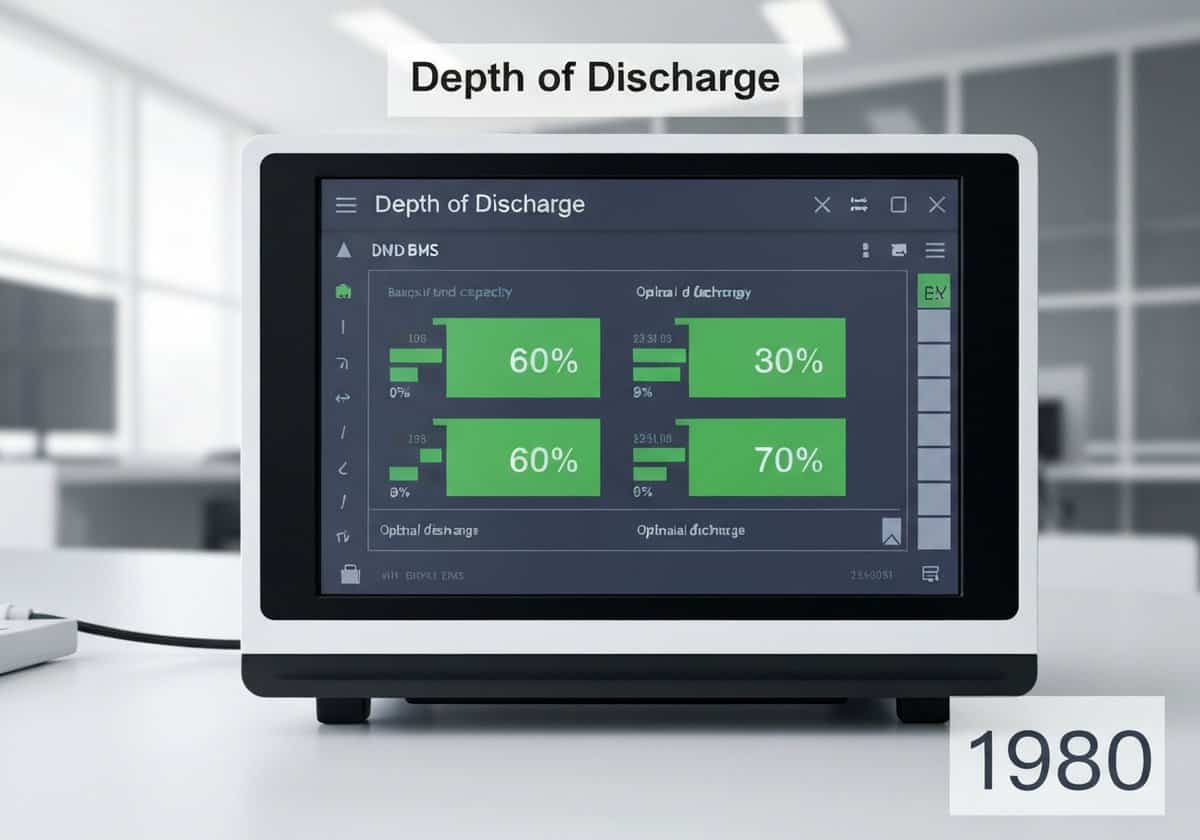
يشير عمق التفريغ (DoD) إلى النسبة المئوية لسعة البطارية التي تم تفريغها.
Depth of Discharge is a critical concept for the practical application and longevity of rechargeable batteries. While a battery has a nominal capacity, using 100% of that capacity in every cycle causes maximum stress on the battery’s internal components, leading to faster degradation. This degradation can manifest as capacity fade (a permanent loss of energy storage ability) or an increase in internal resistance. For example, a lithium-ion battery might last for 500 cycles if regularly discharged to 100% DoD, but could last for several thousand cycles if only discharged to 50% DoD.
This relationship is not linear and varies significantly between battery chemistries. Lead-acid batteries are particularly sensitive to deep discharge, while some lithium chemistries like Lithium Iron Phosphate (LFP) are more robust and can handle higher DoD with less degradation. Battery Management Systems (BMS) actively use the DoD concept. They often limit the user-accessible capacity, creating buffers at the top and bottom of the charge range. For instance, when an EV shows ‘100%’ charge, it might only be at 95% of its true maximum charge, and ‘0%’ might correspond to 10% of its true capacity, thereby avoiding the high-stress regions and extending the battery pack’s service life.
تطوير وحدات تحكم دقيقة قادرة على تنفيذ خوارزميات إدارة البطارية
التطبيقات
أنظمة إدارة البطارية (BMS) في المركبات الكهربائية لإطالة عمر البطارية
تحسين أنظمة التخزين على نطاق الشبكة لتحقيق طول العمر
برمجة أنظمة الطاقة الشمسية خارج الشبكة
إطالة عمر الأجهزة الإلكترونية الاستهلاكية
حساب السعة القابلة للاستخدام في مصادر الطاقة غير المنقطعة (UPS)
براءات الاختراع:
NA
أفكار ابتكارات محتملة
بسبب عمليات جمع البيانات من خلال برامج الروبوت، والتي تتجاوز حاليًا 40 ألفًا يوميًا، فإن هذا المحتوى مخصص لأعضاء المجتمع فقط. > تسجيل الدخول < أو > سجل < (مجاني 100٪) للوصول إلى هذا، وكذلك جميع المحتويات والأدوات الأخرى المقيدة.
يعتمد عمر دورة البطارية بشكل كبير على متوسط DoD الخاص بها؛