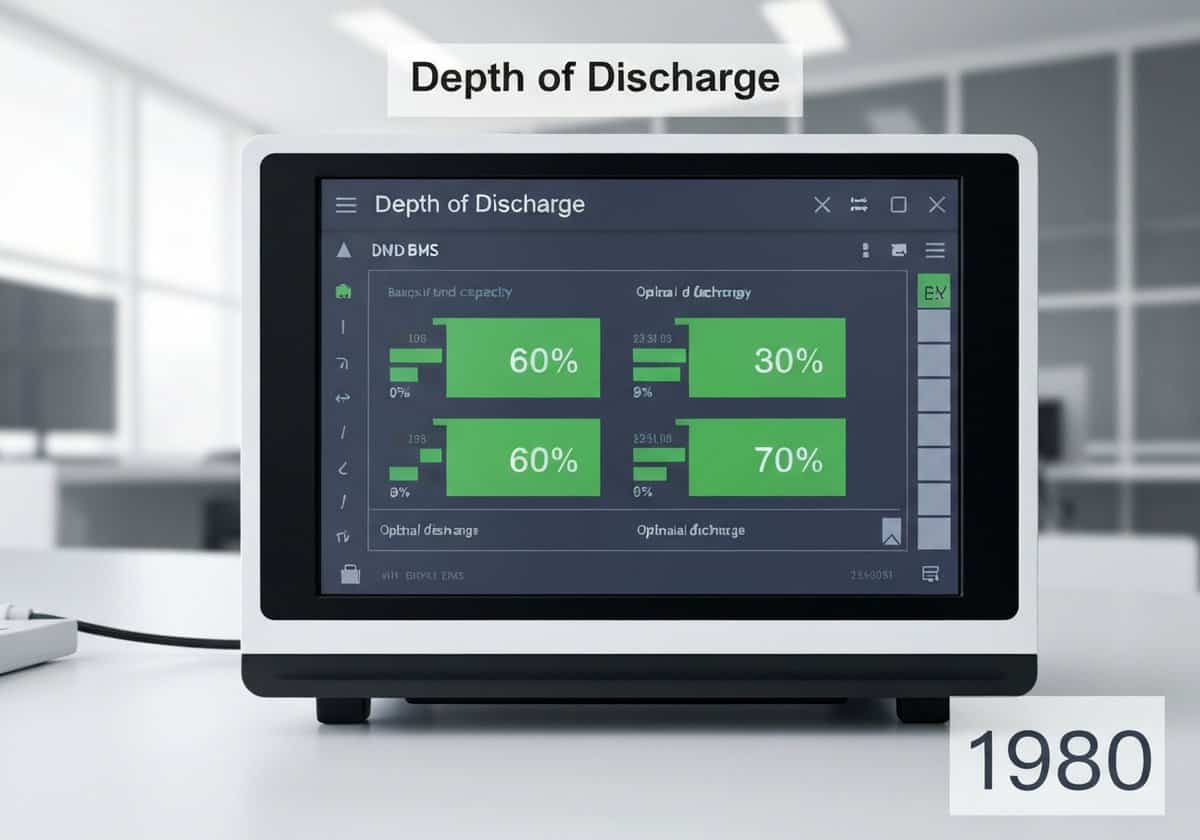
방전 심도(DoD)는 배터리 용량 중 방전된 비율을 백분율로 나타낸 것입니다. 이는 충전 상태(SoC)의 역수이며, DoD가 100%인 경우 배터리가 완전히 방전된 상태입니다. 배터리의 수명은 평균 DoD에 크게 좌우됩니다. DoD가 낮을수록(예: 용량의 80%까지만 방전) 배터리의 수명이 크게 늘어납니다.


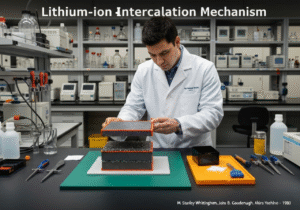
(설명을 위한 생성된 이미지입니다)
방전 심도(DoD)는 배터리 용량 중 방전된 비율을 백분율로 나타낸 것입니다. 이는 충전 상태(SoC)의 역수이며, DoD가 100%인 경우 배터리가 완전히 방전된 상태입니다. 배터리의 수명은 평균 DoD에 크게 좌우됩니다. DoD가 낮을수록(예: 용량의 80%까지만 방전) 배터리의 수명이 크게 늘어납니다.
Depth of Discharge is a critical concept for the practical application and longevity of rechargeable batteries. While a battery has a nominal capacity, using 100% of that capacity in every cycle causes maximum stress on the battery’s internal components, leading to faster degradation. This degradation can manifest as capacity fade (a permanent loss of energy storage ability) or an increase in internal resistance. For example, a lithium-ion battery might last for 500 cycles if regularly discharged to 100% DoD, but could last for several thousand cycles if only discharged to 50% DoD.
This relationship is not linear and varies significantly between battery chemistries. Lead-acid batteries are particularly sensitive to deep discharge, while some lithium chemistries like Lithium Iron Phosphate (LFP) are more robust and can handle higher DoD with less degradation. Battery Management Systems (BMS) actively use the DoD concept. They often limit the user-accessible capacity, creating buffers at the top and bottom of the charge range. For instance, when an EV shows ‘100%’ charge, it might only be at 95% of its true maximum charge, and ‘0%’ might correspond to 10% of its true capacity, thereby avoiding the high-stress regions and extending the battery pack’s service life.
현재 하루 4만 건이 넘는 봇 트래픽을 차단하기 위해 이 콘텐츠는 커뮤니티 회원만 이용할 수 있습니다.
> 로그인 < 또는 >등록 < 이 콘텐츠를 비롯한 모든 제한된 콘텐츠와 도구는 (100% 무료로) 이용할 수 있습니다.
방전 심도(DoD)
(날짜를 알 수 없거나 관련이 없는 경우, 예를 들어 "유체역학"의 경우, 주목할 만한 등장 시기를 대략적으로 추정하여 제공합니다.)
고화질 이미지 및 다운로드는 등록된 회원에게만 100% 무료로 제공됩니다.
> 로그인 <