Product Design, Manufacturing & Innovation Resources
بيت » Bioactive Materials

Bioactive Materials

1969
  • Larry L. Hench
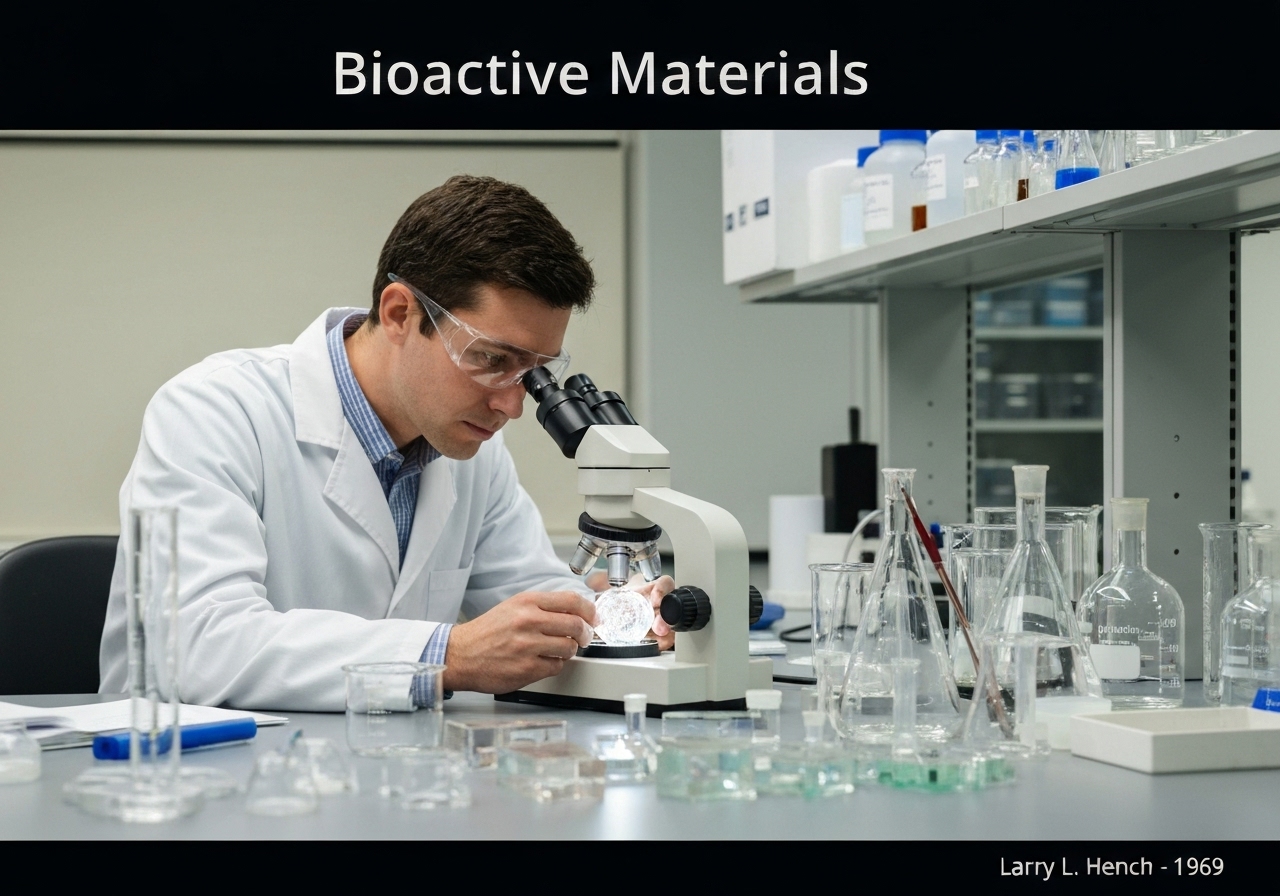
عينات من الزجاج الحيوي في مختبر لأبحاث المواد الحيوية.

(صورة تم إنشاؤها للتوضيح فقط)

Bioactive materials are a class of biomaterials designed to elicit a specific, positive biological response at the material-tissue interface, resulting in the formation of a bond between them. Unlike bioinert materials that aim for minimal interaction, bioactive materials actively participate in healing processes. A classic example is Bioglass, which forms a hydroxyapatite layer on its surface, bonding directly to bone.


The concept of bioactivity was pioneered by Larry Hench with his 1969 invention of Bioglass® 45S5, a specific composition of 45 wt% SiO2, 24.5% CaO, 24.5% Na2O, and 6% P2O5. The mechanism of bone bonding involves a sequence of five surface chemical reactions. When exposed to bodily fluids, (1) rapid ion exchange of Na+ from the glass with H+ from solution occurs, creating a silica-rich layer. (2) This increases local pH, which causes (3) the glass network to break down, releasing silicic acid (Si(OH)4) and forming silanols (Si-OH) at the surface. (4) A high local concentration of calcium and phosphate ions, both from the glass and surrounding fluid, leads to the formation of an amorphous calcium-phosphate layer. (5) This layer crystallizes into hydroxycarbonate apatite (HCA), which is chemically and structurally similar to the mineral phase of bone. This HCA layer provides a bioactive scaffold for osteoblasts to colonize, differentiate, and deposit new bone matrix, creating a strong, direct, and seamless bond with the host bone. This process, known as osseointegration, is crucial for the long-term stability of implants. Furthermore, the dissolution products, particularly silicic acid, have been shown to stimulate genes within osteoprogenitor cells, upregulating the production of growth factors. This makes the material not only osteoconductive (a scaffold for bone growth) but also osteoinductive (actively stimulating new bone formation).

UNESCO Nomenclature: 3201
- العلوم الطبية

يكتب

العملية الكيميائية

الاضطراب

ثوري

الاستخدام

الاستخدام الواسع النطاق

السلائف

  • development of glass science and manufacturing
  • understanding of bone composition and the role of hydroxyapatite
  • early use of inert ceramics like alumina in orthopedics
  • advances in surface analysis techniques to study the material-tissue interface

التطبيقات

  • bone grafts and void fillers in orthopedic and dental surgery
  • coatings on metallic implants (e.g., hip stems) to promote osseointegration
  • scaffolds for bone tissue engineering
  • components in bioactive toothpastes for remineralizing enamel
  • wound healing dressings that stimulate tissue repair

براءات الاختراع:

  • US3929971A

أفكار ابتكارات محتملة

بسبب عمليات جمع البيانات من خلال برامج الروبوت، والتي تتجاوز حاليًا 40 ألفًا يوميًا، فإن هذا المحتوى مخصص لأعضاء المجتمع فقط.
> تسجيل الدخول < أو > سجل < (مجاني 100٪) للوصول إلى هذا، وكذلك جميع المحتويات والأدوات الأخرى المقيدة.

ذات صلة بـ: المواد النشطة بيولوجيًا، والزجاج الحيوي، ولاري هينش، وهيدروكسيباتيت، والاندماج العظمي، وربط العظام، وتبادل الأيونات، والحث العظمي، والتوصيل العظمي، والمواد الحيوية الخزفية.

السياق التاريخي

Bioactive Materials

1960
1960
1969
1976-05-28
1980
1990
1960
1965
1970
1980
1980
1990

(إذا كان التاريخ غير معروف أو غير ذي صلة، على سبيل المثال "ميكانيكا الموائع"، يتم توفير تقدير تقريبي لظهوره الملحوظ)

الاختراع والابتكار والمبادئ التقنية ذات الصلة

الصور بالحجم الكامل والتنزيلات متاحة فقط 100% مجاناً للأعضاء المسجلين.