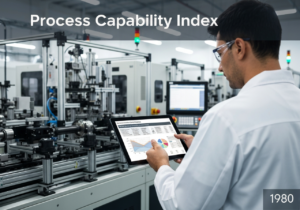
Process Capability Analysis (Cp and Cpk) is commonly applied in various industries such as automotive, aerospace, electronics, and pharmaceuticals, where the precision of manufacturing processes is paramount. During the design and development phase, product teams utilize this methodology to evaluate whether their processes can meet customer specifications before production begins. This analysis often involves cross-functional collaboration among engineers, quality assurance teams, and production managers, who collectively interpret data from the process to make informed decisions. For instance, in a semiconductor fabrication facility, Cp and Cpk calculations enable engineers to assess whether the fabrication process produces chips within the desired electrical characteristics, thus ensuring product reliability and performance. The analysis is beneficial in Lean Sigma initiatives, where the focus is on reducing waste and enhancing process efficiency. Organizations may integrate Process Capability Analysis into their continuous improvement programs, scheduling regular assessments to ensure that processes remain capable over time, especially after any significant production changes or equipment updates. The method emphasizes the importance of aligning process performance with customer expectations, thus creating a systematic approach to quality management that reduces defects and elevates customer satisfaction. Statistical tools such as control charts and histograms often accompany these analyses, providing visual representations of process performance and enabling teams to quickly identify deviations from desired outcomes.