Simple and visual; Facilitates quick decision-making and prioritization; Helps teams focus on activities with the highest 投资回报率; Encourages discussion and consensus on priorities.
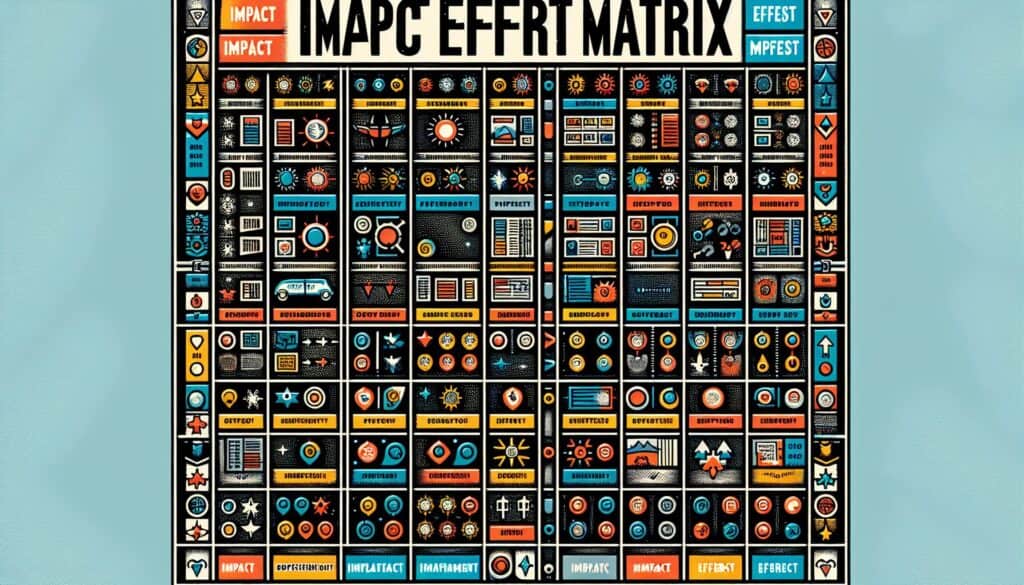
The Impact Effort Matrix is commonly employed in various industries including software development, product management, and engineering, particularly during the ideation and planning phases of projects. This methodology aids teams in evaluating potential initiatives by visualizing which tasks could lead to significant benefits with minimal resource investment, allowing for efficient allocation of efforts. In software development, for example, a team might identify user interface enhancements that could improve customer satisfaction significantly while requiring little coding effort, thus categorizing them as quick wins. Conversely, a manufacturing firm might plot a new product line launch that promises high returns but demands extensive R&D and market validation, positioning it within the major projects quadrant. Stakeholders from cross-functional teams, including marketing, design, and engineering, typically contribute to this exercise to leverage diverse insights and foster collective decision-making. The visual nature of the matrix facilitates discussions that can align team members on priorities, ultimately driving a consensus on which initiatives should receive immediate attention to maximize efficiency and effectiveness in project execution. This approach not only accelerates decision-making but also improves transparency in the prioritization process, ensuring that team efforts are concentrated where they can yield the most substantial impact.