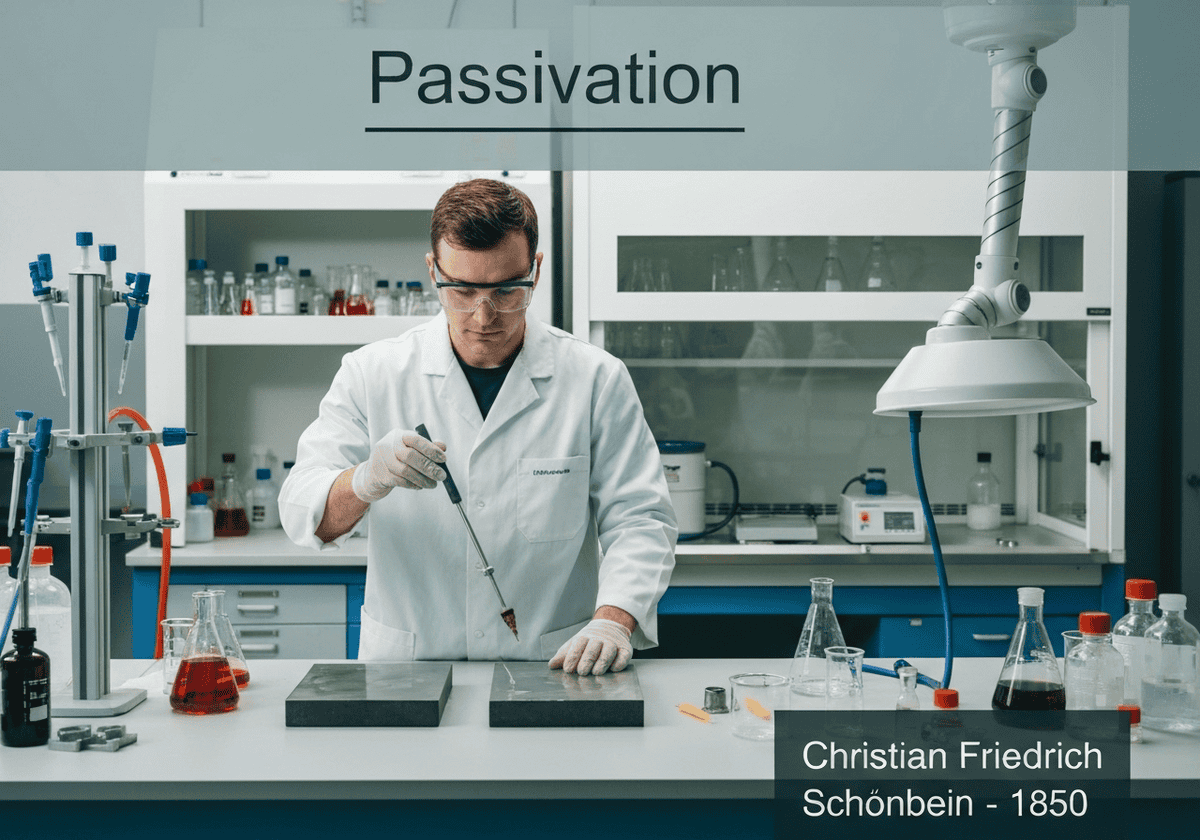
The mechanism of passivation is electrochemical. When a reactive metal like chromium, aluminum, or titanium is exposed to an oxidizing environment (like air or certain acids), its surface rapidly oxidizes. If the resulting metal oxide is stable, dense, non-porous, and well-adhered to the metal surface, it forms a protective passive layer. This layer is extremely thin, often only 1-3 nanometers, but it is sufficient to dramatically slow down the rate of corrosion by preventing direct contact between the metal and the corrosive environment.
Passivation can be a natural process or can be enhanced artificially through chemical treatments, such as dipping stainless steel in nitric or citric acid to remove free iron from the surface and encourage the formation of a more robust chromium-rich oxide layer. This process is distinct from applying a coating, as the passive layer is formed from the base metal itself.