Product Design, Manufacturing & Innovation Resources

Teste de Barkhausen

Teste de Barkhausen

Teste de Barkhausen

Objetivo:

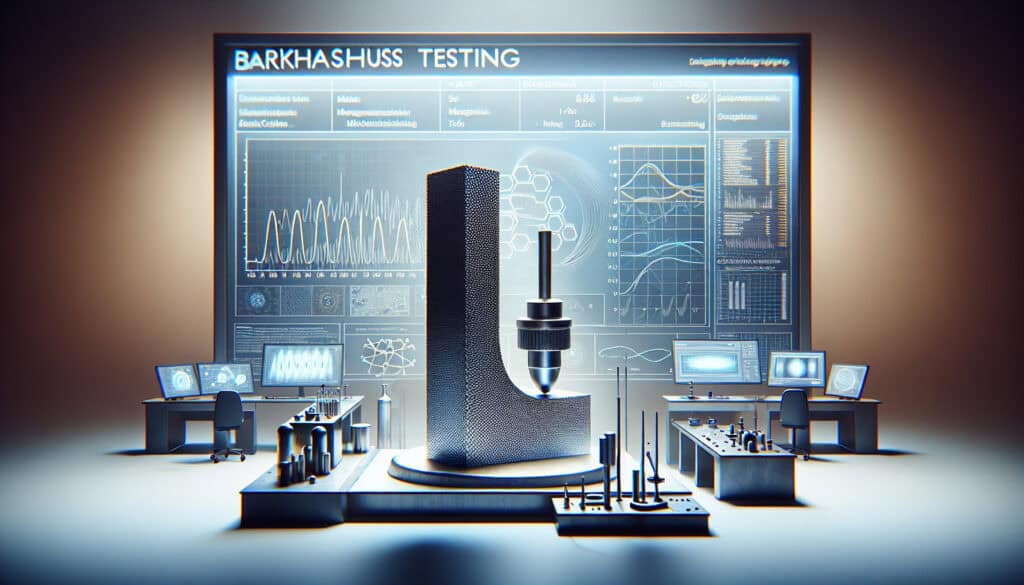
A non-destructive testing método that is used to detect and analyze stress and microstructural changes in ferromagnetic materials.


Como é usado:

Prós

Contras

Categorias:

Ideal para:

Barkhausen Testing, rooted in the principles of magnetization changes within ferromagnetic materials, finds extensive applications across industries such as aerospace, automotive, and manufacturing, where the integrity of components is paramount. This methodology is particularly suited for the evaluation of fatigue and residual stress in critical parts like gears, shafts, and structural components, often employed during the quality assurance phase of production or during maintenance inspections. It is commonly initiated by materials engineers or quality assurance specialists who seek to assess the mechanical properties or performance history of a component without compromising its usability. The participation of cross-functional teams, including design engineers and metallurgists, can enhance the effectiveness of the testing process, as they provide context on the material properties and intended applications. Barkhausen Testing can also serve as a valuable tool in research and development settings, allowing for advanced analysis of new materials and enabling iterative design processes. This method is compatible with various testing environments, including in-situ examinations and laboratory investigations, providing flexibility in how and where assessments are conducted. The sensitivity of Barkhausen noise measurements to microstructural changes offers an avenue for predictive maintenance strategies, as shifts in material conditions can be monitored over time, leading to more proactive approaches in asset management.

Etapas principais desta metodologia

  1. Calibrate the Barkhausen noise measurement system to ensure accurate detection and analysis.
  2. Apply a variable magnetic field to the ferromagnetic material under investigation.
  3. Monitor the Barkhausen effect signals generated during the application of the magnetic field.
  4. Analyze the characteristics of the Barkhausen noise, paying attention to amplitude and frequency changes.
  5. Relate the observed changes in Barkhausen noise to stress and microstructural changes in the material.
  6. Validate the findings through comparison with known standards or additional testing methods.

Dicas profissionais

  • Integrate Barkhausen noise analysis with advanced signal processing techniques like machine learning algorithms to enhance detection capabilities and interpretation accuracy of microstructural anomalies.
  • Combine Barkhausen testing with complementary non-destructive methods, such as ultrasonic testing or eddy current testing, to obtain a comprehensive understanding of material conditions and improve reliability of results.
  • Regularly calibrate and validate equipment against known standards to ensure measurement consistency and accuracy, particularly when analyzing variations in stress levels or microstructural changes in diverse ferromagnetic materials.

Para ler e comparar diversas metodologias, Recomendamos o

> Repositório abrangente de metodologias  <
juntamente com mais de 400 outras metodologias.

Seus comentários sobre esta metodologia ou informações adicionais são bem-vindos em [link para o site/plataforma]. seção de comentários abaixo ↓, assim como quaisquer ideias ou links relacionados à engenharia.

Contexto histórico

1750
1785
1788
1800
1800
1800
1800
1750
1757
1788
1800
1800
1800
1800
1801

(Caso a data seja desconhecida ou irrelevante, por exemplo, "mecânica dos fluidos", é fornecida uma estimativa aproximada de seu surgimento notável)


Posts relacionados

Imagens em tamanho real e downloads estão disponíveis apenas, 100% gratuitos, para membros registrados.