지속적인 개선, 인간 공학, 보건과학, 인간적 요소, 프로세스 개선, 품질 관리, 위험 관리, 안전
목적:
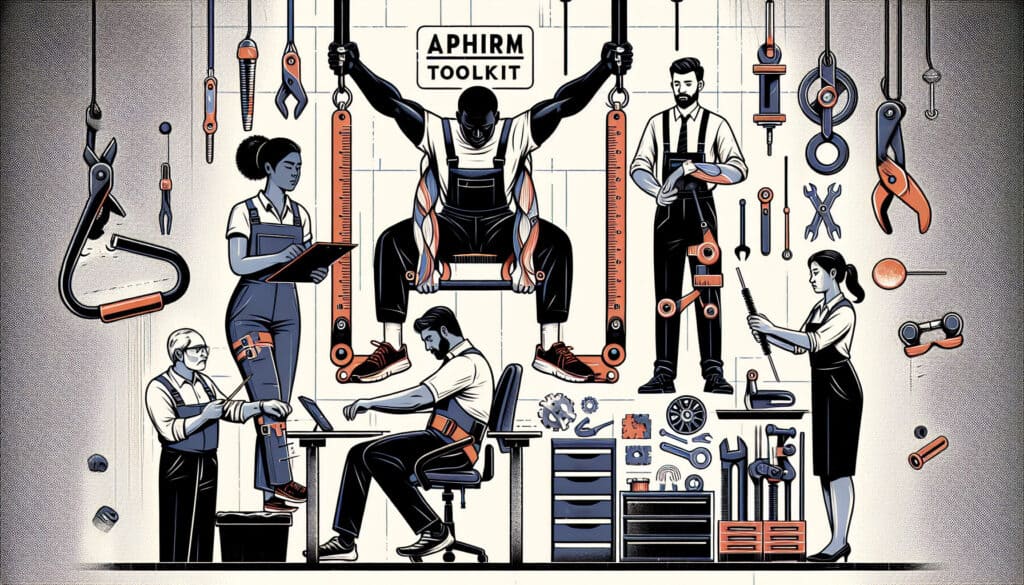
호주에서 개발된 자료 모음으로, 조직이 근골격계 질환의 위험을 관리하는 데 도움을 줍니다.
사용 방법:
APHIRM(참여형 위험 식별 및 위험 관리) 툴킷은 작업장에서 근골격계 위험을 식별, 평가 및 관리하는 단계별 지침을 제공합니다. 여기에는 체크리스트 및 워크시트와 같은 다양한 실용적인 도구가 포함되어 있습니다.
장점
근골격계 위험 관리를 위한 실용적이고 사용하기 쉬운 프레임워크를 제공하며, 참여적 접근 방식을 기반으로 하고, 특히 호주 작업 환경에 맞춰 개발되었습니다.
단점
본 방안은 모든 국가 또는 산업에 적용 가능하지 않을 수 있으며, 효과를 발휘하려면 경영진과 근로자의 헌신이 필요하고, 모든 유형의 근골격계 질환 위험에 적합하지 않을 수 있습니다.
카테고리:
인간 공학, 인사부, 위험 관리
다음과 같은 경우에 가장 적합합니다:
호주 직장에서의 근골격계 질환 위험 관리.
The APHIRM Toolkit is particularly valuable in industries such as healthcare, manufacturing, and logistics, where manual handling and repetitive tasks are prevalent. It is applicable throughout various project phases, including initial design, implementation, and ongoing maintenance. A multidisciplinary team, including health and safety officers, ergonomic specialists, and front-line workers, typically initiates the risk assessment process, ensuring that insights and experiences from those directly affected inform the evaluation of hazards. The participative nature of the toolkit allows for input from a diverse range of stakeholders, making it adaptable to different workplace environments and practices. The practical tools, such as checklists and worksheets, promote engagement and facilitate straightforward applications, regardless of the existing level of expertise in risk management. Regularly integrating the APHIRM methodology into workplace safety programs not only promotes compliance with Australian Safe Work regulations but also encourages a culture of safety that aims to reduce the incidence of musculoskeletal disorders. By ensuring that risk management is a shared responsibility, workplaces can foster ongoing dialogues about safety measures, leading to continuous improvement in ergonomic practices and better health outcomes for employees. Through its integrated approach, the toolkit also serves as a blueprint for conducting training sessions and workshops focused on risk identification and mitigation strategies, empowering teams to proactively address issues related to musculoskeletal health.
이 방법론의 주요 단계
작업장 평가 및 관찰을 통해 근골격계 위험 요소를 파악합니다.
확인된 위험 요소와 관련된 위험 수준을 정성적 또는 정량적 측정 방법을 사용하여 평가합니다.
파악된 위험을 완화하기 위한 통제 전략을 개발하는 데 이해관계자들을 참여시키십시오.
선택한 통제 조치를 시행하고 모든 직원에게 이를 알리십시오.
시행된 통제 조치의 효과성을 모니터링하고 직원들의 의견을 수렴하십시오.
직장 환경의 변화 또는 새롭게 발생하는 위험을 반영하여 위험 관리 프로세스를 정기적으로 검토하고 업데이트하십시오.
프로 팁
정기적인 작업 흐름 평가에 인체공학적 평가를 통합하여 즉시 눈에 띄지 않을 수 있는 미묘한 위험 요소를 파악하십시오.
참여하는 직원들의 피드백을 활용하여 실제 경험을 바탕으로 위험 관리 전략을 지속적으로 개선하고 향상시키십시오.
데이터 분석 도구를 활용하여 근골격계 질환의 추세를 모니터링하고, 파악된 패턴을 기반으로 선제적으로 개입 방안을 조정하십시오.