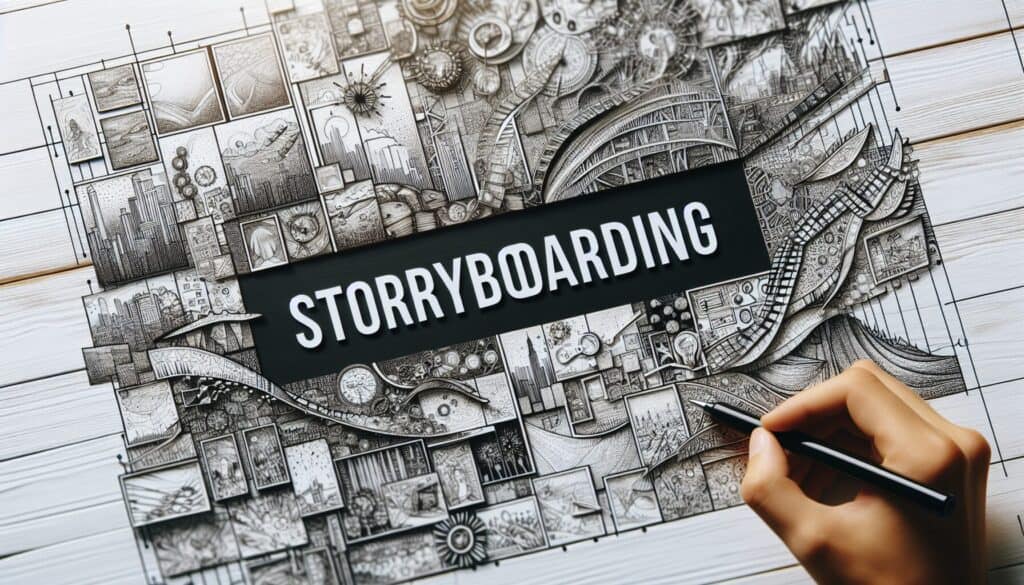
Storyboarding is widely utilized in various industries such as film, animation, software design, and user experience research, where the key moments in a process or series of interactions need to be articulated visually. In product design, teams often employ storyboarding during the ideation phase to convey user scenarios, which facilitates brainstorming sessions and fosters collaboration among cross-functional teams. For example, a software company may create storyboards to outline a user’s experience while interacting with a new app feature, detailing each step visually and including captions that describe user intentions and emotions. This method is particularly effective in identifying potential pain points or misalignments in expectations early in the design process, allowing teams to iterate on ideas before development begins. Stakeholders, including UX designers, product managers, and engineers, typically participate in the creation of these storyboards, enabling diverse viewpoints and richer contextual understanding. Moreover, storyboarding serves as a valuable communication tool that simplifies presentations and dialogues with clients or other stakeholders who may not be familiar with technical jargon, thus advancing alignment and buy-in across various groups. In the context of training materials or marketing videos, storyboards aid in defining the visual narrative, ensuring that the final product aligns with the strategic vision and user needs.
この方法論の主なステップ
プロのヒント
- Integrate user feedback loops into storyboarding to refine narrative accuracy and ensure alignment with user expectations.
- Use a mix of hand-drawn elements and digital techniques to capture spontaneity and clarity, facilitating a richer visual dialogue.
- Create multiple iterations of storyboards to explore alternate scenarios and outcomes, allowing for adaptability and innovation in design narratives.
複数の方法論を読み比べて、 私たちは、
> 包括的な方法論リポジトリ <
400以上の他の手法と併せて。
この方法論に関するご意見や追加情報は、 以下のコメント欄 ↓、エンジニアリング関連のアイデアやリンクも同様です。