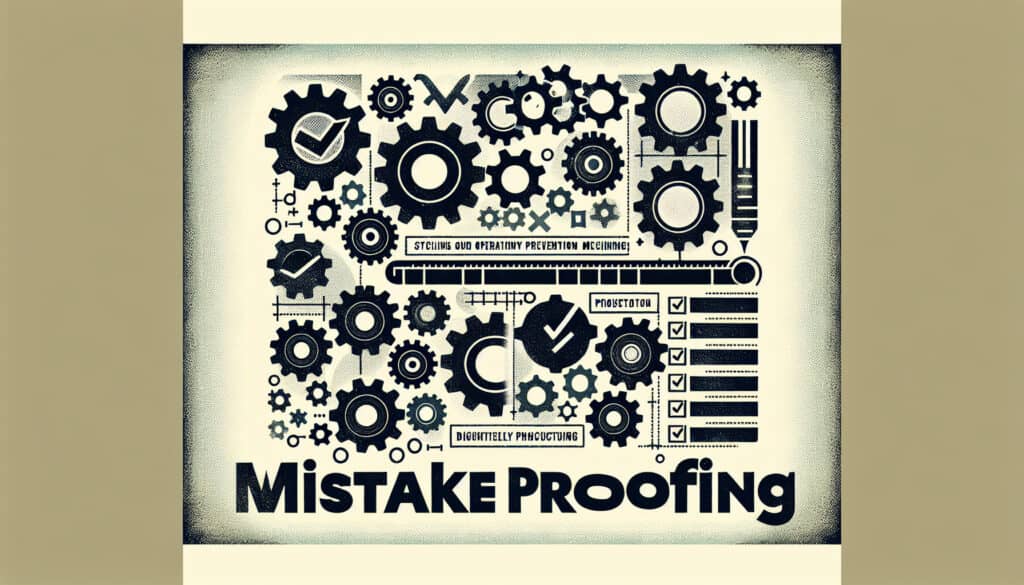
Poka-Yoke techniques can be applied in various sectors such as automotive manufacturing, healthcare, electronics, and food processing, where minimizing errors is paramount. During the design phase, engineers and designers collaborate to identify potential failure points within a process or product, enabling the implementation of fail-safe mechanisms before production begins. For instance, in a manufacturing assembly line, fixtures can be designed to guide components into correct positions, while in software development, user interfaces can include prompts that prevent data entry errors. Quality control teams often integrate Poka-Yoke principles to enhance inspection processes by employing checklists or automated systems that flag inconsistencies. This methodology can be initiated by project managers or quality engineering teams, encouraging involvement from cross-functional teams including production workers who can provide insights on practical challenges faced on the shop floor. Industries such as healthcare utilize Poka-Yoke through medication dispensing systems that ensure patients receive the correct dosage, emphasizing patient safety and operational efficiency. The implementation of these techniques not only enhances quality but also leads to significant cost savings, as the expenses associated with rework, waste, and customer complaints diminish. By embedding error-prevention measures directly into processes, organizations cultivate a culture of continuous improvement, reinforcing accountability among employees while fostering operational reliability.