To translate an organization’s mission and strategy into a comprehensive set of performance measures that provides the フレームワーク for strategic measurement and management.
使用方法:
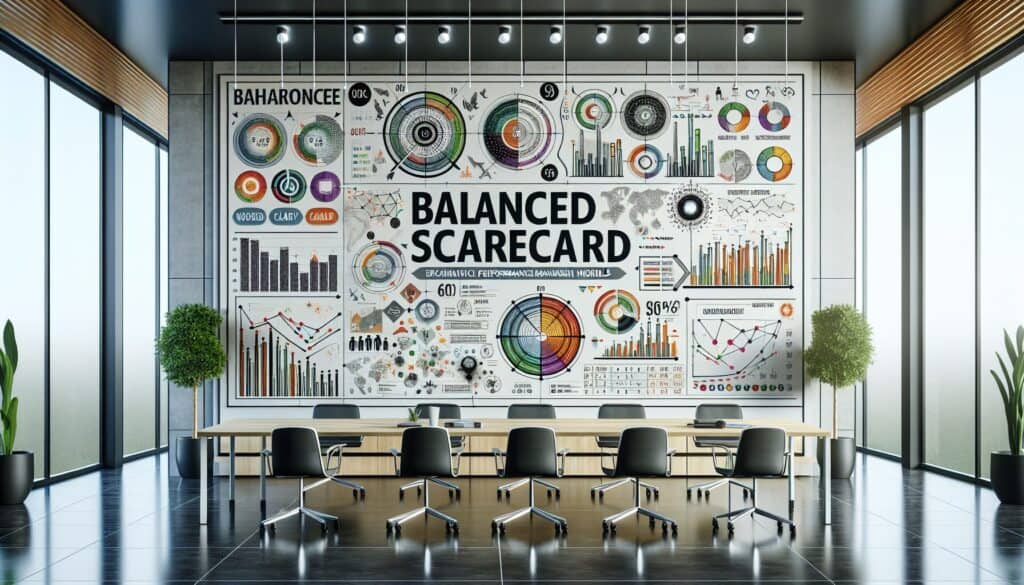
A strategic planning and management system that views the organization from four perspectives: financial, customer, internal business processes, and learning and growth. It helps align business activities to the vision and strategy of the organization.
長所
Provides a holistic view of organizational performance; Aligns strategic objectives with performance measures; Improves communication of strategy across the organization; Facilitates better alignment between departments.
短所
Can be complex and time-consuming to develop and implement; Risk of selecting the wrong metrics or too many KPIs; Requires strong leadership commitment and buy-in.
カテゴリー:
顧客とマーケティング, 経済, 人事, プロジェクト管理
最適な用途:
Translating strategy into a measurable set of performance indicators across various perspectives for effective strategic management.
The Balanced Scorecard methodology is widely applicable across various industries, including manufacturing, healthcare, technology, and finance, primarily utilized during strategic planning, performance management, and operational improvement initiatives. Organizations can implement the Balanced Scorecard during the early phases of strategy development or throughout execution to ensure alignment between day-to-day activities and long-term strategic objectives. Typically, the process is initiated by senior management or strategy teams, with active participation from cross-functional teams, including departmental leaders, finance, operations, and human resources. This collaborative approach fosters a culture of accountability and shared vision across different levels of the organization. By translating strategic goals into specific performance metrics, the Balanced Scorecard enables organizations to monitor progress effectively, facilitating timely adjustments based on empirical performance data. Examples of applications include setting customer satisfaction targets in retail, enhancing operational efficiency in manufacturing through process optimization, or increasing employee engagement levels in service-oriented firms. The method generates a comprehensive view of performance, helping to bridge the gap between financial outcomes and operational drivers, which is particularly useful in achieving sustainable growth. It also enhances communication regarding strategy within organizations, breaking down silos by aligning departmental objectives with broader business goals, thereby encouraging collaboration and integrated thinking to enhance overall performance.
この方法論の主なステップ
Define the vision and mission of the organization.
Identify strategic objectives within each of the four perspectives.
Develop specific measures to assess performance against each objective.
Set targets for each measure to achieve desired outcomes.
Align initiatives and actions to support strategic objectives.
Regularly review and adjust the measures and targets based on performance feedback.
Communicate and align the Balanced Scorecard across all levels of the organization.
プロのヒント
Regularly update performance indicators to reflect changing market dynamics and strategic objectives for relevance.
Integrate qualitative feedback from employees and customers alongside quantitative metrics to enrich performance assessments.
Utilize advanced analytics tools to draw correlations between different perspectives for enhanced decision-making insights.