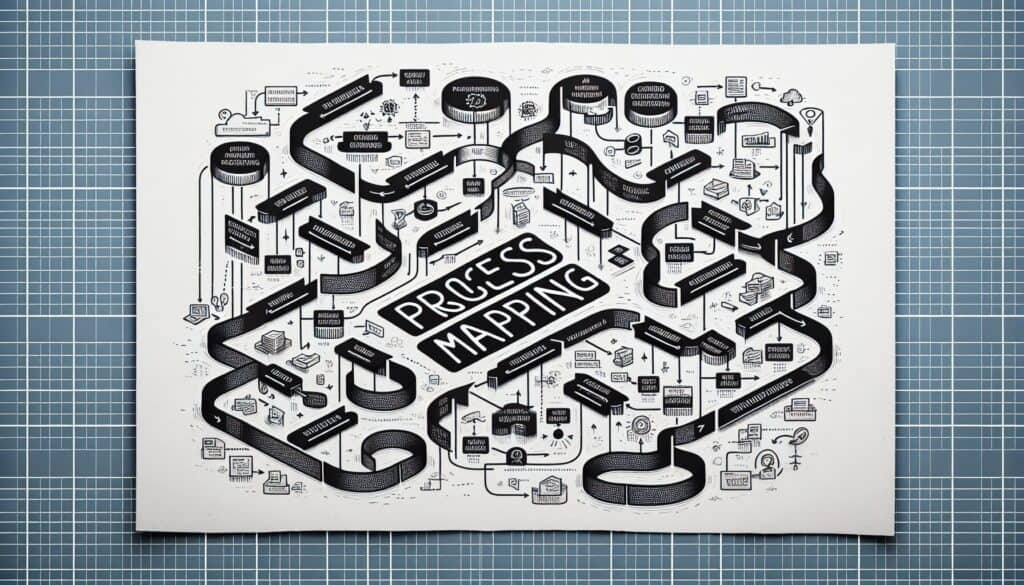
Process mapping is widely utilized across various sectors, including manufacturing, healthcare, finance, and software development. In manufacturing, it can be employed during the design phase of production systems, enabling teams to visualize the entire manufacturing workflow from raw material procurement to final product delivery, helping to identify potential inefficiencies and areas for automation. In healthcare, process mapping is often initiated by quality assurance teams to visualize patient care paths, thus improving patient outcomes and ensuring compliance with regulatory standards. In the finance sector, process maps are useful for documenting compliance procedures and internal controls, ensuring that all team members understand their roles and responsibilities in maintaining regulatory standards. During project management phases, cross-functional teams collaborate to create these diagrams, ensuring that all stakeholders have a shared understanding of workflows. Training initiatives also benefit significantly, as onboarding new employees with visual aids aids retention and provides clarity, reducing training time. Various tools can be employed for creating diagrams, including software like Microsoft Visio, Lucidchart, or specialized process mapping tools that enhance collaboration and allow for continuous updates as processes evolve. The visualization of workflows through process mapping empowers teams to continuously refine operations, supports change management initiatives, and enhances overall organizational efficacy.