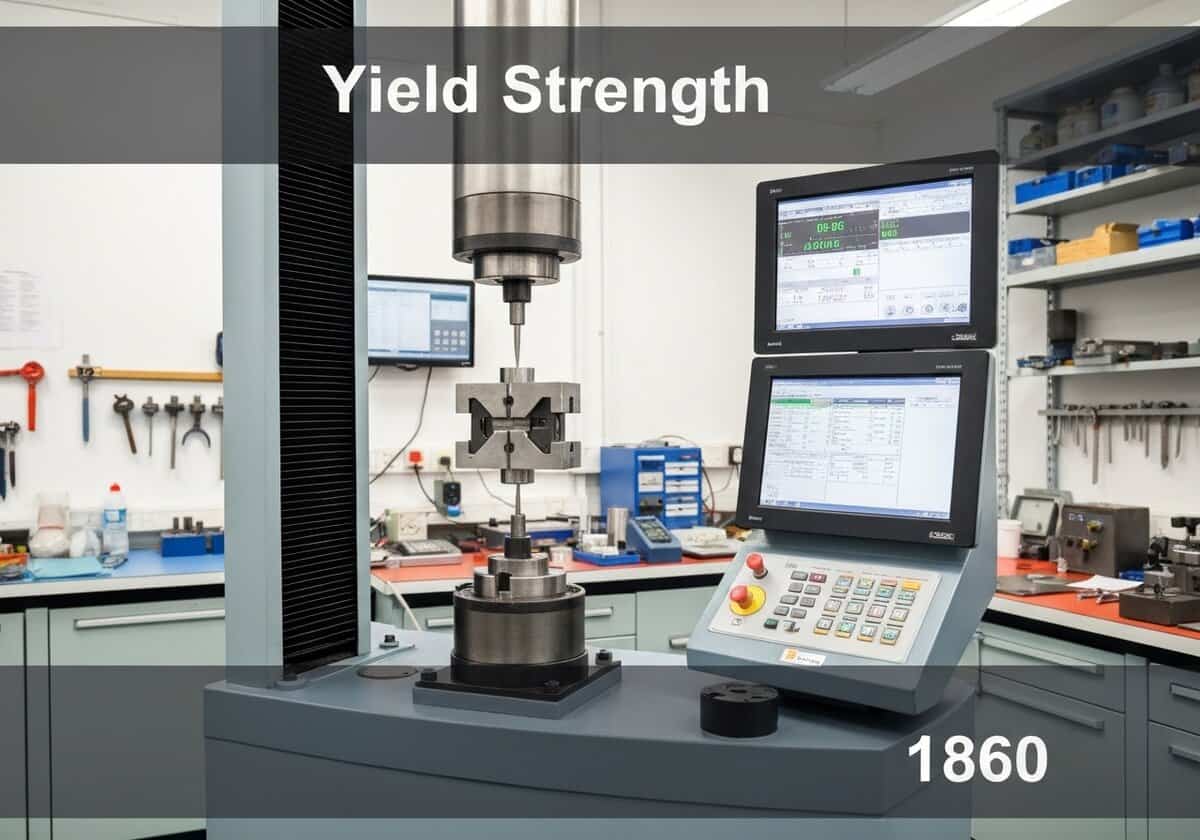
The transition from elastic to plastic behavior is a critical design consideration. For materials with a clear, sharp yield point (like low-carbon steel), it’s easily identified on the stress-strain curve as a distinct peak (upper yield point) followed by a drop to a lower, constant stress plateau (lower yield point). However, many materials, such as aluminum alloys, exhibit a gradual transition. For these, a proof stress or offset yield point is defined. This is commonly determined by the 0.2% offset method, where a line parallel to the initial elastic portion of the curve is drawn from a strain value of 0.002 (or 0.2%). The stress at which this line intersects the stress-strain curve is defined as the 0.2% proof yield strength. This value represents the stress that would cause a permanent, non-recoverable strain of 0.2% upon unloading. The yield strength is a fundamental parameter used to determine the maximum allowable load a mechanical component can bear before it is considered to have failed, as permanent deformation can render a part unusable even if it has not fractured.