Product Design, Manufacturing & Innovation Resources
» 室内空気中の総揮発性有機化合物(TVOC)

室内空気中の総揮発性有機化合物(TVOC)

1980
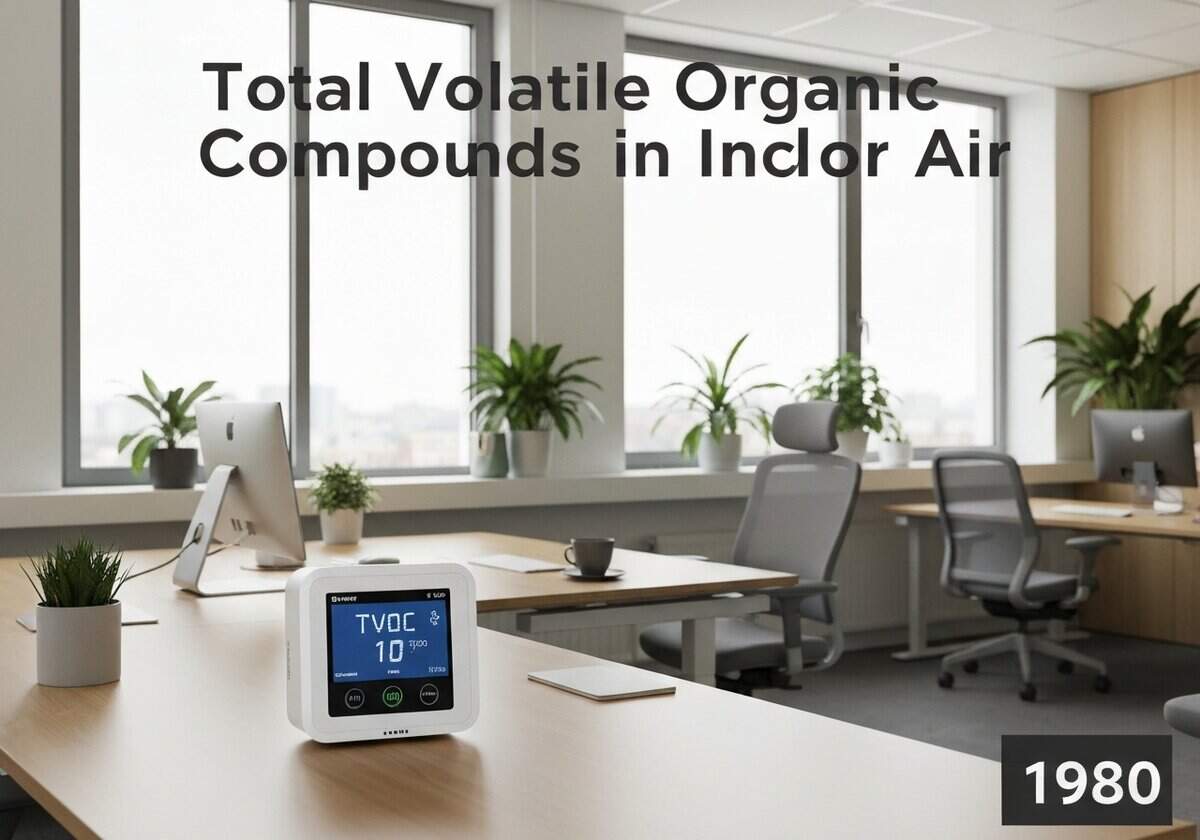
オフィス内の全揮発性有機化合物を測定する室内空気質モニタリング装置。.

(画像はイメージです)

Indoor concentrations of VOCs from sources like building materials, furniture, and cleaning agents often exceed outdoor levels. Total Volatile Organic Compounds (TVOC) is a metric representing the summed concentration of multiple individual VOCs in the air. It is widely used as a general screening tool for assessing indoor air quality (IAQ), though it doesn’t distinguish between high and low toxicity compounds.
The concept of TVOC emerged from the need to quantify the complex mixture of pollutants found indoors, which can number in the hundreds. Sources are ubiquitous and include formaldehyde from pressed wood products, benzene from attached garages or tobacco smoke, terpenes (limonene, pinene) from cleaning products and air fresheners, and a wide array of alkanes and aromatic compounds from paints and adhesives. Measuring each compound individually is expensive and time-consuming. The TVOC measurement, typically performed using a photoionization detector (PID) or a metal-oxide semiconductor (MOS) sensor, provides a single, cost-effective value that indicates the overall ‘chemical load’ of the air.

While useful, the TVOC metric has significant limitations. It is a summation and does not provide information about the specific compounds present. Therefore, a high TVOC value could be caused by a high concentration of a relatively harmless compound like ethanol, or a low but dangerous concentration of a carcinogen like benzene. Different sensors also have varying sensitivities to different VOCs, leading to inconsistencies in measurements. Despite these drawbacks, TVOC remains a valuable first-pass indicator. A high TVOC reading often triggers more detailed investigation using methods like gas chromatography-mass spectrometry (GC-MS) to identify and quantify the specific VOCs of concern.

UNESCO Nomenclature: 3308
– Public health

タイプ

Measurement Metric

混乱

増分

使用法

広く普及している

前駆物質

  • identification of ‘sick building syndrome’ in energy-efficient buildings in the 1970s
  • development of portable photoionization detectors (pids)
  • advances in material science identifying emissions from synthetic products
  • growing public awareness of the health effects of chemical exposure
  • gas chromatography for separating complex chemical mixtures

アプリケーション

  • indoor air quality monitoring in homes and offices
  • building certification standards (e.g., leed, well)
  • evaluation of low-emitting building materials
  • research on sick building syndrome
  • hvac system control and automation

特許:

NA

潜在的なイノベーションのアイデア

ボットによるトラフィック(現在1日あたり4万件以上)を排除するため、このコンテンツはコミュニティメンバー限定となっています。
> ログイン < または > 登録 < (100%無料)でこれにアクセスできます。他のすべての制限付きコンテンツとツールも同様です。

Related to: TVOC, indoor air quality, IAQ, sick building syndrome, building materials, VOC sensor, environmental health, formaldehyde, benzene, air pollution.

歴史的背景

室内空気中の総揮発性有機化合物(TVOC)

1980
1980
1980
1980
1980
1984
1986
1980
1980
1980
1980
1980
1981
1986
1986

(日付が不明または関連性がない場合、例えば「流体力学」などでは、その注目すべき出現時期の概算値が提示されます。)

関連する発明、革新、および技術原理

フルサイズの画像とダウンロードは、登録会員のみが100%無料で利用できます。