Product Design, Manufacturing & Innovation Resources
» 揚水式水力発電

揚水式水力発電

1890
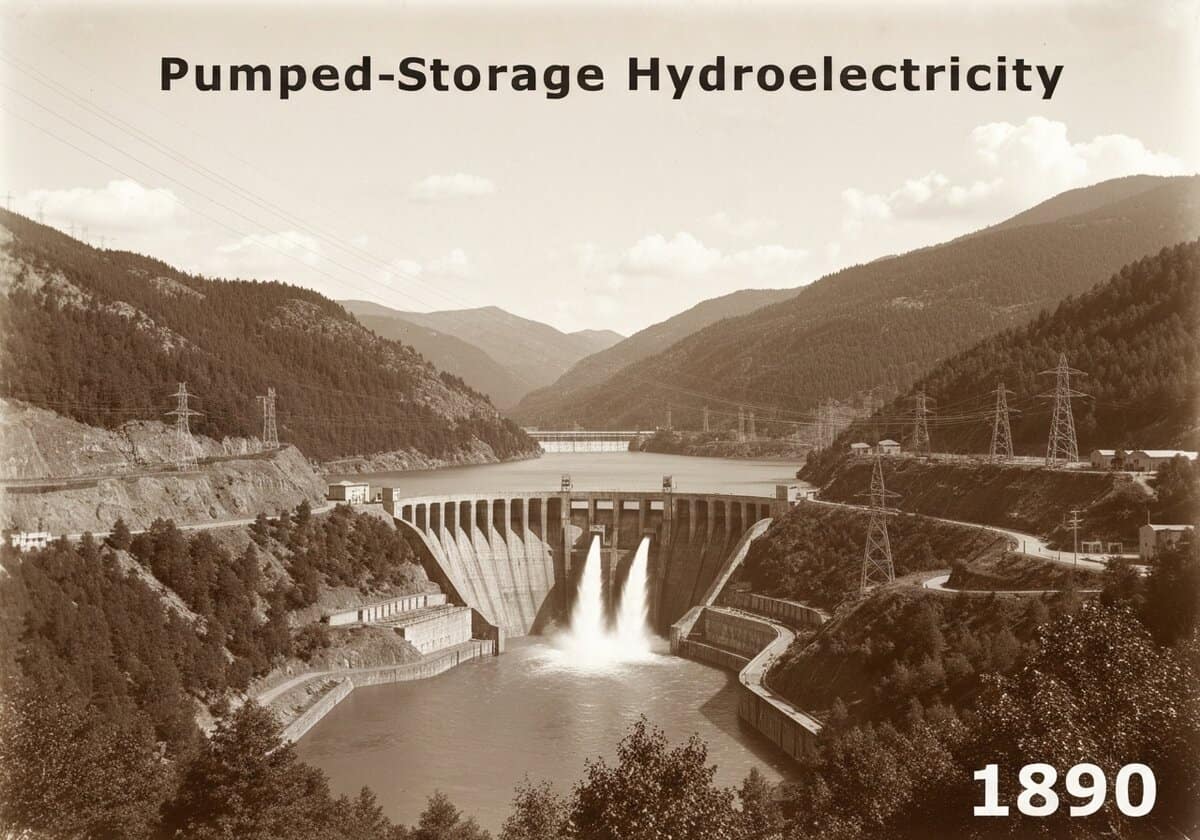
Pumped-storage hydroelectric facility with dam and turbines for energy storage.

(画像はイメージです)

揚水式水力発電(PSH)は、電力系統の負荷バランス調整に使用される水力エネルギー貯蔵の一種です。 方法 低地の貯水池から高地の貯水池へ汲み上げた水を、水の重力ポテンシャルエネルギーの形で蓄える。電力需要が高い時期には、蓄えられた水を放出してタービンを回し、発電を行う。
PSH systems are currently the most dominant form of grid-scale energy storage, accounting for over 94% of the world’s installed storage capacity. A typical PSH plant consists of two water reservoirs at different elevations. During off-peak hours, when electricity is cheap and abundant (e.g., at night or during high wind/solar generation), excess power is used to pump water from the lower reservoir to the upper one. This process converts electrical energy into gravitational potential energy. When electricity demand is high, water is released from the upper reservoir, flowing down through turbines to generate electricity, similar to a conventional hydroelectric plant. The round-trip efficiency of PSH systems is typically between 70% and 80%. The main advantages are their long lifespan (often over 50 years), large storage capacity, and ability to provide ancillary services to the grid. However, their deployment is geographically constrained, requiring specific topography with significant height differences and access to water.

UNESCO Nomenclature: 3305
電気工学

タイプ

物理システム

混乱

増分

使用法

広く普及している

前駆物質

  • 重力ポテンシャルエネルギーの発見
  • ブノワ・フルネイロンによる水力タービンの発明(1827年)
  • 発電機の開発
  • 従来型の水力発電ダムの建設

アプリケーション

  • グリッド規模のエネルギー貯蔵
  • 電力網の負荷分散
  • 周波数調整
  • 太陽光や風力などの断続的な再生可能エネルギー源の統合

特許:

NA

潜在的なイノベーションのアイデア

ボットによるトラフィック(現在1日あたり4万件以上)を排除するため、このコンテンツはコミュニティメンバー限定となっています。
> ログイン < または > 登録 < (100%無料)でこれにアクセスできます。他のすべての制限付きコンテンツとツールも同様です。

関連キーワード:揚水発電、水力発電、系統蓄電、位置エネルギー、負荷バランス、貯水池、タービン、PSH、系統安定性、再生可能エネルギー統合。

歴史的背景

揚水式水力発電

1881
1884
1890
1890
1899-01-01
1900
1903
1876
1882-01-01
1886-04-23
1890
1897
1900
1900
1903-05-10

(日付が不明または関連性がない場合、例えば「流体力学」などでは、その注目すべき出現時期の概算値が提示されます。)

関連する発明、革新、および技術原理

フルサイズの画像とダウンロードは、登録会員のみが100%無料で利用できます。