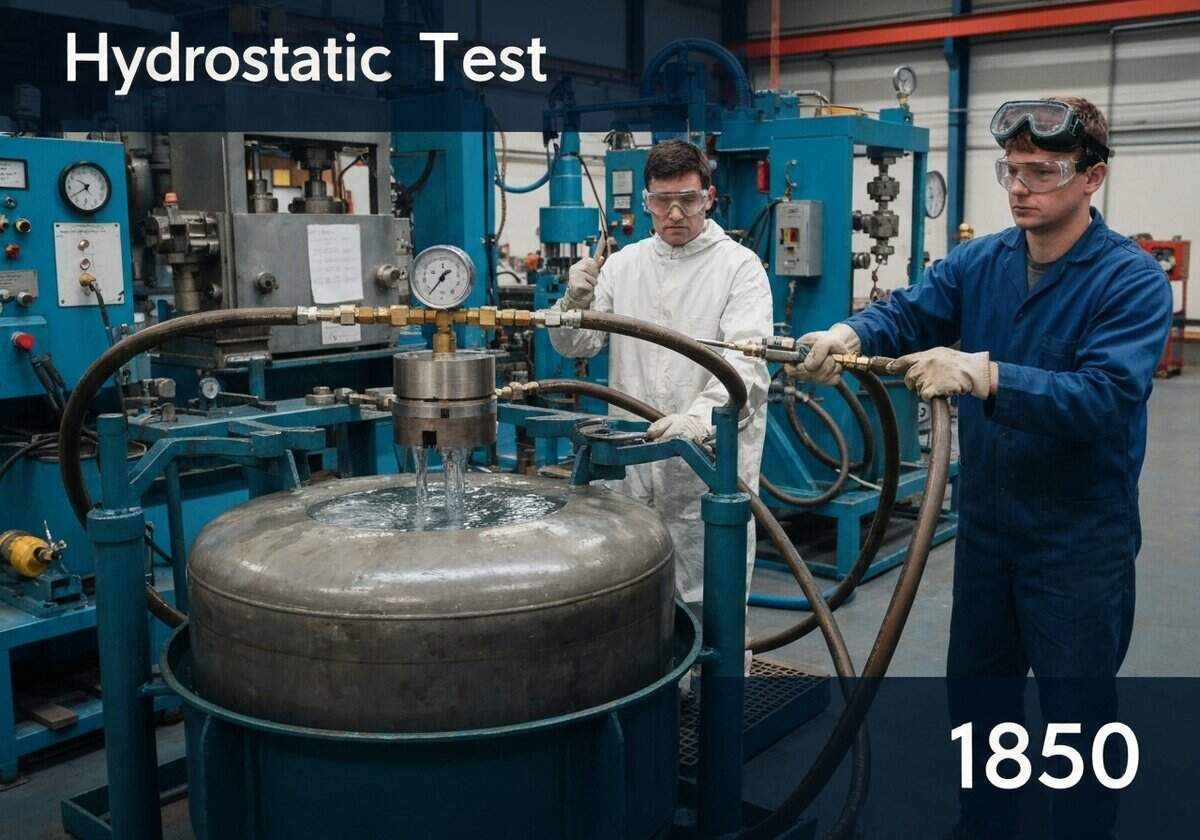
The hydrostatic test, or hydrotest, is a cornerstone of safety in industries dealing with pressurized systems. The procedure involves completely filling the component with a liquid, ensuring all air is purged, and then using a pump to increase the pressure to the required test level, which is always significantly higher than the maximum allowable working pressure (MAWP). The pressure is held for a predetermined duration while the vessel is inspected for leaks or permanent changes in shape. The safety advantage of using a liquid like water is rooted in its low compressibility. If the vessel fails and ruptures, the pressurized liquid will only expand slightly, resulting in a rapid pressure drop and a simple leak. In contrast, a compressed gas (as in a pneumatic test) stores a vast amount of potential energy. A rupture during a pneumatic test would lead to a violent, explosive release of this energy, propelling shrapnel and creating a dangerous blast wave. The energy stored in compressed water is orders of magnitude less than that stored in air at the same pressure.