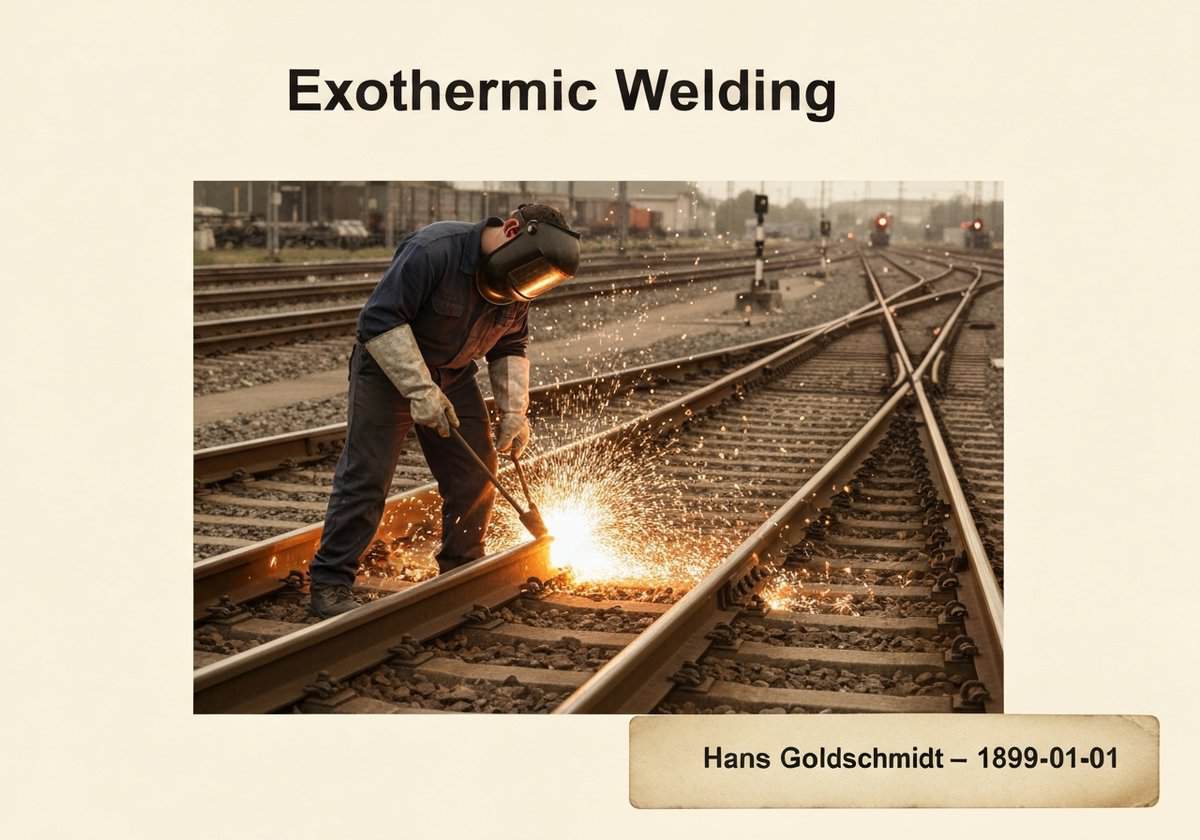
The process of exothermic welding begins with the precise alignment of the two metal pieces to be joined, leaving a specific gap between them. A refractory mold, designed to match the cross-section of the parts, is clamped around the joint. The metal ends are often preheated with a torch to remove moisture and ensure a good fusion. A crucible containing the thermite charge is placed over the mold. After the thermite is ignited, the exothermic reaction proceeds inside the crucible, producing molten metal (e.g., steel) and a lighter slag of aluminum oxide. Once the reaction is complete, a tapping mechanism at the bottom of the crucible is opened, allowing the heavier molten metal to flow down into the mold cavity. The superheated liquid metal fills the gap, melting the surfaces of the parent metal pieces and fusing with them. The lighter aluminum oxide slag flows in last, filling the top of the mold and forming a protective layer over the molten steel, shielding it from atmospheric contamination as it cools.