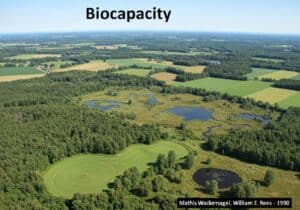
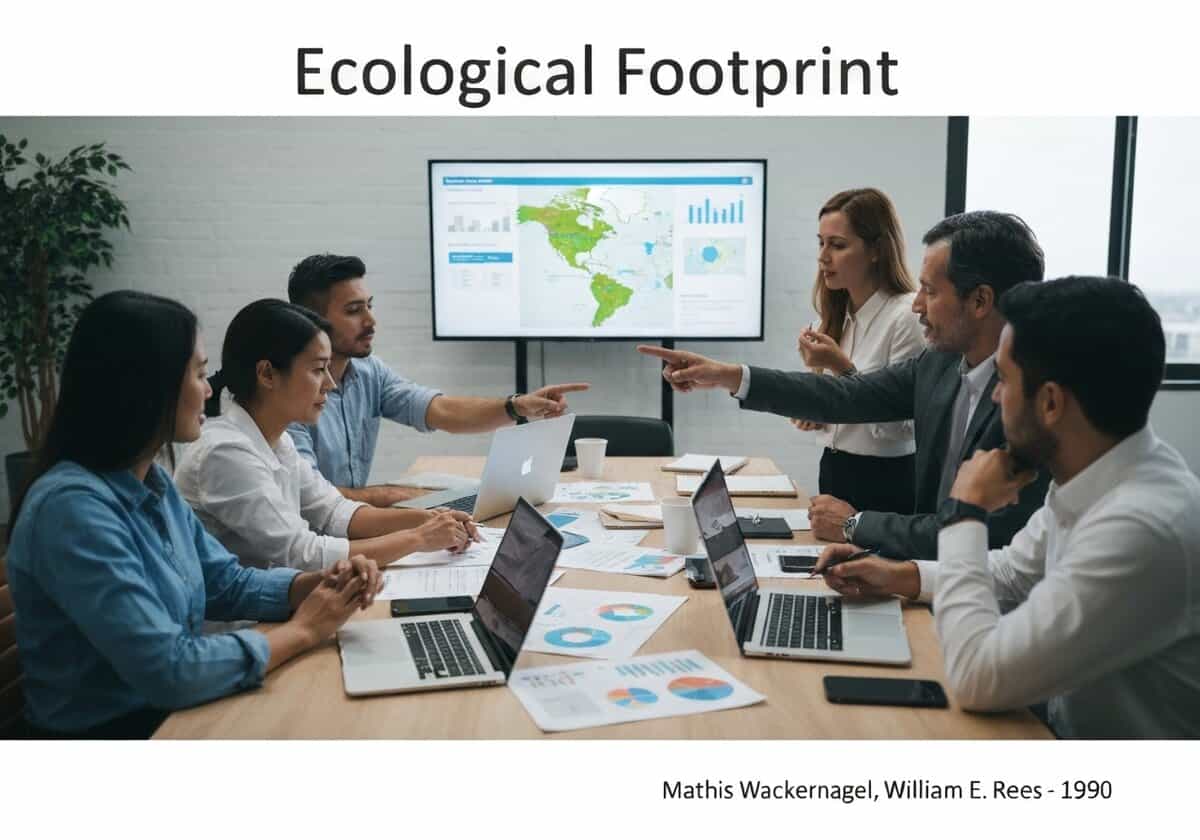
Developed in the early 1990s by Mathis Wackernagel during his PhD research under William E. Rees at the University of British Columbia, the Ecological Footprint concept was designed to be a comprehensive indicator of human pressure on the environment. It translates various types of consumption and waste generation into a single, understandable unit: the global hectare (gha). The methodology categorizes consumption into several major areas: food, shelter, mobility, goods, and services. It also accounts for the six main land use types: cropland, grazing land, fishing grounds, forest land for timber and fiber, built-up land for infrastructure, and forest land required to absorb carbon dioxide emissions not absorbed by the ocean (the carbon footprint). The carbon footprint component is often the largest part of the total Ecological Footprint for most industrialized nations. By summing up these areas, the metric provides an aggregate measure of demand that can be compared directly against the available biocapacity, making it a powerful tool for assessing sustainability at various scales, from an individual to the entire planet.