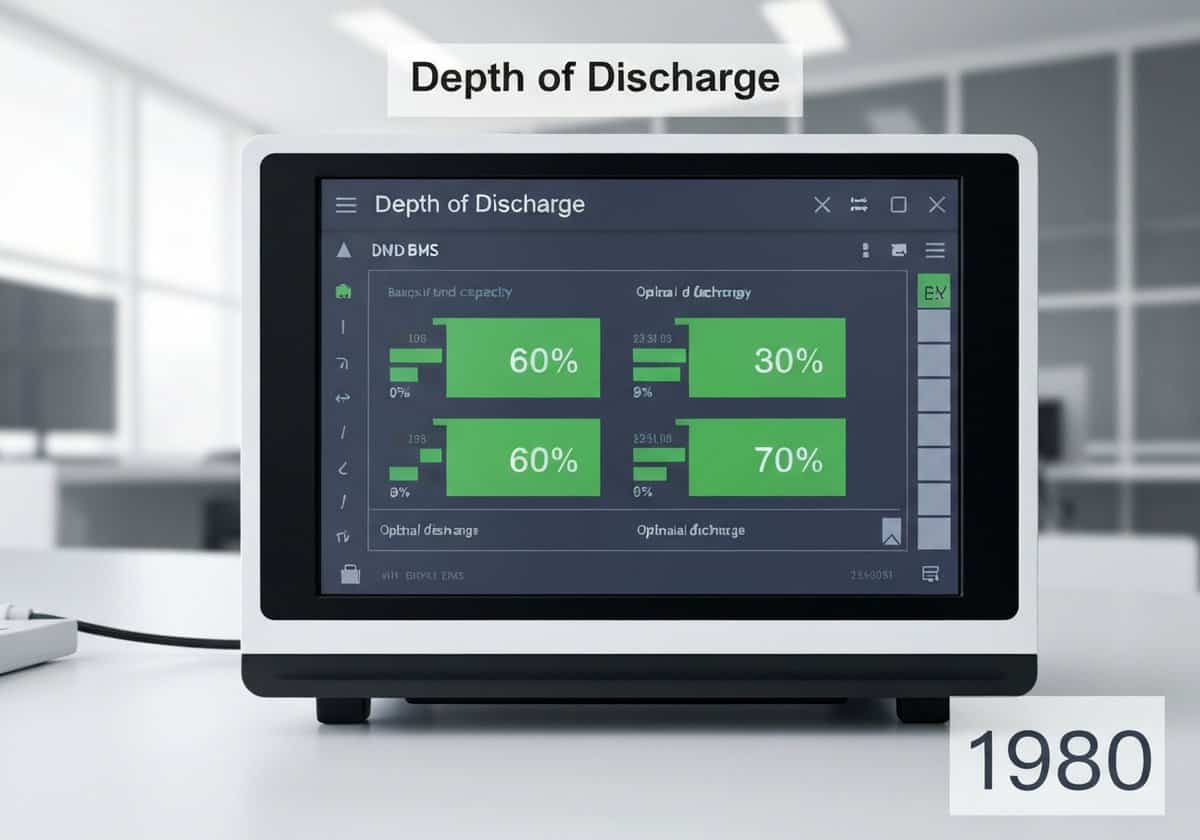
放電深度(DoD)は、バッテリーの容量のうち放電された割合を示します。これは充電状態(SoC)の逆数であり、DoDが100%の場合はバッテリーが完全に空の状態を意味します。バッテリーのサイクル寿命は平均DoDに大きく依存します。DoDが低いサイクル(例えば、容量の80%までしか放電しない)ほど、バッテリーが耐えられるサイクル数が大幅に増加します。


(画像はイメージです)
放電深度(DoD)は、バッテリーの容量のうち放電された割合を示します。これは充電状態(SoC)の逆数であり、DoDが100%の場合はバッテリーが完全に空の状態を意味します。バッテリーのサイクル寿命は平均DoDに大きく依存します。DoDが低いサイクル(例えば、容量の80%までしか放電しない)ほど、バッテリーが耐えられるサイクル数が大幅に増加します。
Depth of Discharge is a critical concept for the practical application and longevity of rechargeable batteries. While a battery has a nominal capacity, using 100% of that capacity in every cycle causes maximum stress on the battery’s internal components, leading to faster degradation. This degradation can manifest as capacity fade (a permanent loss of energy storage ability) or an increase in internal resistance. For example, a lithium-ion battery might last for 500 cycles if regularly discharged to 100% DoD, but could last for several thousand cycles if only discharged to 50% DoD.
This relationship is not linear and varies significantly between battery chemistries. Lead-acid batteries are particularly sensitive to deep discharge, while some lithium chemistries like Lithium Iron Phosphate (LFP) are more robust and can handle higher DoD with less degradation. Battery Management Systems (BMS) actively use the DoD concept. They often limit the user-accessible capacity, creating buffers at the top and bottom of the charge range. For instance, when an EV shows ‘100%’ charge, it might only be at 95% of its true maximum charge, and ‘0%’ might correspond to 10% of its true capacity, thereby avoiding the high-stress regions and extending the battery pack’s service life.
ボットによるトラフィック(現在1日あたり4万件以上)を排除するため、このコンテンツはコミュニティメンバー限定となっています。
> ログイン < または > 登録 < (100%無料)でこれにアクセスできます。他のすべての制限付きコンテンツとツールも同様です。
放電深度(DoD)
(日付が不明または関連性がない場合、例えば「流体力学」などでは、その注目すべき出現時期の概算値が提示されます。)
フルサイズの画像とダウンロードは、登録会員のみが100%無料で利用できます。
> ログイン <