ド・モルガンの法則は、デジタル回路設計の基礎となるブール代数の変換規則のペアである。 第一法則 論理積の否定は否定の論理和であると述べている。[latex]neg(P land Q) iff (neg P) lor (neg Q)[/latex]。 2 つ目の論理積は、論理和の否定は否定の論理積であると述べている。[latex]neg(P lor Q) iff (neg P) land (neg Q)[/latex]。

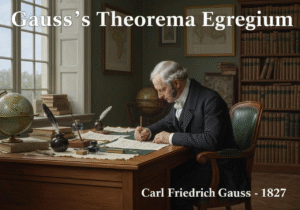
(画像はイメージです)
ド・モルガンの法則は、デジタル回路設計の基礎となるブール代数の変換規則のペアである。 第一法則 論理積の否定は否定の論理和であると述べている。[latex]neg(P land Q) iff (neg P) lor (neg Q)[/latex]。 2 つ目の論理積は、論理和の否定は否定の論理積であると述べている。[latex]neg(P lor Q) iff (neg P) land (neg Q)[/latex]。

In the context of digital electronics, De Morgan’s laws provide a powerful tool for circuit manipulation. They establish a direct equivalence between different types of logic gates. For example, the first law, [latex]\neg(A \cdot B) = \neg A + \neg B[/latex] (using dot for AND and plus for OR), shows that a NAND gate is equivalent to an OR gate with inverted inputs. Similarly, the second law, [latex]\neg(A + B) = \neg A \cdot \neg B[/latex], shows that a NOR gate is equivalent to an AND gate with inverted inputs. This interchangeability is extremely practical. Since NAND and NOR gates are “universal gates”—meaning any Boolean function can be implemented using only NAND gates or only NOR gates—De Morgan’s laws are essential for converting a circuit design from a mix of AND, OR, and NOT gates into a design using a single gate type. This simplifies the manufacturing process for integrated circuits, as only one type of logic cell needs to be perfected and replicated. The laws are also used extensively in logic synthesis software to optimize circuits for speed, area, or power consumption by transforming and simplifying the underlying Boolean expressions.
ボットによるトラフィック(現在1日あたり4万件以上)を排除するため、このコンテンツはコミュニティメンバー限定となっています。
> ログイン < または > 登録 < (100%無料)でこれにアクセスできます。他のすべての制限付きコンテンツとツールも同様です。
ド・モルガンの法則
(日付が不明または関連性がない場合、例えば「流体力学」などでは、その注目すべき出現時期の概算値が提示されます。)

フルサイズの画像とダウンロードは、登録会員のみが100%無料で利用できます。
> ログイン <