Product Design, Manufacturing & Innovation Resources
» Chemical Bonding

Chemical Bonding

1916
  • Gilbert N. Lewis
  • Linus Pauling
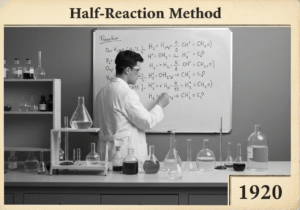
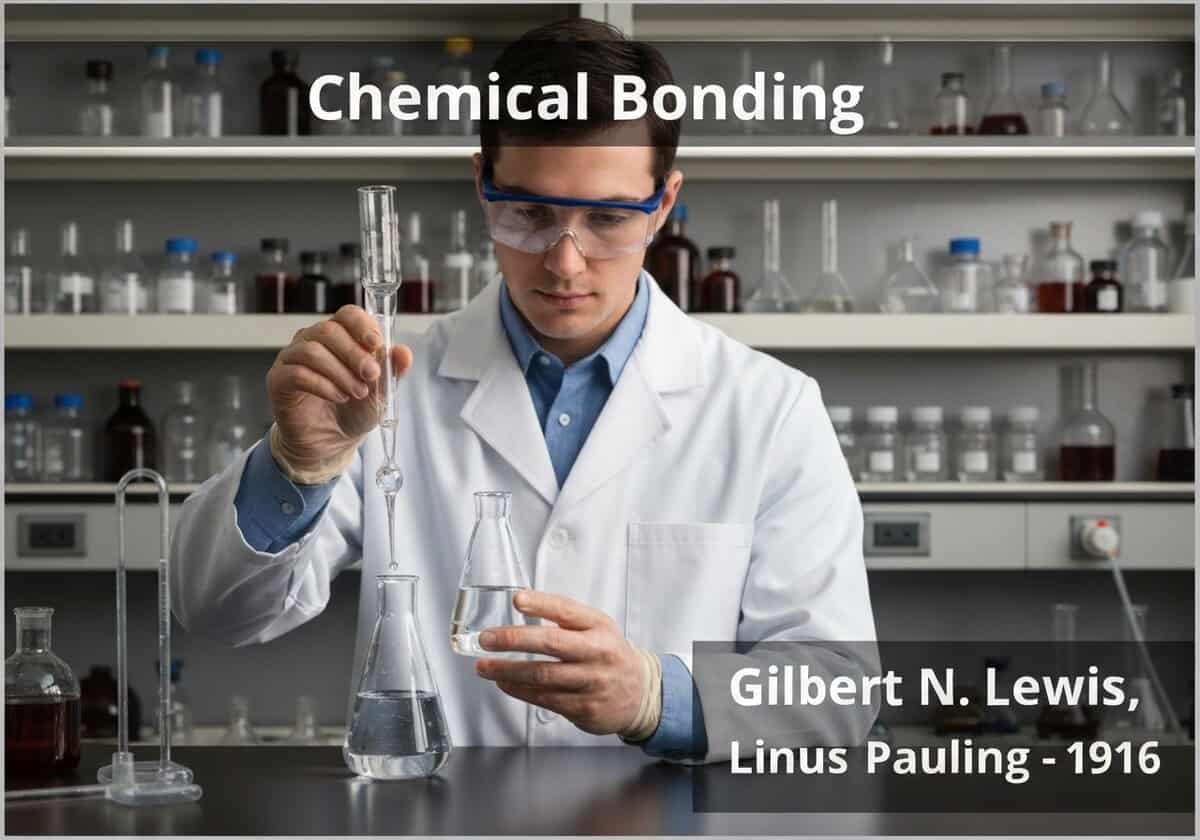
物理化学における化学結合を説明する実験風景。.

(画像はイメージです)

A chemical bond is a lasting attraction between atoms, ions, or molecules that enables the formation of chemical compounds. Bonds result from the electrostatic force of attraction between oppositely charged ions (ionic bonds) or through the sharing of electrons (covalent bonds). The strength and type of bonds dictate the structure and properties of a substance.
化学結合の概念は、個々の原子がどのように結合して、私たちが観察する膨大な種類の物質を形成するかを説明するものです。ギルバート・N・ルイスが1916年に提唱した共有結合は、原子が電子対を共有して安定した電子配置(「オクテット則」)を達成するというものであり、画期的な一歩でした。ルイス構造式で視覚化されたこのシンプルでありながら強力なアイデアは、非イオン性化合物の結合の最初の明確な図を提供しました。一方、イオン結合は、電気陰性度の低い原子(通常は金属)から電気陰性度の高い原子(非金属)へ1つ以上の電子が完全に移動することによって形成され、静電引力によって結合した荷電イオンが生成されます。

Our understanding was deepened significantly by the application of quantum mechanics. Linus Pauling’s valence bond theory, introduced in the 1930s, described covalent bonds as the result of the overlap of atomic orbitals. This theory introduced the concepts of hybridization (e.g., sp, sp2, sp3) and resonance to explain observed molecular geometries and bond properties. An alternative and often more powerful approach is molecular orbital (MO) theory, which considers electrons to be delocalized across the entire molecule in molecular orbitals formed from the combination of atomic orbitals. MO theory is essential for explaining the properties of conjugated systems, magnetism, and excited states. Beyond these primary types, there are also metallic bonds, characterized by a ‘sea’ of delocalized electrons, and weaker intermolecular forces like hydrogen bonds and van der Waals forces, which are critical for the properties of liquids, solids, and biological macromolecules like DNA.

UNESCO Nomenclature: 2209
物理化学

タイプ

抽象システム

混乱

基礎

使用法

広く普及している

前駆物質

  • 原子論(ジョン・ドルトン)
  • 電子の発見(J.J.トムソン)
  • 原子核モデルの発展(アーネスト・ラザフォード)
  • 「親和性」と「価数」の初期の概念

アプリケーション

  • 材料科学および工学(例:合金、ポリマーの製造)
  • 医薬品設計と薬理学
  • 新規化合物の合成
  • 生物学的プロセス(例:タンパク質の折り畳み)の理解
  • 接着剤および複合材料の開発
  • 分子構造の予測(VSEPR理論)

特許:

NA

潜在的なイノベーションのアイデア

ボットによるトラフィック(現在1日あたり4万件以上)を排除するため、このコンテンツはコミュニティメンバー限定となっています。
> ログイン < または > 登録 < (100%無料)でこれにアクセスできます。他のすべての制限付きコンテンツとツールも同様です。

関連キーワード:化学結合、共有結合、イオン結合、金属結合、ギルバート・N・ルイス、ライナス・ポーリング、電気陰性度、価電子、分子軌道理論、分子間力。

歴史的背景

Chemical Bonding

1912
1915
1915-11
1916
1918
1919-05-29
1920
1911-04-08
1913
1915
1916
1917
1918
1920
1920

(日付が不明または関連性がない場合、例えば「流体力学」などでは、その注目すべき出現時期の概算値が提示されます。)

関連する発明、革新、および技術原理

フルサイズの画像とダウンロードは、登録会員のみが100%無料で利用できます。