故障モード影響度および重要度解析(FMECAは、航空宇宙、自動車、医療機器など、さまざまな業界の製品の信頼性と安全性を確保する上で極めて重要な方法論となっています。統計によると、製品故障の約70%は に起因することが明らかになっています。 設計不良 プロセス上の欠陥や不具合に対処するためには、FMECAの複雑な仕組みを理解することが、リスクを効果的に軽減しようとするエンジニアや製品設計者にとって不可欠となります。この記事では、FMECAの定義と目的を詳しく説明し、故障モードの特定からリスク軽減までの体系的なプロセス手順を概説し、リスク優先度番号(RPN)計算の重要性を説明し、特定の用途に合わせたさまざまな種類のFMECAについて解説します。
主なポイント

- 潜在的な不具合を特定するための体系的なアプローチ。
- 優先順位付けのためのリスク優先度番号を計算します。
- 用途に合わせてカスタマイズされた様々なタイプがあります。
- 評価はリスク軽減戦略に役立つ。
- Compliance with established 基準 enhances reliability.
- ソフトウェアツールは、効率的なFMECAプロセスをサポートします。
FMECAの定義と目的
Failure Mode Effects and Criticality Analysis (FMECA) is a systematic approach used to identify potential failures in a product or process, assess their impact on system performance, and determine the criticality of each failure. The primary objective is to enhance reliability and safety by anticipating issues that could lead to catastrophic failures or significant performance degradation. It serves as a proactive risk management tool, offering engineers and designers valuable insights that drive improvements in 製品デザイン and operational processes.

この分析は、部品の故障モードからシステム全体への影響まで、複数のレベルを網羅している。
特定された各故障モードは、その潜在的な影響に基づいて評価され、その後、その深刻度、発生可能性、および(故障が発生する前の)検出可能性について分析される。
例えば、自動車業界では、FMECA(故障モード影響解析)によってブレーキシステムの潜在的な故障を特定することができ、エンジニアがどの問題に優先的に取り組むべきかを判断するのに役立ち、それによって事故の可能性とそれに伴うコストを低減することができる。
この手法は安全性を向上させるだけでなく、リソース配分も最適化します。リスクの高い故障モードに重点を置くことで、組織は予定外のメンテナンスや製品リコールに伴うコストを最小限に抑えることができます。例えば、ある研究では、航空宇宙分野でFMECAを導入することでダウンタイムが最大30%削減されたことが示されており、運用効率の確保におけるその有効性が実証されています。
FMECAは、医療、製造、航空宇宙など、さまざまな業界でも利用されています。各アプリケーションは、 フレームワーク ユーザー満足度と運用信頼性を向上させるため、中核となる原則を特定の業界ニーズや運用状況に合わせて調整します。システム障害がシステムに及ぼす影響を明確に理解することで、組織は製品ライフサイクルを大幅に改善する堅牢な軽減戦略を策定できます。
The FMECA Process Steps
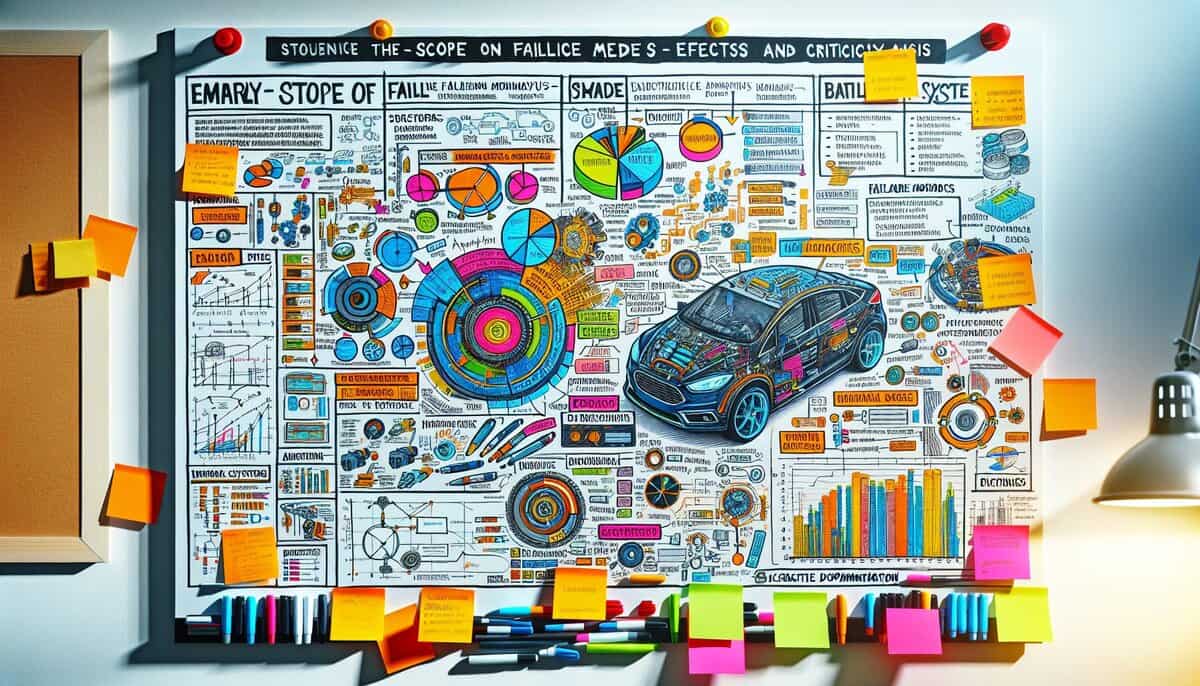
The FMECA methodology initiates with the system or product definition, wherein the scope is detailed, clearly identifying the boundaries, intended use, and operational environment. A comprehensive understanding of the system architecture and functional requirements is essential. Subsequently, components are listed along with their specific functions. For example, in the automotive industry, components like the braking system need thorough assessment due to their safety-critical nature. Each component is then analyzed for potential failure modes, which includes assessing how and where failures might occur. Each failure mode must be documented accurately.
The next step involves determining the effects of each identified failure mode on the system or product. In this phase, engineers must evaluate how a failure might disrupt operation or compromise safety, reliability, or performance. For instance, a failure in a プレッシャー sensor in a manufacturing assembly could result in over-pressurization, potentially causing system damage or safety hazards. Each effect is rated based on its severity, helping prioritize efforts. Since different failure modes can have varying impacts, assigning a severity rating becomes crucial.
Once failure modes and their effects are recorded, the analysis transitions to a risk assessment, where both the occurrence of each failure mode and its detection likelihood are evaluated. The combination of severity, occurrence, and detection ratings leads to the Risk Priority Number (RPN) calculation. This numeric index guides engineers in prioritizing corrective actions. For clarity, a sample table may represent the RPN calculations across different components:
| Component | Failure Mode | Severity | Occurrence | Detection | RPN |
|---|---|---|---|---|---|
| Brake System | Loss of brake pressure | 9 | 3 | 2 | 54 |
| Sensor | Signal failure | 7 | 2 | 3 | 42 |
Risk Priority Number RPN Calculation and Interpretation
Calculating the Risk Priority Number (RPN) involves a systematic approach using three critical parameters: Severity (S), Occurrence (O), and Detection (D). Each parameter is rated on a scale typically from 1 to 10. The RPN itself is computed with the formula: \(RPN = S * O * D\). For example, if a failure mode is rated as 7 for severity, 5 for occurrence, and 4 for detection, the RPN would be 140. This numeric value helps prioritize risks based on their potential impact and likelihood, facilitating focused mitigation efforts.
Interpreting the RPN values provides insights into which failure modes require immediate attention. Generally, a higher RPN indicates a greater risk. For instance, RPNs below 100 might suggest low priority, while values above 150 demand urgent action. Industries such as aerospace and healthcare often set specific thresholds determining whether further analysis or corrective actions are warranted, modifying the conventional thresholds to accommodate high safety standards.
For effective analysis, it’s vital to continuously monitor and update the RPN as products evolve through design changes or operational shifts. Engaging cross-functional チーム during this review process can enhance risk assessment accuracy and foster team ownership of the outcomes. The dynamic nature of risks requires RPN values to reflect real-time data, ensuring no critical issues are overlooked.
| RPN Range | Priority Level | Action Needed |
|---|---|---|
| 1 – 49 | 低い | Monitor |
| 50 – 149 | 中くらい | Review |
| 150+ | 高い | Immediate action required |
Types of FMECA and Their Applications
FMECA can be categorized into different types based on the specific focus of the analysis and the industry it targets. The standard process involves examining potential failure modes in systems, but variants such as Design FMECA (DFMECA) and Process FMECA (PFMECA) cater to distinct areas:
- DFMECA is applied during the design phase to identify possible design-related failures before the manufacturing stage
- PFMECA assesses the manufacturing processes and operational aspects. Each type enhances reliability by enabling corrective actions tailored to the phase of the 製品ライフサイクル most affected.
Applications of FMECA span various industries. For instance, in the aerospace sector, studies have shown that implementing DFMECA can result in a failure rate reduction of up to 25%, significantly lowering the risk of catastrophic failures. Similarly, in automotive manufacturing, PFMECA focuses on assembly line processes, enhancing production efficiency and quality assurance by identifying prone-to-failure components.
Different contexts lend themselves to specific methodologies. For example, software FMECA evaluates both software components and their interaction with hardware. This type is crucial in sectors where digital solutions govern safety features, such as in autonomous vehicles. In such frameworks, the identification and mitigation of software-related failures become paramount for system reliability and user safety.
Benefits and Limitations of FMECA

The application of FMECA significantly enhances product reliability while reducing the costs associated with potential failures. By identifying failure modes early in the design and manufacturing processes, organizations can implement preventive measures that avert costly recalls and repairs. For example, in the automotive industry, implementing FMECA 導かれた to a 30% reduction in warranty claims for a major automotive manufacturer, demonstrating a tangible benefit of early identification and mitigation of risks.
Another advantage is the systematic approach it offers for continuous improvement in engineering processes. FMECA allows teams to quantify risks through the Risk Priority Number (RPN), helping prioritize actions based on severity, occurrence, and detection ratings.
Organizations must track RPN values over time to ensure that risk-reduction strategies are still effective.
In addition, FMECA fosters interdisciplinary collaboration, as it often involves cross-functional teams, including design engineers, quality assurance, and production staff. Such collaboration can lead to innovative solutions and perspectives. When team members 従事する in brainstorming and discussion during FMECA sessions, the collective knowledge base expands, resulting in a more comprehensive understanding of potential failure modes and mitigation strategies.
Despite its advantages, FMECA does have limitations that organizations must consider: the process is time-consuming and requires detailed documentation and analysis, which can be resource-intensive, particularly for smaller firms. Furthermore, if conducted improperly, FMECA might yield misleading outcomes, as it is heavily dependent on the expertise of those conducting it. Inaccurate risk assessments can lead to over-prioritizing less critical risks, misallocating resources.
Implementation challenges also arise from the need for standardized procedures and comprehensive training to ensure effectiveness across teams.
| Criteria | 利点 | Limitations |
|---|---|---|
| Cost Reduction | Identifies potential failures early | Resource-intensive |
| 品質改善 | Enhances product reliability | Dependent on expertise |
| Interdisciplinary Collaboration | Fosters innovative problem-solving | Requires standardized processes |
Standards Guidelines and Software Tools for FMECA
Industry standards for FMECA are established by organizations such as the International Organization for Standardization (ISO) and the Society of Automotive Engineers (SAE). ISO14971, focused on risk management for medical devices, provides a framework for FMECA that is widely adopted. SAE J1739 is another significant standard, specifically designed for automotive applications. These guidelines create structured methodologies for identification, analysis, and management of failure modes, allowing organizations to create reliable and consistent FMECA reports.
Numerous software tools support the FMECA process, offering capabilities ranging from database management to complex statistical analysis. Tools such as Reliability Workbench, ARMS, and RiskWatch offer tailored functionalities for FMECA. These platforms not only enhance data collaboration among engineering teams but also facilitate automated calculations of Risk Priority Numbers (RPN) and offer visualization features such as heat maps and dashboards. Their usage has proven to reduce the time taken for FMECA assessments by as much as 40% in some industries.
For effective FMECA implementation, understanding the capability and limitations of available tools is crucial. Some software, like FMEA-Pro, provides templates and compliance tracking, while others, such as FMECA Studio, focus heavily on ユーザーインターフェース and ease of navigation. Selection should be based on project needs, team size, and specific industry requirements.
Using software can greatly enhance the tracking of failure mode histories and allow for real-time updates, promoting responsiveness in engineering processes. A comparative analysis of FMECA software is presented in the table below, highlighting key features:
| ソフトウェア | 主な特徴 | 最適な用途 |
|---|---|---|
| Reliability Workbench | Advanced statistical analysis | Large enterprises |
| FMEA-Pro | Compliance templates | Regulated industries |
| RiskWatch | Heat mapping | Visual reporting |
Documentation practices as prescribed in ISO 9001 can further bolster the FMECA process by ensuring that all findings are recorded systematically. This documentation creates essential traceability and supports continuous improvement efforts within manufacturing and engineering sectors.

Industry standards for FMECA are established by organizations such as the International Organization for Standardization (ISO) and the Society of Automotive Engineers (SAE). ISO 14971, focused on risk management for medical devices, provides a framework for FMECA that is widely adopted. SAE J1739 is another significant standard, specifically designed for automotive applications. These guidelines create structured methodologies for identification, analysis, and management of failure modes, allowing organizations to create reliable and consistent FMECA reports.
ヒント: ensure to periodically revisit FMECA reports, as changes in design or operational conditions may influence failure modes and their impacts significantly over time. Regular updating not only optimizes the FMECA but also ensures compliance with regulatory standards.
結論
In addressing the critical need for reliability and safety in product development, the methodology of Failure Mode Effects and Criticality Analysis (FMECA) proves to be indispensable for engineers and designers across various sectors. As we’ve examined, the systematic approach of FMECA—from identifying potential failure modes to ranking their criticality using the Risk Priority Number (RPN)—provides a structured framework for proactively managing risks.
By integrating FMECA into the design and manufacturing processes, engineers can significantly reduce the likelihood of failures attributed to design flaws.
Frequently Asked Questions
What is FMECA and what are its objectives?
What are the steps involved in the FMECA process?
How is the Risk Priority Number (RPN) calculated and interpreted?
What standards and guidelines are relevant to FMECA?
What software tools are available for conducting FMECA?
How is FMECA applied in specific industries like Aerospace and Defense or Automotive?
Related Readings
- Failure Mode Classification: categorizing potential failure modes based on their nature and impact on the system.
- Root Cause Analysis (RCA): a method to investigate the underlying causes of failures to prevent recurrence.
- Corrective Action Plan (CAP): a structured strategy to address identified risks and improve system reliability.
- Reliability Centered Maintenance (RCM): an approach that focuses on maintaining system reliability through proactive maintenance strategies.
- Quantitative Risk Assessment (QRA): a numeric approach to evaluating risks and their probabilities based on historical data.
- デザインレビュー: formal evaluations of product designs at different stages to identify potential failure modes earlier in the process.
- Change Control Process: a method to manage changes in design and process that may introduce new failure modes.
- Failure Reporting and Corrective Action System (FRACAS): a structured process for documenting failures and implementing corrective measures.
- Preventive Maintenance Strategies: scheduled maintenance activities aimed at preventing failures before they occur.
- Benchmarking Best Practices: comparing FMECA processes with industry standards to identify opportunities for improvement.
- Stakeholder Risk Assessment: involving stakeholders to gather perspectives on risks and their potential impacts.
- Simulation and Modeling Techniques: using models to simulate failure scenarios and visualize effects on system performance.
- Human Factors Engineering: considering human interactions and errors as potential failure modes in system design.
- Data Analysis for FMECA: employing statistical methods to analyze data for more robust failure predictions.
- Lifecycle Assessment: evaluating the environmental impact of failure modes throughout the product lifecycle.
External Links on Failure Mode Effects And Criticality Analysis (FMECA)
国際規格
(リンクにカーソルを合わせると、コンテンツの説明が表示されます)
用語集
Computer Algebra Systems (CAS): 数式を記号形式で操作するために設計されたソフトウェアで、簡略化、微分、積分、方程式の解法などの演算を可能にします。これらのシステムは正確な計算を容易にし、代数的な問題解決のためのツールを提供するため、教育や研究で広く利用されています。
Computer-Aided Engineering (CAE): 数値解析手法とモデリング技術を用いて製品性能のシミュレーション、最適化、検証を可能にする、エンジニアリング解析および設計プロセスを支援する一連のソフトウェアツール。
Contract Manufacturer (CM): 他社に代わって製品を製造する会社で、通常は特定の設計および品質仕様に従って製造を行う。この仕組みにより、依頼企業はマーケティングや製品開発といった中核事業に集中できる一方、製造工程は外部委託することができる。
Failure Mode and Effects Analysis (FMEA): a systematic method for evaluating potential failure modes within a system, process, or product, assessing their effects on performance, and prioritizing risks to improve reliability and safety through corrective actions.
Failure Mode Effects And Criticality Analysis (FMECA): システムにおける潜在的な故障モードを特定し、システム性能への影響を評価し、各故障の重大度を判断してリスク管理および軽減戦略の優先順位を決定するための体系的なアプローチ。
International Electrotechnical Commission (IEC): 電気、電子、および関連技術に関する国際規格を開発・発行し、国際貿易を促進するとともに、電気機器およびシステムの安全性、効率性、相互運用性を確保するグローバル組織。
International Organization for Standardization (ISO): a non-governmental international body that develops and publishes standards to ensure quality, safety, efficiency, and interoperability across various industries and sectors, facilitating global trade and cooperation. Established in 1947, it comprises national standardization organizations from member countries.
User Interface (UI): a system that enables interaction between users and software applications, encompassing visual elements, controls, and overall layout to facilitate user tasks and enhance experience.