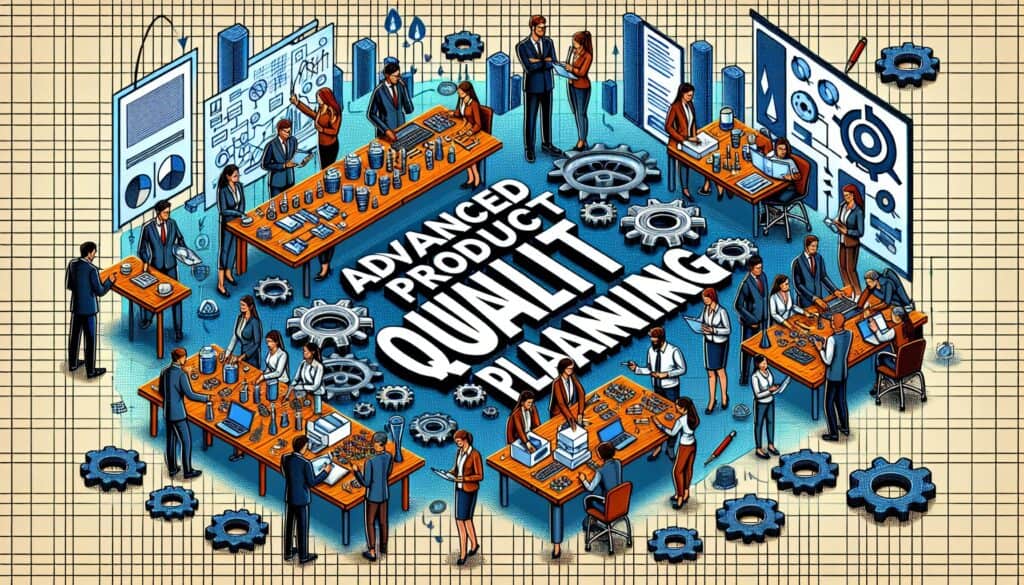
Advanced Product Quality Planning (APQP) is particularly beneficial in industries where product reliability and compliance with safety standards are paramount, such as automotive manufacturing, aerospace, electronics, and medical devices. As teams embark on this structured framework, they can effectively incorporate various quality tools such as Failure Mode and Effects Analysis (FMEA), Design Reviews, and Control Plans at each phase, which ensures that potential issues are addressed well before reaching the consumer market. Companies like Ford, General Motors, and Toyota have successfully implemented APQP to not only enhance their product development cycles but also to strengthen relationships with suppliers by involving them in early discussions, which leads to better integration of materials and processes. One of the key contexts for APQP is during the initial stages of a project, where cross-functional teams consisting of design engineers, quality assurance personnel, marketing representatives, and manufacturing experts converge to define project specifications. The involvement of diverse stakeholders fosters a comprehensive understanding of customer requirements and regulatory standards, ensuring that all voices are heard in the design and development phases. As product and process validation unfolds, rigorous testing and inspections occur, enabling organizations to verify product conformance against defined quality benchmarks. In the feedback phase, retrospective assessments are conducted, allowing teams to learn from the launch experience, capture lessons learned, and implement corrective actions for future projects. This holistic approach not only mitigates risks associated with product failures but also boosts customer satisfaction through improved product quality and reliability, thereby enhancing the overall brand reputation in competitive markets.
Fasi chiave di questa metodologia
Suggerimenti per i professionisti
- Integrate advanced simulation tools in the Design & Development phase to predict product performance and identify potential design flaws early.
- Implement iterative feedback loops with robust metrics during Product & Process Validation to refine processes and align with evolving customer needs.
- Utilize cross-functional workshops to enhance supplier collaboration, ensuring alignment on quality standards and expectations throughout the APQP phases.
Leggere e confrontare diverse metodologie, raccomandiamo il
> Ampio archivio di metodologie <
insieme ad altre 400 metodologie.
I vostri commenti su questa metodologia o ulteriori informazioni sono benvenuti su sezione commenti qui sotto ↓ , così come tutte le idee o i link relativi all'ingegneria.