Product Design, Manufacturing & Innovation Resources
घर » प्रोइंसुलिन प्रसंस्करण और इंसुलिन जैवसंश्लेषण

प्रोइंसुलिन प्रसंस्करण और इंसुलिन जैवसंश्लेषण

1967
  • Donald F. Steiner
कोशिका जीवविज्ञान अनुप्रयोगों के लिए एक प्रयोगशाला में प्रोइन्सुलिन प्रसंस्करण का अध्ययन करने वाला शोधकर्ता।.

(यह छवि केवल उदाहरण के लिए बनाई गई है)

Insulin is synthesized in pancreatic beta cells as a single-chain precursor called proinsulin. In the endoplasmic reticulum, proinsulin folds and forms its disulfide bonds. It is then transported to the Golgi apparatus and packaged into secretory granules, where proteases (prohormone convertases PC1/3 and PC2, and carboxypeptidase E) cleave it into mature insulin and a connecting peptide, C-peptide.

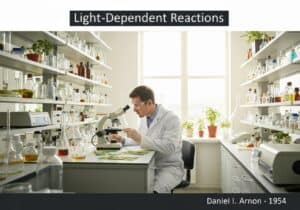
The discovery of proinsulin by Donald F. Steiner in 1967 resolved a key puzzle in insulin biosynthesis. It was known that insulin consisted of two separate polypeptide chains (A and B), but the mechanism for ensuring their coordinated synthesis and correct assembly via disulfide bonds was unclear. Steiner’s research revealed that a single gene codes for a larger, single-chain precursor. This preproinsulin molecule contains a signal peptide at its N-terminus that directs it into the lumen of the endoplasmic reticulum (ER). The signal peptide is quickly cleaved off, leaving proinsulin. Proinsulin consists of the B chain, a connecting C-peptide, and the A chain, in that order (B-C-A). Within the ER, the molecule folds into its proper conformation, guided by chaperones, which brings the cysteine residues into proximity, allowing the three crucial disulfide bonds to form correctly. This folded proinsulin is then transported to the Golgi complex and packaged into immature clathrin-coated secretory vesicles. As these vesicles mature into dense-core secretory granules, the internal environment becomes more acidic, activating specific endoproteases. Prohormone convertase 1/3 (PC1/3) makes the initial cut at the B-chain/C-peptide junction, and prohormone convertase 2 (PC2) cuts at the C-peptide/A-chain junction. Finally, carboxypeptidase E (CPE) trims off basic amino acid residues at the new C-termini, resulting in the final, mature two-chain insulin molecule and the free C-peptide. Both are stored in these granules and co-secreted in equimolar amounts in response to high blood glucose.

UNESCO Nomenclature: 2403
कोशिका जीवविज्ञान

Type

जैविक प्रक्रिया

व्यवधान

संतोषजनक

उपयोग

व्यापक उपयोग

शगुन

  • प्रोटीन संश्लेषण मार्ग की खोज (राइबोसोम, ईआर, गोल्जी)
  • determination of insulin’s two-chain structure by sanger
  • रेडियोधर्मी अमीनो अम्लों का उपयोग करके पल्स-चेज़ लेबलिंग तकनीकों का विकास
  • प्रोटियोलिटिक एंजाइमों (प्रोटीएज़) की पहचान

आवेदन

  • शरीर में इंसुलिन के उत्पादन का आकलन करने के लिए रक्त में सी-पेप्टाइड के स्तर का मापन।
  • जन्मजात हाइपरप्रोइंसुलिनेमिया की समझ, जो प्रोइंसुलिन प्रसंस्करण का एक आनुवंशिक विकार है।
  • बेहतर स्थिरता के लिए सिंगल-चेन इंसुलिन एनालॉग्स का विकास
  • कोशिका के भीतर प्रोटीन की तह और आवागमन पर शोध
  • अन्य पेप्टाइड हार्मोन के जैवसंश्लेषण के लिए एक मॉडल प्रणाली प्रदान करना

पेटेंट:

NA

संभावित नवाचार विचार

बॉट ट्रैफिक को कम करने के कारण, जो वर्तमान में प्रति दिन 40,000 से अधिक है, यह सामग्री केवल समुदाय के सदस्यों के लिए आरक्षित है।
> लॉगिन < या > रजिस्टर < इस सामग्री और अन्य सभी प्रतिबंधित सामग्रियों और उपकरणों तक पहुंच (100% निःशुल्क) है।

Related to: proinsulin, c-peptide, biosynthesis, beta cell, endoplasmic reticulum, golgi apparatus, secretory granule, protein folding, post-translational modification, donald steiner.

ऐतिहासिक संदर्भ

प्रोइंसुलिन प्रसंस्करण और इंसुलिन जैवसंश्लेषण

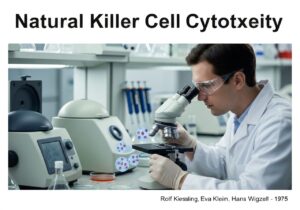
Natural Killer cells in a laboratory setting, examining cytotoxicity mechanisms.

प्राकृतिक हत्यारा (एनके) कोशिका साइटोटॉक्सिसिटी

नेचुरल किलर (एनके) कोशिकाएं जन्मजात प्रतिरक्षा प्रणाली की साइटोटॉक्सिक लिम्फोसाइट्स हैं, जो वायरल संक्रमण और कैंसर के खिलाफ प्रारंभिक रक्षा के लिए महत्वपूर्ण हैं। टी कोशिकाओं के विपरीत, इन्हें पूर्व संवेदीकरण की आवश्यकता नहीं होती है। एनके कोशिकाएं "मिसिंग-सेल्फ" पहचान तंत्र के माध्यम से उन लक्ष्य कोशिकाओं की पहचान करती हैं और उन्हें नष्ट करती हैं जिनमें एमएचसी क्लास I अणु कम हो गए हैं - जो ट्यूमर और वायरस द्वारा अपनाई जाने वाली एक सामान्य प्रतिरक्षा बचाव रणनीति है - और परफोरिन और ग्रैनजाइम के माध्यम से एपोप्टोसिस को प्रेरित करती हैं।

1950
1954
1960
1967
1970
1975
1977
1950
1951
1958
1960
1970
1973
1975
1979

(यदि तिथि अज्ञात है या प्रासंगिक नहीं है, उदाहरण के लिए "द्रव यांत्रिकी", तो इसके उल्लेखनीय उद्भव का एक अनुमानित आंकड़ा प्रदान किया गया है)

संबंधित आविष्कार, नवाचार और तकनीकी सिद्धांत

पंजीकृत सदस्यों के लिए पूर्ण आकार की छवियाँ और डाउनलोड 100% निःशुल्क उपलब्ध हैं।