Product Design, Manufacturing & Innovation Resources
Maison » Ferromagnetism and Magnetic Domains

Ferromagnetism and Magnetic Domains

1907
  • Pierre-Ernest Weiss
Analyse des matériaux ferromagnétiques dans un laboratoire de physique du solide.

(Image générée à titre d'illustration uniquement)

Le ferromagnétisme est le mécanisme par lequel certains matériaux, comme le fer, forment des aimants permanents. Il résulte d'une interaction d'échange quantique qui provoque l'alignement spontané des moments magnétiques atomiques dans des régions appelées domaines magnétiques. En dessous de la température de Curie, ces domaines peuvent être alignés par un champ magnétique externe, créant ainsi un champ magnétique fort et persistant. aimant même après la suppression du champ externe.
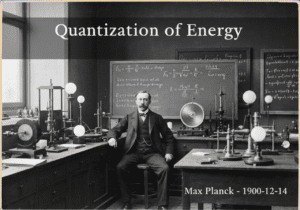
Pierre Weiss proposed the concept of magnetic domains in 1907 to explain the properties of ferromagnetic materials. He theorized that within a ferromagnetic material, there are small regions, now known as Weiss domains, where the atomic magnetic moments are all aligned in the same direction, resulting in strong local magnetization. In an unmagnetized piece of ferromagnetic material, the domains are randomly oriented, so their magnetic fields cancel each other out, and the material as a whole has no net magnetic field.

When an external magnetic field is applied, two processes can occur: the domains that are already aligned with the field can grow at the expense of their neighbors (domain wall motion), and the magnetic moments within other domains can rotate to align with the external field. When the external field is strong enough, nearly all domains become aligned, and the material is said to be saturated. For hard magnetic materials, this alignment can persist even after the external field is removed, creating a permanent magnet. This persistence is called remanence. The strength of the reverse field needed to demagnetize the material is called its coercivity.

UNESCO Nomenclature: 2211
- Physique de l'état solide

Taper

Propriété physique

Perturbation

Fondamentaux

Usage

Utilisation généralisée

Précurseurs

  • discovery of naturally magnetic lodestone
  • understanding of atomic magnetic moments
  • développement de la mécanique quantique
  • observation of magnetic hysteresis

Applications

  • permanent magnets in motors and speakers
  • magnetic data storage (hard drives, magnetic tape)
  • transformers and inductors
  • magnetic shielding
  • sensors

Brevets:

NA

Idées d'innovations potentielles

En raison du trafic généré par les robots de scraping, actuellement supérieur à 40 000 par jour, ce contenu est réservé aux membres de la communauté.
> Connexion < ou > Registre < (100% gratuit) pour y accéder, ainsi qu'à tous les autres contenus et outils à accès restreint.

Voir aussi : ferromagnétisme, domaine magnétique, domaine de Weiss, interaction d'échange, température de Curie, aimant permanent, hystérésis, rémanence, coercivité, physique du solide.

Contexte historique

Ferromagnetism and Magnetic Domains

1900-12-14
1902
1904
1907
1909
1910
1912
1900
1902
1902
1907
1909
1910
1911-04-08
1913

(si la date est inconnue ou non pertinente, par exemple « mécanique des fluides », une estimation arrondie de son émergence notable est fournie)

Inventions, innovations et principes techniques connexes

Les images en pleine résolution et les téléchargements sont uniquement disponibles, et 100% gratuits, pour les membres inscrits.