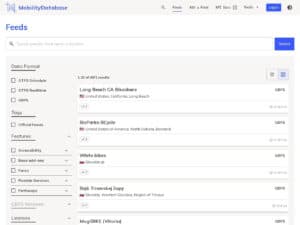
Anonymity Checker compared with BrowserLeaks and EFF Cover Your Tracks| Comprobador de anonimato | BrowserLeaks | EFF Cover Your Tracks |
|---|
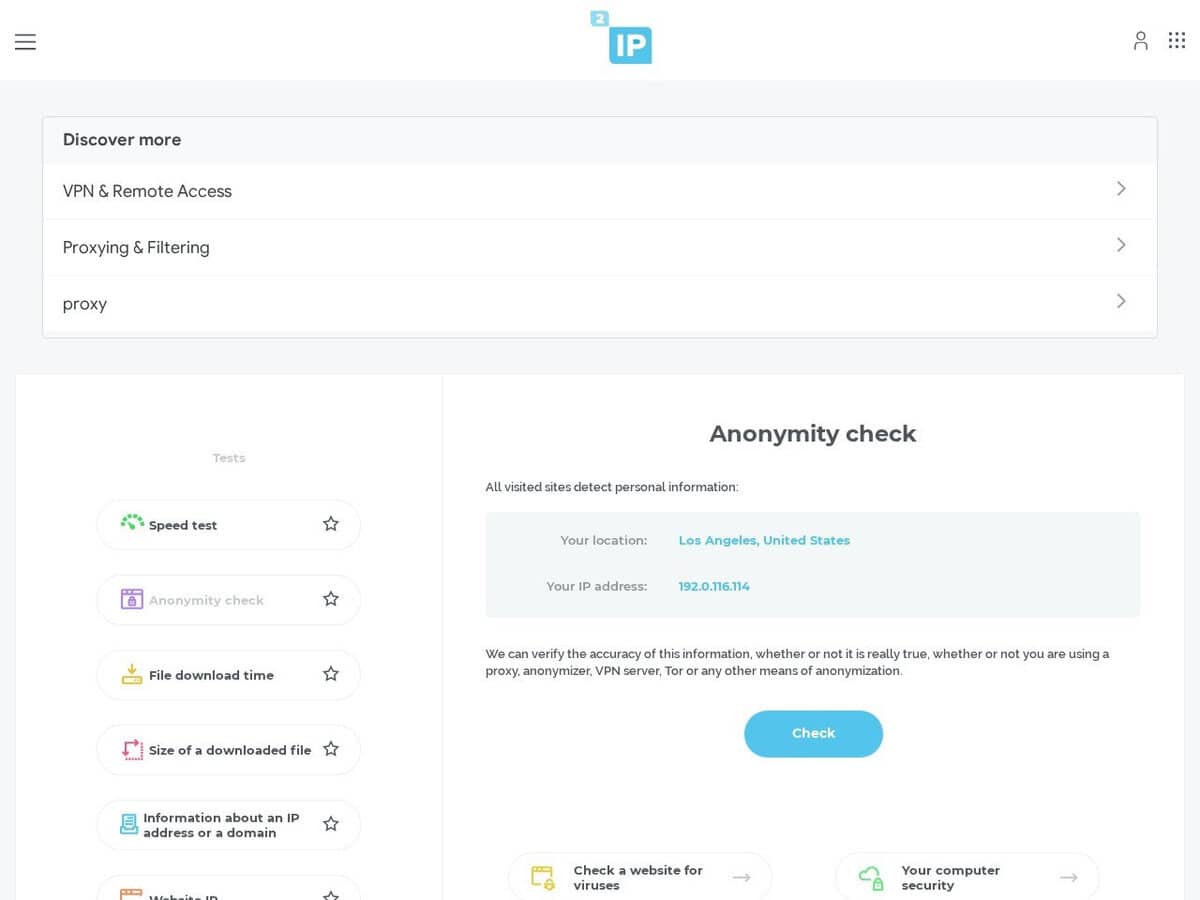
| Formato de salida: Returns a single anonymity score plus the detail of each test. A score close to 0% (green) means the tool detects no hiding mechanism, so a low value is not automatically good. | Formato de salida: Returns separate reports per test (IP address, WebRTC leak, canvas, WebGL, fonts, TLS client, geolocation API, content filters, DNS leak among others). It gives raw findings to interpret, with no single score stated on its home page. | Formato de salida: Returns a uniqueness result for the browser configuration, compared with a database of recently observed configurations, and a separate tracker blocking result. |
| Scope of the checks: Analyses browser visible specifications and connection details, so it mixes network exposure and browser attributes in one run. | Scope of the checks: The widest set of individual technical tests of the three, including experimental tools such as TCP/IP and HTTP/2 fingerprinting, QUIC and Client Hints tests. Useful to verify one specific leak path. | Scope of the checks: Focuses on two questions: do your tracker blockers stop simulated ad and beacon trackers and honour a Do Not Track domain, and how identifiable is your browser from attributes such as user agent, screen size, timezone, fonts, canvas and WebGL hashes. |
| Reading the result: Reports what it believes about your setup. The result has to be checked against your real configuration, which only you know, and combined with the Fingerprint and Browser Header checker tools. | Reading the result: Results are technical and need some networking and browser knowledge to interpret, for example telling a WebRTC leak from a normal local address. | Reading the result: The uniqueness score rests on an information theory model described on the site. It suits a non-specialist first assessment, then a deeper tool can follow. |
| Operator and data handling: The page names no operator. It shows a copyright notice for 2011 to 2026 and states that third-party analytics may be temporarily active. | Operator and data handling: Run by the Electronic Frontier Foundation, launched in 2010 as Panopticlick and renamed Cover Your Tracks in 2020. It logs the collected browser information anonymously and uses anonymous results to compute uniqueness for other visitors. |