Product Design, Manufacturing & Innovation Resources

تخطيط مسار القيمة (VSM)

رسم خريطة سلسلة القيمة

تخطيط مسار القيمة (VSM)

الهدف:

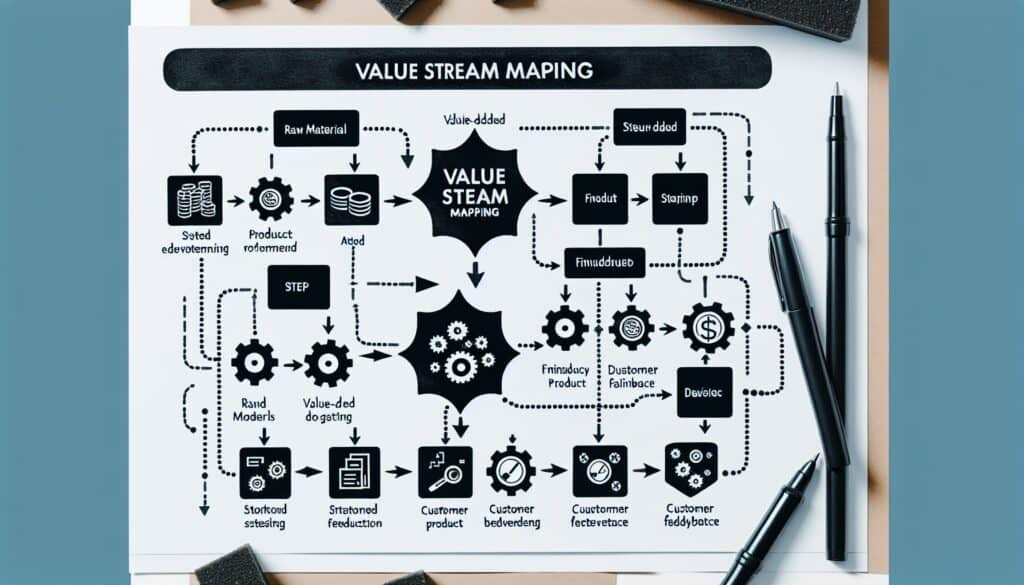
أداة إدارة Lean تستخدم لتصور وتحليل وتحسين جميع الخطوات (ذات القيمة المضافة وغير ذات القيمة المضافة) في عملية تقديم منتج أو خدمة، من المواد الخام إلى العميل.

كيفية استخدامه:

الايجابيات

سلبيات

الفئات:

الأفضل لـ:

Value Stream Mapping (VSM) serves as a powerful methodology across various sectors such as manufacturing, healthcare, and software development, where understanding the flow of value is paramount. In manufacturing, for example, automotive companies utilize VSM to visualize workshop processes, enabling them to pinpoint inefficiencies between assembly lines and material handling systems. In healthcare, hospitals apply VSM to optimize patient flow, thereby enhancing service delivery while minimizing waiting times. This methodology is particularly effective in the initial phases of a project where mapping current operations can yield significant improvements. Participants typically include cross-functional teams comprising engineers, operators, and stakeholders who contribute diverse perspectives on process challenges and opportunities. Conducting regular workshops or Kaizen events can invigorate this practice, encouraging continuous updates to both current and future state maps as processes evolve. A hallmark of VSM is its visual nature, which not only simplifies complex workflows but also promotes enhanced communication among team members, fostering a shared understanding of goals and metrics that drive performance improvements. Exporting VSM findings into action plans sets a structured path for change, leading to measurable reductions in cycle times and increases in customer satisfaction. The collaborative approach reinforces a culture of continuous improvement, supporting organizations in their pursuit of lean principles while establishing a framework for sustainable operational excellence.

الخطوات الرئيسية لهذه المنهجية

  1. أنشئ خريطة للوضع الحالي توضح تدفق المواد والمعلومات.
  2. حدد مناطق الهدر والاختناقات ضمن خريطة الوضع الحالي.
  3. قم بتحليل النفايات المحددة وترتيبها حسب الأولوية بناءً على تأثيرها.
  4. صمم خريطة حالة مستقبلية تتضمن تحسينات لتعزيز التدفق.
  5. قم بوضع خطة تنفيذية تتضمن تفاصيل الإجراءات اللازمة لتحقيق الوضع المستقبلي.
  6. وضع معايير لقياس التحسينات بعد التنفيذ.
  7. إبلاغ أصحاب المصلحة بالوضع المستقبلي وخطة التنفيذ.
  8. نفّذ خطة التنفيذ وراقب التقدم بانتظام.

نصائح للمحترفين

  • قم بدمج حلقات التغذية الراجعة في عملية VSM لتمكين التحسين المستمر والتعديلات في الوقت الفعلي.
  • استخدم المقاييس القائمة على البيانات جنبًا إلى جنب مع الملاحظات النوعية لإثراء تحليل الوضع الحالي من أجل رسم خرائط أكثر قوة.
  • إشراك فرق متعددة الوظائف خلال مرحلتي التخطيط لضمان وجود وجهات نظر متنوعة وتعزيز حل المشكلات بشكل تعاوني.

لقراءة عدة منهجيات ومقارنتها, نوصي باستخدام

> مستودع المنهجيات الشامل  <
مع أكثر من 400 منهجية أخرى.

نرحب بتعليقاتكم على هذه المنهجية أو المعلومات الإضافية على قسم التعليقات أدناه ↓، وكذلك أي أفكار أو روابط متعلقة بالهندسة.

السياق التاريخي

1950
1955
1956
1960
1960
1960
1960
1950
1950
1955
1958
1960
1960
1960
1960

(إذا كان التاريخ غير معروف أو غير ذي صلة، على سبيل المثال "ميكانيكا الموائع"، يتم توفير تقدير تقريبي لظهوره الملحوظ)


منشورات ذات صلة

الصور بالحجم الكامل والتنزيلات متاحة فقط 100% مجاناً للأعضاء المسجلين.