العصف الذهني, إِبداع, التعاون بين الوظائف, التفكير التصميمي, التصميم التوليدي, التفكير, ابتكار, تقنيات حل المشكلات, التصميم المتمحور حول المستخدم
الهدف:
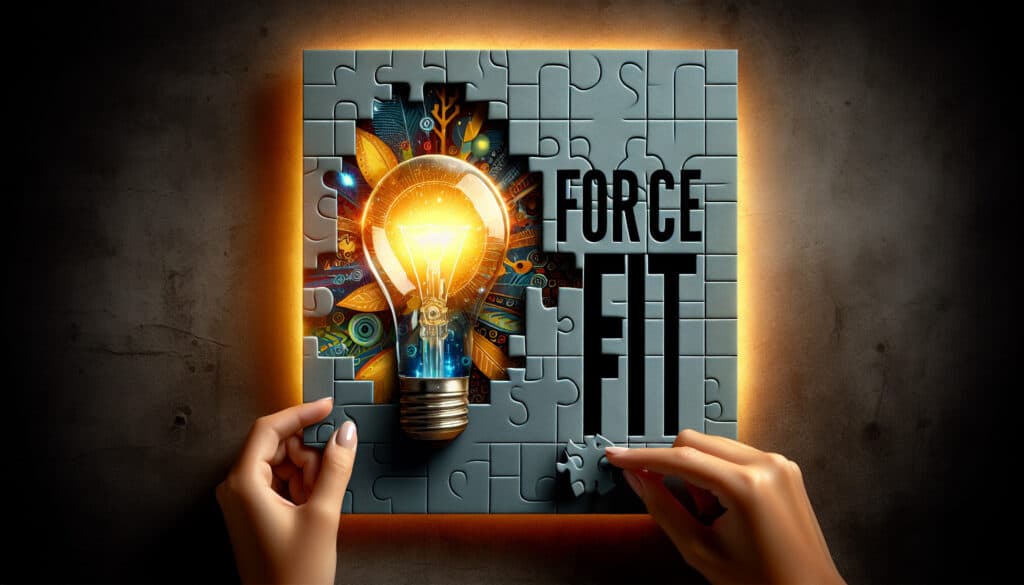
توليد أفكار إبداعية من خلال فرض وجود صلة بين مفهومين غير مرتبطين.
كيفية استخدامه:
أسلوب توليد أفكار يُجبر فيه حل مشكلة ما على الاعتماد على شيء أو فكرة تبدو غير ذات صلة. وهذا يساعد على الخروج عن التفكير التقليدي وتوليد حلول مبتكرة.
الايجابيات
يمكن أن يثير أفكارًا إبداعية ومبتكرة؛ ويشجع على التفكير خارج الصندوق.
سلبيات
قد يكون من الصعب إقامة روابط ذات مغزى؛ وقد تكون النتائج غير عملية أو غير منطقية.
الفئات:
التفكير, حل المشكلات
الأفضل لـ:
توليد أفكار منتجات جديدة أو حلول لمشكلة صعبة.
Force-Fit methodology, leveraging the juxtaposition of unrelated concepts, is particularly useful in diverse contexts ranging from consumer electronics to healthcare product development. In industries such as automotive design, where enhancing user experience and safety features is a constant challenge, teams may apply Force-Fit by juxtaposing a concept from nature, like biomimicry seen in vehicle aerodynamics, or an element from technology, like smartphone interfaces, to inspire innovative solutions for dashboard design or control systems. Within the early phases of product development, especially during brainstorming sessions, multidisciplinary teams comprising designers, engineers, and market analysts can participate to broaden the scope of ideas generated, creating a rich reservoir of potential solutions. This methodology is effective in tackling traditionally stubborn problems, such as improving resource efficiency in manufacturing by drawing inspiration from unrelated fields like agriculture or architecture, potentially leading to breakthrough innovations. The randomized element of combining disparate ideas can dislodge typical biases and preconceived notions, leading to unique product features or services, such as integrating augmented reality into retail environments to enhance customer interaction. Moreover, the versatility of Force-Fit allows teams to apply this technique anywhere from initial ideation workshops to fine-tuning the final design stages, making it a flexible tool in the innovation toolkit. Engaging participants from varied backgrounds ensures a wider array of perspectives and can result in unexpected insights, drastically improving the probability of discovering groundbreaking solutions that stand out in competitive markets.
الخطوات الرئيسية لهذه المنهجية
حدد المشكلة الأساسية التي تحتاج إلى حل.
اختر شيئًا أو مفهومًا غير ذي صلة لمحاولة ملاءمته قسرًا مع المشكلة.
قم بتحليل خصائص ووظائف الشيء أو المفهوم المختار.
تبادل الأفكار حول كيفية معالجة خصائص الكائن غير ذي الصلة للمشكلة الأصلية.
شجع الأفكار الجريئة على الظهور دون إصدار أحكام.
اختر الأفكار الواعدة لمزيد من البحث والاستكشاف.
قم بتحسين الأفكار المختارة وتكييفها لتصبح حلولاً قابلة للتنفيذ.
نصائح للمحترفين
المشاركة في ورش عمل متعددة التخصصات لتشجيع وجهات النظر المتنوعة، وتسهيل الروابط غير المتوقعة بين المجالات غير ذات الصلة.
استخدم القطع الأثرية المادية من مجالات غير ذات صلة أثناء جلسات العصف الذهني لاستحضار أنماط تفكير مختلفة وتسهيل الارتباطات غير التقليدية.
Incorporate random word generators or prompts to stimulate offbeat thinking, challenging participants to connect these words to the design problem at hand.