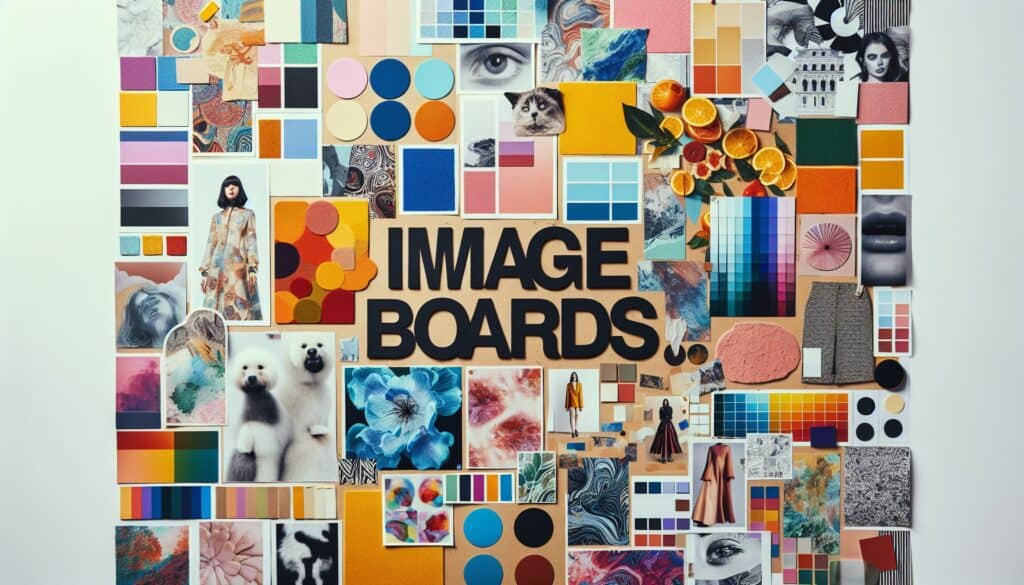
Image boards, commonly known as mood boards, play a significant role in bridging the gap between abstract concepts and tangible design in various industries. They are frequently employed during the ideation phase of projects in sectors such as graphic design, interior design, fashion, and product development, where visual aesthetics are paramount. In practice, team members from different disciplines, including designers, marketers, and engineers, collaboratively gather inspiration—ranging from color palettes to materials and typography—to establish a shared vision that aligns with the project’s goals and user expectations. For instance, in product design, a mood board may integrate textures and visual materials that reflect the desired user experience, informing the tactile qualities of the final product. The iterative nature of mood boards allows participants to experiment with styles and elements without significant investment in resources, encouraging creativity and innovation. By providing a concrete reference point, they facilitate discussions around aesthetic choices, ensuring that stakeholders remain aligned on the project’s visual narrative and emotional resonance. This collaborative tool not only enhances the initial creative phase but can also serve as a benchmark for evaluating design decisions throughout the project lifecycle, ensuring that the resultant design remains consistent with the established visual identity. As such, these boards are valuable in scenarios where initial ideas need to be communicated effectively to clients, investors, or team members, ensuring that everyone involved has a unified understanding of the creative direction.
Key steps of this methodology
نصائح احترافية
To read and compare several methodologies, we recommend the
> Extensive Methodologies Repository <
together with the 400+ other methodologies.
Your comments on this methodology or additional info are welcome on the comment section below ↓ , so as any engineering-related ideas or links.