Product Design, Manufacturing & Innovation Resources
بيت » علاقة بلانك (علاقة بلانك-أينشتاين)

علاقة بلانك (علاقة بلانك-أينشتاين)

1900
  • Max Planck
  • Albert Einstein
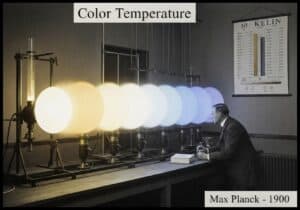
Vintage laboratory scene illustrating Planck's relation in quantum mechanics.

(صورة تم إنشاؤها للتوضيح فقط)

تُعد علاقة بلانك معادلة أساسية في ميكانيكا الكم الميكانيكا تُحدد هذه العلاقة كمية طاقة الفوتون الواحد. الصيغة هي: E = hν، حيث E هي طاقة الفوتون، وν (ν) تردده، وh ثابت بلانك. تُثبت هذه العلاقة الطبيعة الجسيمية للضوء، مُبينةً أن طاقته مُكمّمة في حزم منفصلة، ​​أو كمات.

Max Planck first introduced this relationship in 1900 as part of his solution to the black-body radiation problem, which classical physics could not explain. He postulated that energy could only be emitted or absorbed by the walls of the black body in discrete packets, which he called “quanta”. The energy of each quantum was proportional to the frequency of the radiation, with the proportionality constant being [latex]h[/latex]. This was a radical departure from classical physics, where energy was considered continuous. In 1905, Albert Einstein extended this concept to light itself, proposing that light is not just emitted or absorbed in packets but actually consists of these discrete energy packets, later named photons. He used this idea to explain the photoelectric effect, where electrons are ejected from a material when light shines on it. The relation [latex]E = h\nu[/latex] is central to all of spectroscopy because it directly links the measurable frequency (or wavelength, since [latex]c = \lambda\nu[/latex]) of light to the discrete energy level transitions within atoms and molecules. When a substance absorbs or emits light, the photon’s energy [latex]E[/latex] must exactly match the energy difference [latex]\Delta E[/latex] between two quantum states of the atom or molecule, providing a direct probe into the quantum structure of matter.

UNESCO Nomenclature: 2213
الفيزياء النظرية

يكتب

النظام التجريدي

الاضطراب

ثوري

الاستخدام

الاستخدام الواسع النطاق

السلائف

  • معادلات جيمس كلارك ماكسويل للكهرومغناطيسية (1865)
  • مشكلة إشعاع الجسم الأسود (كارثة الأشعة فوق البنفسجية)
  • اكتشاف هاينريش هيرتز للتأثير الكهروضوئي (1887)

التطبيقات

  • شرح التأثير الكهروضوئي
  • أساس ميكانيكا الكم
  • تقنية الليزر (تضخيم الضوء عن طريق الانبعاث المحفز للإشعاع)
  • مصابيح LED وفيزياء أشباه الموصلات
  • فهم الأطياف الذرية والجزيئية

براءات الاختراع:

NA

أفكار ابتكارات محتملة

بسبب عمليات جمع البيانات من خلال برامج الروبوت، والتي تتجاوز حاليًا 40 ألفًا يوميًا، فإن هذا المحتوى مخصص لأعضاء المجتمع فقط.
> تسجيل الدخول < أو > سجل < (مجاني 100٪) للوصول إلى هذا، وكذلك جميع المحتويات والأدوات الأخرى المقيدة.

ذات صلة بـ: علاقة بلانك، ميكانيكا الكم، الفوتون، ثابت بلانك، الطاقة، التردد، التأثير الكهروضوئي، التكميم، إشعاع الجسم الأسود، E=hv.

السياق التاريخي

علاقة بلانك (علاقة بلانك-أينشتاين)

1900
1900
1900
1900
1900
1900
1900
1900
1900
1900
1900
1900
1900
1900
1900

(إذا كان التاريخ غير معروف أو غير ذي صلة، على سبيل المثال "ميكانيكا الموائع"، يتم توفير تقدير تقريبي لظهوره الملحوظ)

الاختراع والابتكار والمبادئ التقنية ذات الصلة

الصور بالحجم الكامل والتنزيلات متاحة فقط 100% مجاناً للأعضاء المسجلين.