Product Design, Manufacturing & Innovation Resources
بيت » Precipitation Hardening

Precipitation Hardening

1906
  • Alfred Wilm
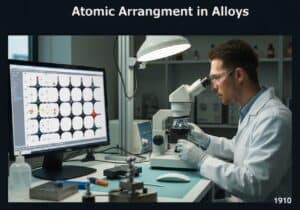
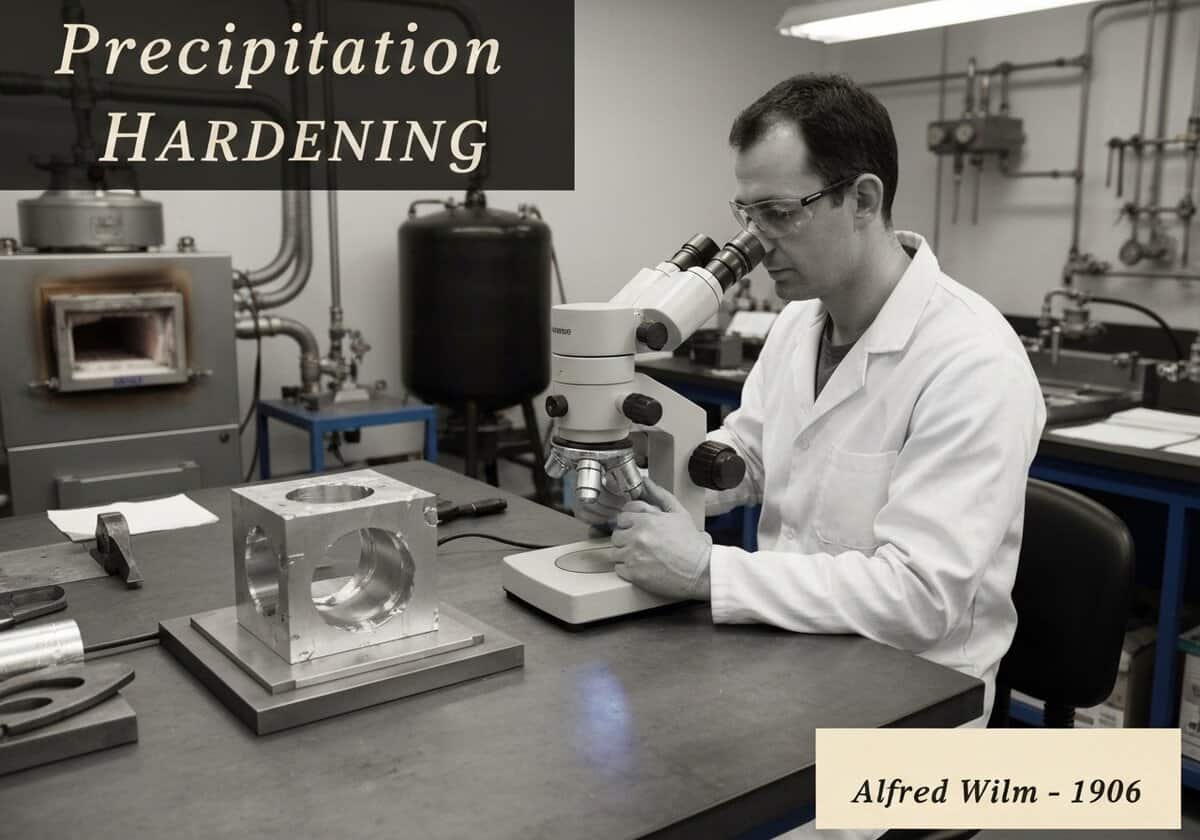
خبير معادن يحلل عينة من سبائك الألومنيوم موضحاً تأثيرات التصلب بالترسيب.

(صورة تم إنشاؤها للتوضيح فقط)

Precipitation hardening, or age hardening, is a heat treatment process that increases the yield strength of malleable materials. It involves heating an alloy to dissolve solute elements (solutionizing), rapidly cooling (quenching) to trap them in a supersaturated solid solution, and then aging at a lower temperature to allow fine particles of a second phase (precipitates) to form, which obstruct dislocation movement.


The discovery of precipitation hardening by Alfred Wilm was accidental. While studying an aluminum alloy containing copper, magnesium, and manganese (later named Duralumin), he noticed its hardness increased over several days after quenching, even at room temperature. This phenomenon is now understood as a three-step process. First, in solution treatment, the alloy is heated to a temperature high enough to dissolve all the solute atoms into a single-phase solid solution. Second, the alloy is rapidly quenched in a medium like water, which freezes the atoms in place, creating a supersaturated solid solution. This state is thermodynamically unstable. Third, during aging (either at room temperature or an elevated temperature), the supersaturated solute atoms diffuse and cluster together to form extremely small, coherent particles of a new phase called precipitates.

تعمل هذه الرواسب كعوائق قوية أمام حركة الخلعات، وهي الناقلات الأساسية للتشوه اللدن في المواد البلورية. تعتمد فعالية التقوية على حجم هذه الرواسب وشكلها وتوزيعها. في البداية، عندما تتشكل الرواسب وتنمو، تزداد القوة. ومع ذلك، إذا استمرت عملية التقادم لفترة طويلة جدًا (الإفراط في التقادم)، تصبح الرواسب كبيرة جدًا وتفقد تماسكها مع المصفوفة، مما يسمح للخلل بتجاوزها بسهولة أكبر، مما يؤدي إلى انخفاض القوة. تسمح هذه العملية بتكييف دقيق للخواص الميكانيكية للسبائك.

UNESCO Nomenclature: 3308
- علم المعادن

يكتب

العملية الكيميائية

الاضطراب

ثوري

الاستخدام

الاستخدام الواسع النطاق

السلائف

  • discovery of dislocations in crystals by vito volterra and others
  • understanding of solid-state diffusion and arrhenius equation
  • development of controlled heat treatment furnaces
  • metallography techniques for observing microstructures, pioneered by henry clifton sorby

التطبيقات

  • high-strength aluminum alloys (e.g., 2024, 7075) for aircraft structures
  • maraging steels for tooling, rocket casings, and landing gear
  • nickel-based superalloys (e.g., inconel 718) for jet engine turbine blades
  • copper-beryllium alloys for non-sparking tools and high-performance springs
  • specialized stainless steels (e.g., 17-4ph)

براءات الاختراع:

  • German Patent 244554

أفكار ابتكارات محتملة

بسبب عمليات جمع البيانات من خلال برامج الروبوت، والتي تتجاوز حاليًا 40 ألفًا يوميًا، فإن هذا المحتوى مخصص لأعضاء المجتمع فقط.
> تسجيل الدخول < أو > سجل < (مجاني 100٪) للوصول إلى هذا، وكذلك جميع المحتويات والأدوات الأخرى المقيدة.

ذات صلة بـ: التصلب بالترسيب، التصلب بالترسيب، التصلب مع تقدم العمر، المعالجة الحرارية، قوة الخضوع، الخلع، الترسيب، الدورالومين، السبائك الفائقة، المعادن، آلية التقوية.

السياق التاريخي

Precipitation Hardening

1899-01-01
1900
1903
1906
1910
1910
1910
1897
1900
1900
1903-05-10
1910
1910
1910
1910

(إذا كان التاريخ غير معروف أو غير ذي صلة، على سبيل المثال "ميكانيكا الموائع"، يتم توفير تقدير تقريبي لظهوره الملحوظ)

الاختراع والابتكار والمبادئ التقنية ذات الصلة

الصور بالحجم الكامل والتنزيلات متاحة فقط 100% مجاناً للأعضاء المسجلين.