Product Design, Manufacturing & Innovation Resources
بيت » التلألؤ الحيوي

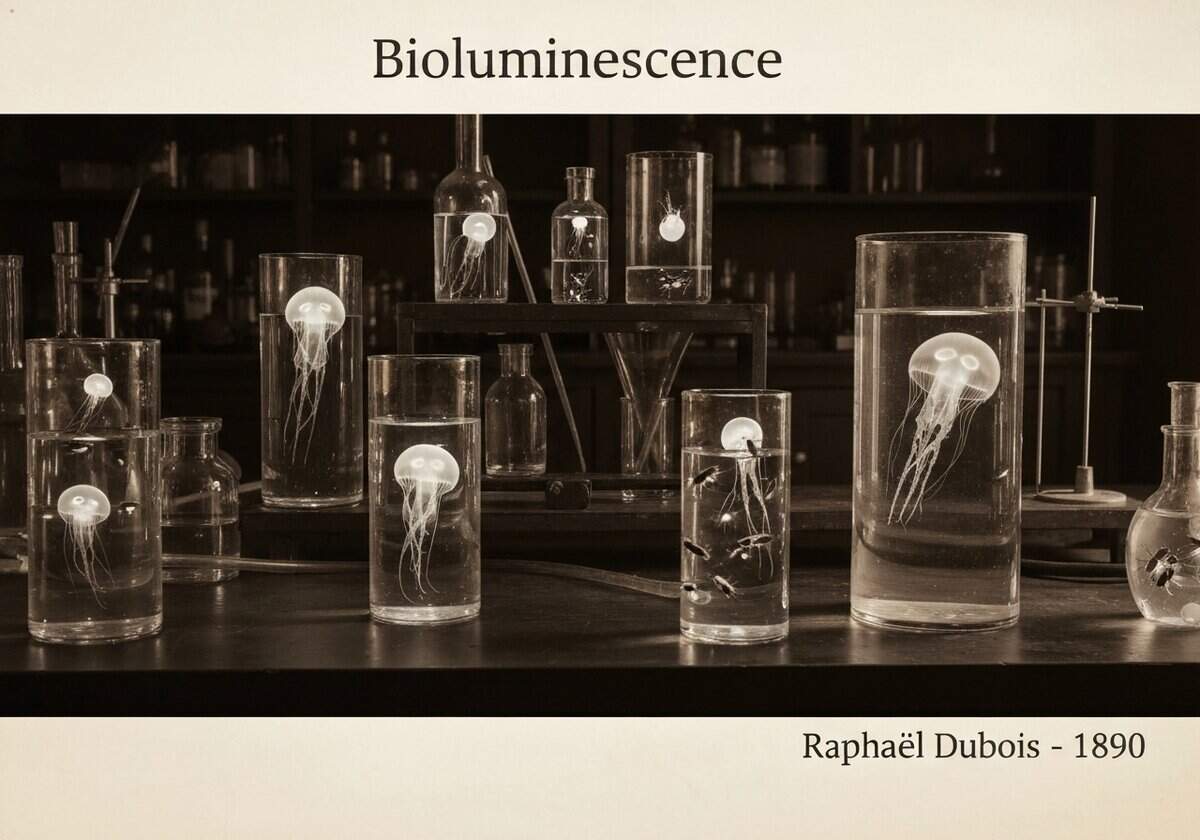
التلألؤ الحيوي

1890
  • Raphaël Dubois
Bioluminescent organisms in a laboratory setting for biochemical research.

(صورة توضيحية فقط)

Bioluminescence is the production and emission of light by a living organism. It is a naturally occurring form of chemiluminescence where energy is released by a chemical reaction in the form of light emission. The primary reaction involves a light-emitting pigment, a luciferin, and an enzyme, a luciferase, which catalyzes the reaction, typically with oxygen as a co-reactant.

Bioluminescence has evolved independently many times across various branches of life, from bacteria and fungi to insects and deep-sea fish. The underlying chemistry, while diverse, generally follows a common pattern. An enzyme (luciferase) acts on a substrate (luciferin) to produce an excited-state intermediate. For example, in fireflies, the luciferase enzyme catalyzes the reaction of firefly luciferin with adenosine triphosphate (ATP) and magnesium to form luciferyl adenylate. This complex then reacts with molecular oxygen to create a highly unstable peroxide intermediate, which decomposes to oxyluciferin in an excited state and releases AMP. The excited oxyluciferin then emits a photon, producing the characteristic yellow-green glow. The high efficiency of many bioluminescent systems (quantum yields can approach 1) means that almost all the energy is released as light, with very little heat, earning it the name ‘cold light’. This efficiency and the specificity of the enzyme-substrate reaction have made luciferase systems invaluable tools in biotechnology, particularly as reporter genes to study gene expression and protein function.

UNESCO Nomenclature: 2302
– Biochemistry

يكتب

Biological Process

خلل

Substantial

الاستخدام

استخدام واسع النطاق

مقدمات

  • مراقبة الكائنات المتوهجة (على سبيل المثال، اليراعات، والخشب المتوهج) عبر التاريخ
  • تطوير علم الإنزيمات وفهم تفاعلات الإنزيم والركيزة
  • عزل وتوصيف الجزيئات العضوية
  • التطورات في علم الوراثة و molecular biology مما يسمح باستنساخ الجينات (لإجراء فحوصات الجينات المُبلِّغة)

التطبيقات

  • الجينات المراسلة في علم الأحياء الجزيئي (اختبار لوسيفيراز)
  • التصوير الطبي الحيوي للعمليات الخلوية وتطور الأمراض في الحيوانات الحية
  • المراقبة البيئية للسمية (على سبيل المثال، الاختبارات البكتيرية)
  • تطوير تقنيات الإضاءة الجديدة
  • اكتشاف الأدوية وفحصها

براءات الاختراع:

NA

أفكار ابتكارية محتملة

  • نباتات معدلة وراثيًا تتوهج كإضاءة محيطة
  • أشجار مضيئة حيوياً لإضاءة شوارع المدينة
  • الاختبارات التشخيصية الطبية حيث تموت البكتيريا المصممة لإنتاج الضوء في وجود مسببات أمراض محددة، مما يتسبب في انطفاء الضوء
  • الخميرة ذاتية الإضاءة المستخدمة في صناعات التخمير والخبز لمراقبة عملية التخمير
  • أجهزة استشعار حيوية للكشف عن الألغام الأرضية من خلال التفاعل مع آثار المواد الكيميائية المتفجرة في التربة
  • أسماك أليفة متوهجة (موجودة بالفعل، ولكن يمكن توسيعها لتشمل حيوانات أليفة/أنماط أخرى)
  • حبر حيوي للطباعة الأمنية ومكافحة التزييف
  • مبيدات زراعية تجعل الآفات تتوهج لتسهيل التعرف عليها وإزالتها بشكل مستهدف
  • أشجار عيد الميلاد المضيئة بيولوجيًا
  • المراقبة في الوقت الحقيقي لجودة المياه باستخدام الكائنات الحية التي تغير ناتجها الضوئي استجابة للملوثات
Related to: bioluminescence, luciferin, luciferase, living organism, light emission, firefly, ATP, reporter gene, cold light, biochemistry.

السياق التاريخي

1890
1955
1980
1880
1897
1970

(إذا كان التاريخ غير معروف أو غير ذي صلة، على سبيل المثال "ميكانيكا الموائع"، يتم توفير تقدير تقريبي لظهوره الملحوظ)

أحدث الإضافات

أهم المنشورات والمقالات

أفضل الأدوات الأصلية

السنة العاشرة عيد

الصور والتنزيلات بالحجم الكامل متاحة فقط، ومجانية تمامًا، للأعضاء المسجلين.