Product Design, Manufacturing & Innovation Resources
بيت » Molecular Self-Assembly in Biomaterials

Molecular Self-Assembly in Biomaterials

1990
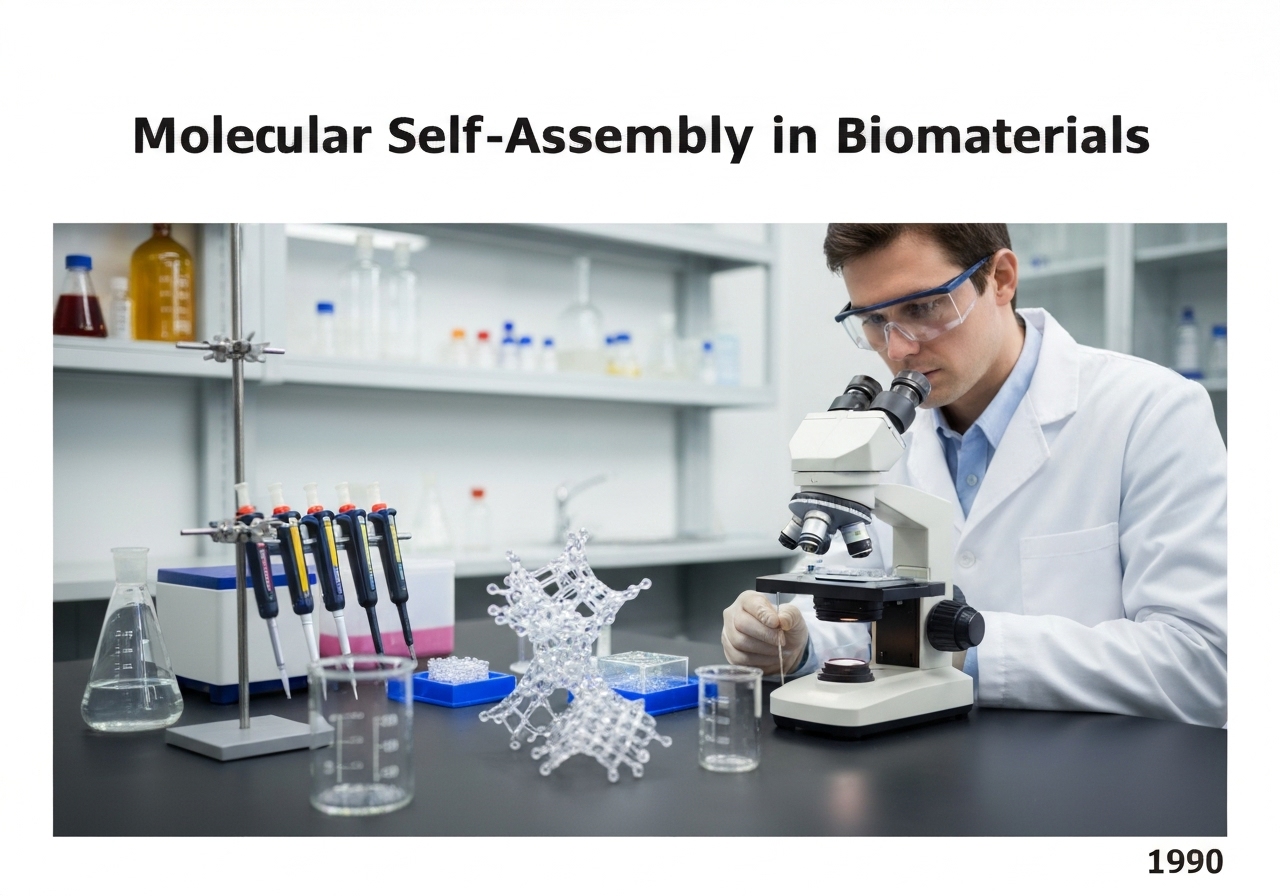
مشهد مختبري يوضح التجميع الذاتي الجزيئي في المواد الحيوية للتطبيقات الطبية الحيوية.

(صورة تم إنشاؤها للتوضيح فقط)

التجميع الذاتي الجزيئي هو عملية ‘من الأسفل إلى الأعلى’ حيث تنتظم الجزيئات تلقائيًا في بنى مرتبة دون توجيه خارجي. هذه الظاهرة، مدفوعة بالتفاعلات غير التساهمية مثل الروابط الهيدروجينية والتأثيرات الكارهة للماء و فان دير فالس أساسي في علم الأحياء (على سبيل المثال، طي البروتين وتكوين طبقة ثنائية دهنية). في المواد الحيوية، يتم تسخيرها في المواد الحيوية لإنشاء مواد معقدة ذات بنية نانوية مثل الهلاميات المائية والألياف النانوية للتطبيقات الطبية الحيوية.

Self-assembly provides a powerful paradigm for creating biomaterials that mimic the hierarchical complexity of biological tissues. The process is thermodynamically driven, seeking a minimum Gibbs free energy state. The design begins with molecular building blocks, often amphiphilic molecules (containing both hydrophilic and hydrophobic parts) such as block copolymers or peptide amphiphiles (PAs). When placed in an aqueous environment above a critical concentration, these molecules arrange themselves to minimize the unfavorable contact between their hydrophobic segments and water. This can lead to various nanostructures, including spherical micelles, cylindrical nanofibers, or planar bilayers, with the final morphology dictated by molecular geometry and packing parameters. A key advantage is the ability to encode biological function directly into the building blocks. For example, a PA can be designed with a peptide sequence containing the RGD motif, a well-known cell adhesion ligand. Upon self-assembly into nanofibers, this motif is displayed on the fiber surface, creating a scaffold that actively promotes cell attachment. These systems are often dynamic and responsive. A change in pH, temperature, or ionic strength can trigger a structural transition, allowing for the creation of ‘smart’ materials. For instance, a self-assembling peptide solution can be designed to be liquid for easy injection but form a solid hydrogel scaffold at body temperature, entrapping cells and drugs at a target site for regenerative medicine applications.

UNESCO Nomenclature: 2209
- كيمياء البوليمر

يكتب

العملية الكيميائية

الاضطراب

التأسيسية

الاستخدام

التكنولوجيا الناشئة

السلائف

  • understanding of non-covalent forces (hydrogen bonds, van der waals)
  • discovery of the lipid bilayer structure of cell membranes
  • work on protein folding and quaternary structure
  • development of polymer chemistry, particularly block copolymers
  • nobel prize-winning work in supramolecular chemistry by lehn, pedersen, and cram

التطبيقات

  • fabrication of nanofibrous scaffolds for tissue engineering that mimic the natural extracellular matrix
  • development of injectable hydrogels for drug delivery and cell encapsulation
  • ابتكار مواد "ذكية" مستجيبة تغير خصائصها استجابةً للمؤثرات مثل درجة الحموضة أو درجة الحرارة
  • formation of nanocarriers like micelles and vesicles for targeted therapy
  • surface coatings that prevent biofouling

براءات الاختراع:

NA

أفكار ابتكارات محتملة

بسبب عمليات جمع البيانات من خلال برامج الروبوت، والتي تتجاوز حاليًا 40 ألفًا يوميًا، فإن هذا المحتوى مخصص لأعضاء المجتمع فقط.
> تسجيل الدخول < أو > سجل < (مجاني 100٪) للوصول إلى هذا، وكذلك جميع المحتويات والأدوات الأخرى المقيدة.

مرتبط ب: التجميع الذاتي، التجميع الذاتي، من الأسفل إلى الأعلى، الكيمياء فوق الجزيئية، التفاعلات غير التساهمية، الهيدروجيل، الألياف النانوية، الأمفيفايل، كتلة البوليمر المشترك، المواد الذكية، الببتيد الأمفيفايل.

السياق التاريخي

Molecular Self-Assembly in Biomaterials

1984
1985
1986
1990
1994
1997
2002
1980
1984
1986
1986
1991
1995
2000
2004

(إذا كان التاريخ غير معروف أو غير ذي صلة، على سبيل المثال "ميكانيكا الموائع"، يتم توفير تقدير تقريبي لظهوره الملحوظ)

الاختراع والابتكار والمبادئ التقنية ذات الصلة

الصور بالحجم الكامل والتنزيلات متاحة فقط 100% مجاناً للأعضاء المسجلين.