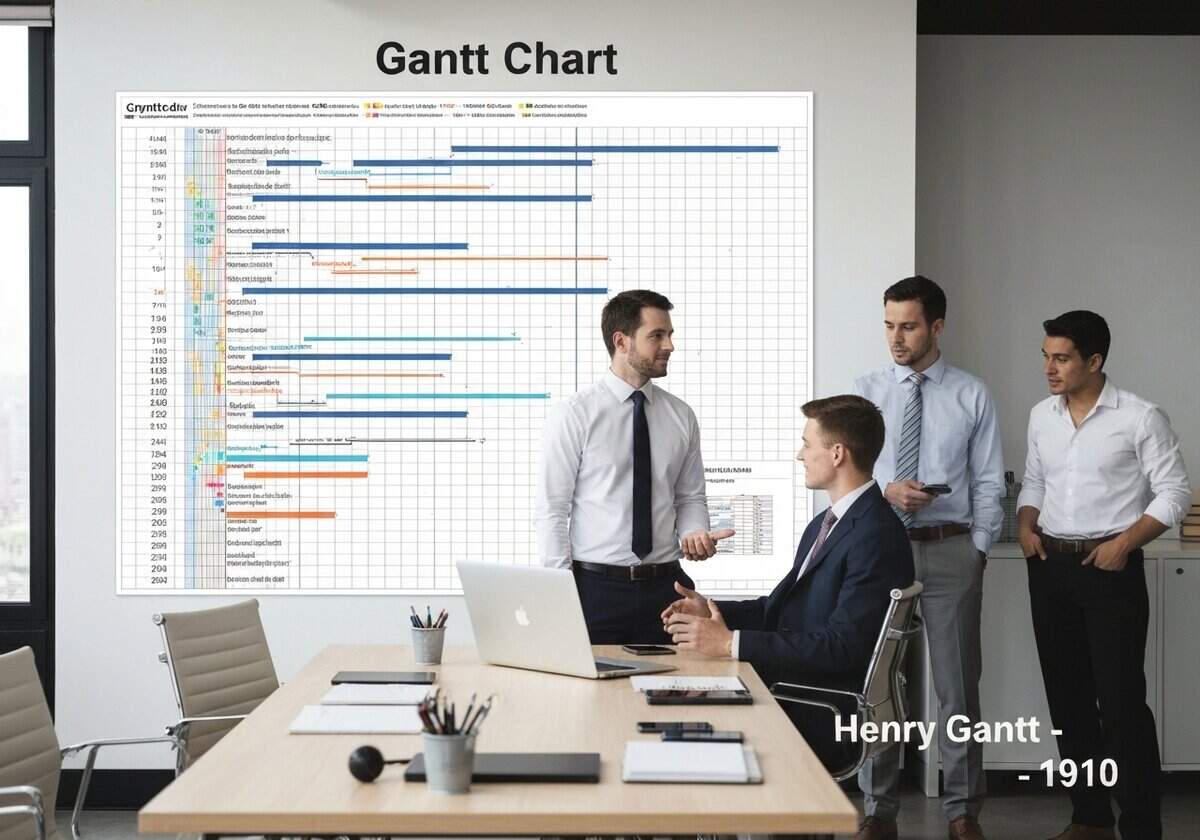
Modern Gantt charts have evolved significantly. They often include milestone markers for important deadlines, dependency lines (e.g., finish-to-start links) showing relationships between tasks, and color-coding for different task types or resource assignments. A key feature is progress tracking, often shown by shading a portion of a task’s bar to represent the percentage of work completed. While highly effective for visualizing schedules, traditional Gantt charts have limitations. They can become cluttered and difficult to read for highly complex projects with hundreds of tasks. They also do not inherently display the ‘critical path’—the sequence of tasks that determines the project’s total duration—without being combined with techniques like PERT or CPM. Despite this, the Gantt chart remains a cornerstone of project management, with its principles integrated into virtually all modern project management software like Microsoft Project, Asana, and Trello.