Product Design, Manufacturing & Innovation Resources
Lar » Sistema de Classificação de Incêndios dos EUA (NFPA 10)

Sistema de Classificação de Incêndios dos EUA (NFPA 10)

1950
  • National Fire Protection Association (NFPA)
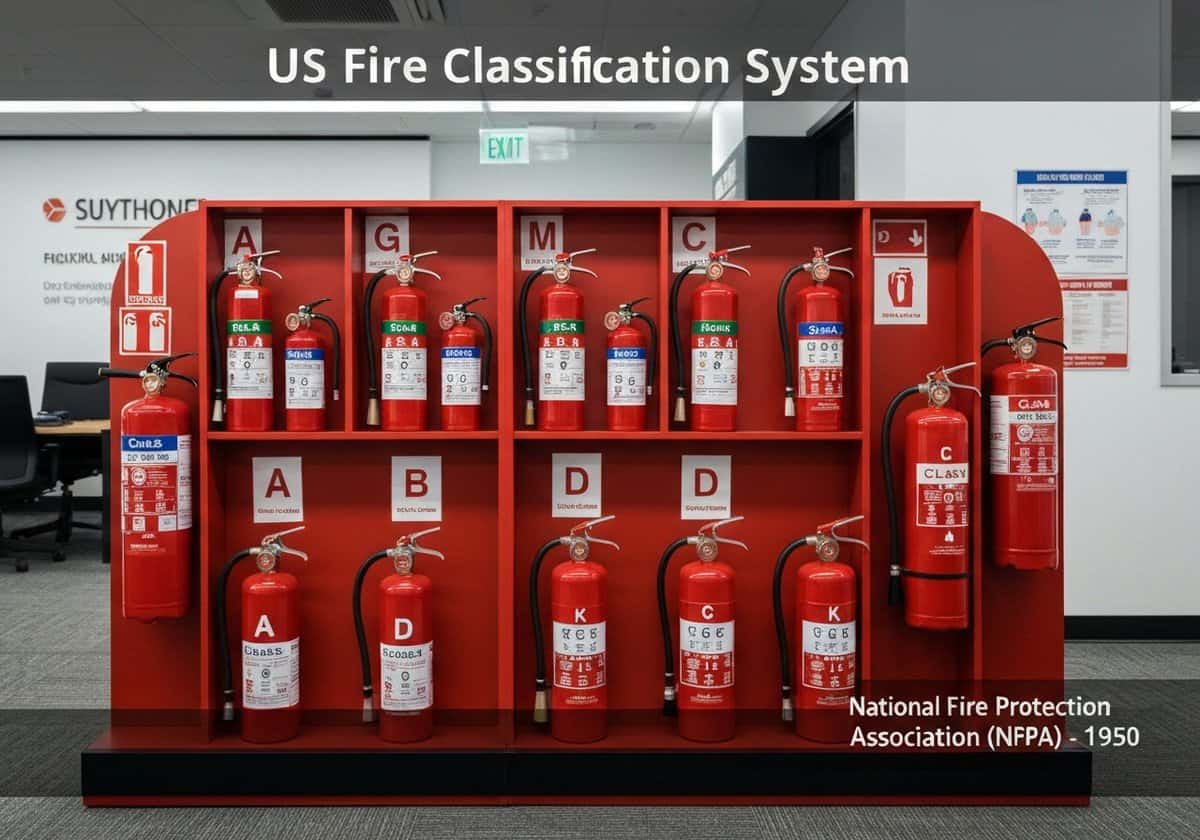
Expositor de extintores de incêndio categorizado pelo Sistema de Classificação de Incêndio dos EUA para conformidade com as normas de segurança.

(Imagem gerada apenas para fins ilustrativos)

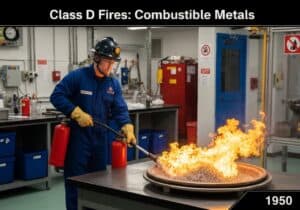
O sistema de classificação de incêndios dos Estados Unidos, padronizado pela NFPA 10, categoriza os incêndios em cinco classes principais com base no tipo de combustível. A Classe A inclui combustíveis comuns, como madeira e papel. A Classe B abrange líquidos e gases inflamáveis. A Classe C é para incêndios envolvendo equipamentos elétricos energizados. A Classe D refere-se a metais combustíveis e a Classe K a óleos e gorduras de cozinha.
The NFPA 10 standard provides a foundational framework for fire safety in the United States. Its primary purpose is to simplify the selection of the correct extinguishing agent for a given fire, preventing the user from inadvertently making the situation worse. For example, using a water-based (Class A) extinguisher on a flammable liquid fire (Class B) could spread the burning fuel, and using it on an electrical fire (Class C) could lead to electrocution.

Each class corresponds to specific extinguishing methods. Class A fires are typically extinguished by the cooling effect of water or by smothering with dry chemicals. Class B fires require agents that cut off the oxygen supply, such as carbon dioxide, dry chemical, or foam. Class C fires require a non-conductive agent like carbon dioxide or a dry chemical; the primary goal is to de-energize the circuit before tackling the fire as a Class A or B. Class D fires need special dry powder agents that smother the fire without reacting with the burning metal. Class K, established in 1998 for commercial kitchens, uses wet chemical agents that cool the fire and produce a soapy foam layer (saponification) to prevent re-ignition of hot grease.

This classification system is visually represented by pictograms on fire extinguishers—a green triangle for A, a red square for B, a blue circle for C, a yellow star for D, and a black hexagon for K—making identification quick and intuitive during an emergency.

UNESCO Nomenclature: 3305
Engenharia química

Tipo

Sistema abstrato

Interrupção

Fundamentais

Uso

Uso generalizado

Precursores

  • the fire triangle concept (fuel, heat, oxygen)
  • empirical knowledge of different materials’ combustion properties
  • development of early extinguishing agents like water, sand, and soda-acid
  • increased fire risks from industrialization and electrification

Aplicações

  • design and labeling of portable fire extinguishers
  • development of building fire codes and regulations
  • firefighter training and emergency response protocols
  • specification of automatic fire suppression systems (e.g., sprinklers)
  • workplace safety requirements mandated by osha

Patentes:

NA

Ideias de Inovação Potencial

Devido ao tráfego de bots de coleta de dados, atualmente superior a 40 mil por dia, este conteúdo é reservado aos membros da comunidade.
> Login < ou > Registrar < (100% gratuito) para acessar isso, assim como todo o restante do conteúdo e das ferramentas restritas.

Related to: NFPA 10, fire classification, class A, class B, class C, class D, class K, fire safety, fire extinguisher, USA.

Contexto histórico

Sistema de Classificação de Incêndios dos EUA (NFPA 10)

1950
1950
1950
1950
1950
1955
1958
1950
1950
1950
1950
1950
1955
1956
1960

(Caso a data seja desconhecida ou irrelevante, por exemplo, "mecânica dos fluidos", é fornecida uma estimativa aproximada de seu surgimento notável)

Princípios relacionados à invenção, inovação e tecnologia

Imagens em tamanho real e downloads estão disponíveis apenas, 100% gratuitos, para membros registrados.