米国防火等級システム(NFPA 10)
1950
- National Fire Protection Association (NFPA)
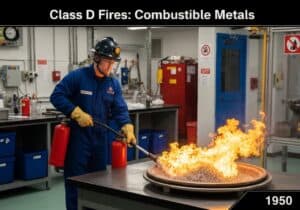
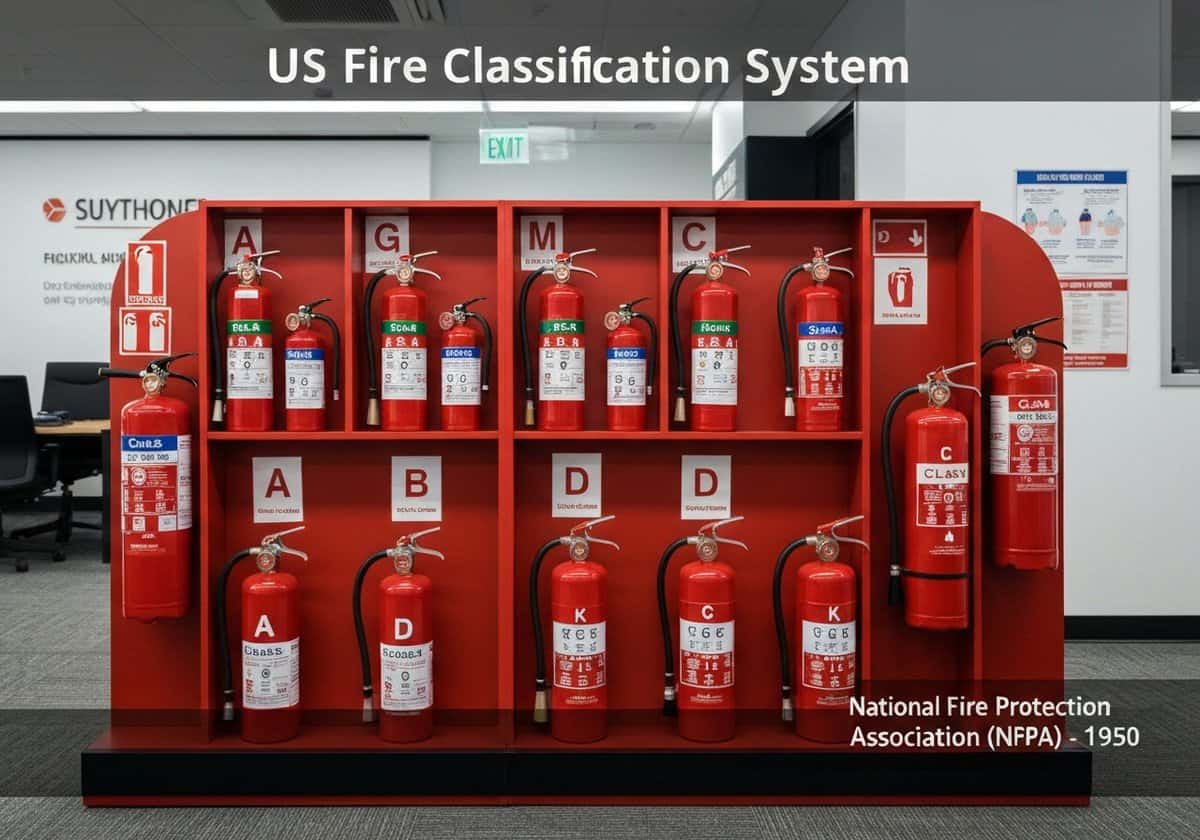
NFPA 10で標準化された米国の火災分類システムは、燃料の種類に基づいて火災を5つの主要なクラスに分類します。クラスAは、木材や紙などの一般的な可燃物を対象としています。クラスBは、可燃性の液体やガスを対象としています。クラスCは、通電中の電気機器が関係する火災です。クラスDは可燃性金属に関するもので、クラスKは食用油や脂肪に関するものです。
The NFPA 10 standard provides a foundational framework for fire safety in the United States. Its primary purpose is to simplify the selection of the correct extinguishing agent for a given fire, preventing the user from inadvertently making the situation worse. For example, using a water-based (Class A) extinguisher on a flammable liquid fire (Class B) could spread the burning fuel, and using it on an electrical fire (Class C) could lead to electrocution.
Each class corresponds to specific extinguishing methods. Class A fires are typically extinguished by the cooling effect of water or by smothering with dry chemicals. Class B fires require agents that cut off the oxygen supply, such as carbon dioxide, dry chemical, or foam. Class C fires require a non-conductive agent like carbon dioxide or a dry chemical; the primary goal is to de-energize the circuit before tackling the fire as a Class A or B. Class D fires need special dry powder agents that smother the fire without reacting with the burning metal. Class K, established in 1998 for commercial kitchens, uses wet chemical agents that cool the fire and produce a soapy foam layer (saponification) to prevent re-ignition of hot grease.
This classification system is visually represented by pictograms on fire extinguishers—a green triangle for A, a red square for B, a blue circle for C, a yellow star for D, and a black hexagon for K—making identification quick and intuitive during an emergency.
UNESCO Nomenclature: 3305
化学工学
前駆物質
- the fire triangle concept (fuel, heat, oxygen)
- empirical knowledge of different materials’ combustion properties
- development of early extinguishing agents like water, sand, and soda-acid
- increased fire risks from industrialization and electrification
アプリケーション
- design and labeling of portable fire extinguishers
- development of building fire codes and regulations
- firefighter training and emergency response protocols
- specification of automatic fire suppression systems (e.g., sprinklers)
- workplace safety requirements mandated by osha
潜在的なイノベーションのアイデア
ボットによるトラフィック(現在1日あたり4万件以上)を排除するため、このコンテンツはコミュニティメンバー限定となっています。
> ログイン < または > 登録 < (100%無料)でこれにアクセスできます。他のすべての制限付きコンテンツとツールも同様です。
Related to: NFPA 10, fire classification, class A, class B, class C, class D, class K, fire safety, fire extinguisher, USA.