Product Design, Manufacturing & Innovation Resources
Lar » Relação de Planck (Relação de Planck-Einstein)

Relação de Planck (Relação de Planck-Einstein)

1900
  • Max Planck
  • Albert Einstein
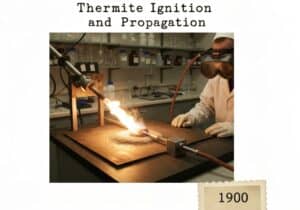
Vintage laboratory scene illustrating Planck's relation in quantum mechanics.

(Imagem gerada apenas para fins ilustrativos)

A relação de Planck é uma equação fundamental na física quântica. mecânica que quantifica a energia de um único fóton. A fórmula é [latex]E = hnu[/latex], onde [latex]E[/latex] é a energia do fóton, [latex]nu[/latex] (nu) é sua frequência e [latex]h[/latex] é a constante de Planck. Essa relação estabelece a natureza corpuscular da luz, mostrando que sua energia é quantizada em pacotes discretos, ou quanta.

Max Planck first introduced this relationship in 1900 as part of his solution to the black-body radiation problem, which classical physics could not explain. He postulated that energy could only be emitted or absorbed by the walls of the black body in discrete packets, which he called “quanta”. The energy of each quantum was proportional to the frequency of the radiation, with the proportionality constant being [latex]h[/latex]. This was a radical departure from classical physics, where energy was considered continuous. In 1905, Albert Einstein extended this concept to light itself, proposing that light is not just emitted or absorbed in packets but actually consists of these discrete energy packets, later named photons. He used this idea to explain the photoelectric effect, where electrons are ejected from a material when light shines on it. The relation [latex]E = h\nu[/latex] is central to all of spectroscopy because it directly links the measurable frequency (or wavelength, since [latex]c = \lambda\nu[/latex]) of light to the discrete energy level transitions within atoms and molecules. When a substance absorbs or emits light, the photon’s energy [latex]E[/latex] must exactly match the energy difference [latex]\Delta E[/latex] between two quantum states of the atom or molecule, providing a direct probe into the quantum structure of matter.

UNESCO Nomenclature: 2213
Física teórica

Tipo

Sistema abstrato

Interrupção

Revolucionário

Uso

Uso generalizado

Precursores

  • Equações do eletromagnetismo de James Clerk Maxwell (1865)
  • The black-body radiation problem (ultraviolet catastrophe)
  • Descoberta do efeito fotoelétrico por Heinrich Hertz (1887)

Aplicações

  • Explicando o efeito fotoelétrico
  • fundamentos da mecânica quântica
  • tecnologia laser (amplificação da luz por emissão estimulada de radiação)
  • LEDs e física de semicondutores
  • Compreendendo os espectros atômicos e moleculares

Patentes:

NA

Ideias de Inovação Potencial

Devido ao tráfego de bots de coleta de dados, atualmente superior a 40 mil por dia, este conteúdo é reservado aos membros da comunidade.
> Login < ou > Registrar < (100% gratuito) para acessar isso, assim como todo o restante do conteúdo e das ferramentas restritas.

Relacionado a: relação de Planck, mecânica quântica, fóton, constante de Planck, energia, frequência, efeito fotoelétrico, quantização, radiação de corpo negro, E=hv.

Contexto histórico

Relação de Planck (Relação de Planck-Einstein)

1900
1900
1900
1900
1900
1900
1900
1900
1900
1900
1900
1900
1900
1900
1900

(Caso a data seja desconhecida ou irrelevante, por exemplo, "mecânica dos fluidos", é fornecida uma estimativa aproximada de seu surgimento notável)

Princípios relacionados à invenção, inovação e tecnologia

Imagens em tamanho real e downloads estão disponíveis apenas, 100% gratuitos, para membros registrados.